Why Strength Training Matters for Triathletes
Triathlon is more than endurance. It’s about how efficiently your body can move, stabilize, and recover. Without strength, every swim, bike, and run becomes harder than it needs to be. That’s why strength training for triathletes at home is so valuable. It builds a foundation that supports every other part of your training.
When you strengthen your core, hips, and shoulders, you improve the transfer of power through each discipline. A strong core means smoother swim rotation and steadier breathing. Strong glutes help you climb hills on the bike without tiring too early. Stable shoulders reduce fatigue when you’re pushing through long swims.
Research consistently shows that combining strength and endurance work improves performance markers such as running economy and power output. See this review on resistance training in endurance athletes for deeper insight. The benefits go beyond power, you’ll notice better posture and fewer niggling injuries, especially in high-mileage weeks. Even two short sessions per week can lead to major gains in speed and stamina.
Think of strength work as insurance for your performance. Each session helps your body handle fatigue more effectively. You become more resilient to repetitive strain, which means faster recovery and more consistent training. This balance between endurance and power is what separates a good triathlete from a great one.
The best part is accessibility. Home strength training for triathletes eliminates barriers. No waiting for machines, no gym fees, and no travel time. You can focus on consistency, the real secret behind long-term performance. When strength training becomes a habit, everything else starts to improve: your race times, your form, and your confidence.
To explore the full principles and benefits of strength work beyond this guide, see our core resource on Strength Training for Triathletes.
If your strength and confidence are growing through home training, our Olympic Distance Triathlon Training Plan helps you take the next step. It blends structured swim, bike, run, and strength workouts into one complete program, ideal for athletes ready to move from base fitness to full triathlon readiness.
- ✔ Periodized 8–16 week programs designed by SportCoaching professionals
- ✔ Balanced swim, bike, and run sessions supported by at-home strength training
- ✔ Focus on pacing, transitions, and recovery to prepare for Olympic distance racing
Build on your at-home strength foundation and prepare for your first Olympic triathlon with expert guidance from SportCoaching.com.au.
View Olympic Triathlon Plan

Best At-Home Strength Exercises for Triathletes
You don’t need heavy machines to build race-ready strength. You need smart movement and consistency. These bodyweight exercises for triathletes and simple band routines target the muscles that matter most (the core, hips, shoulders, and legs) improving control and endurance across all three disciplines.
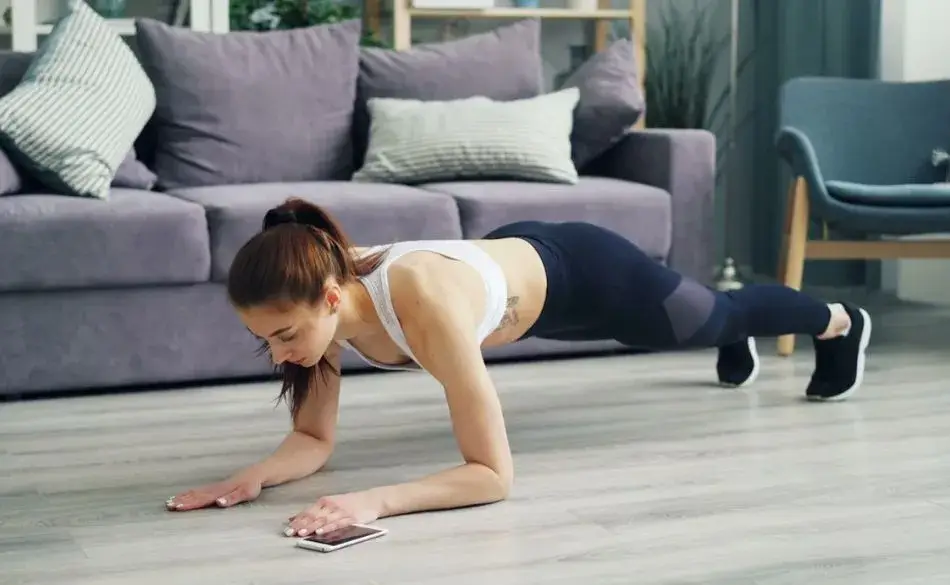
Start with your core. A stable midsection connects your swim, bike, and run. Front and side planks, bird dogs, and dead bugs build rotational control and breathing stability. Research in Sports Medicine shows that trunk stability improves movement efficiency and helps maintain form when fatigue sets in.
Next, train your hips and legs. Strong glutes drive each pedal stroke and support knee stability especially during long climbs or off-season base work. Split squats, hip hinges, and step-ups build unilateral strength that reduces imbalances. A study in BMC Sports Science, Medicine and Rehabilitation found these exercises effectively engage the glutes and hamstrings, enhancing hip extension power without high load.
Your upper body matters too. Balanced shoulders improve swim endurance and protect against fatigue. Push-ups, band rows, and half-kneeling presses strengthen your lats, delts, and scapular stabilizers (key for posture and injury prevention).
Here’s a simple triathlon strength workout you can complete twice per week. Begin with five minutes of mobility to warm up the joints, then move with deliberate control:
- Core: Front plank 3 × 30–45 sec, Side plank 3 × 20–30 sec each
- Hips/Legs: Split squat 3 × 8–10 each, Hip hinge 3 × 8–10
- Upper body: Push-ups 3 × 8–12, Resistance band row 3 × 12–15
- Finisher: Glute bridge march 2 × 30–45 sec
Keep rest short (45–60 seconds). Progress gradually, add a set every two weeks or slow your tempo for challenge. This minimalist approach to home strength training for triathletes builds functional strength, improves muscle coordination, and enhances race-day stability, all without leaving your living room.


More At-Home Strength Exercises for Triathletes
Once you’ve mastered the basics, the next step is progression. Adding variety keeps your muscles adapting and helps balance strength across all three disciplines. These additional at-home strength training exercises for triathletes target mobility, balance, and functional endurance which are essential for staying strong through every stage of your training season.
Focus on control rather than heavy resistance. You’re not trying to “bulk up” but to create stability that supports efficient movement. The goal is to move better, not necessarily to lift more.
Below is a detailed guide outlining how to use these movements effectively in your home program. It includes suggested sets, reps, and key coaching tips used by elite triathlon coaches.
👉 Swipe to view full table
| Exercise | Muscle Focus | Recommended Sets/Reps | Purpose & Coaching Tips |
|---|---|---|---|
| Single-Leg Deadlift | Glutes, Hamstrings, Core | 3 × 8–10 each leg | Improves balance and hip control for running and cycling. Keep your back flat and move slowly. |
| Reverse Lunge with Rotation | Hips, Core, Obliques | 3 × 8–12 each side | Builds rotational stability for better swim and run form. Add a light band or weight for challenge. |
| Superman Pull | Back, Shoulders, Glutes | 3 × 10–15 | Activates the posterior chain and supports shoulder mobility for swimming. |
| Wall Sit with Calf Raise | Quadriceps, Calves | 3 × 30–45 seconds | Increases muscular endurance and lower-leg stability for cycling and climbing power. |
| Standing Band Press | Chest, Core | 3 × 10–12 | Develops upper-body pushing strength while engaging the core for posture on the bike. |
| Y-T-W Shoulder Series | Upper Back, Rotator Cuff | 2–3 × 8 each position | Improves scapular control and reduces swim-related shoulder strain. |
| Plank to Push-Up | Core, Triceps, Shoulders | 2–3 × 8–10 | Combines stability and upper-body strength for functional endurance under fatigue. |
These home-based triathlon strength workouts keep you strong through base, build, and race seasons. Mix and match a few movements each week to keep sessions fresh. As you adapt, progress by adding time under tension or resistance, not by rushing reps. Controlled execution builds real durability, the kind that carries you to the finish line feeling solid, not sore. 7 Stability Ball Exercises to Burn Belly Fat also offers excellent core variations you can rotate in for variety.
If your strength and endurance are improving at home, it might be time to bring it all together with our Half Ironman Training Plans . These structured programs combine swim, bike, run, and strength sessions into one balanced system that helps you turn everyday training into real race-day results.
- ✔ Professionally built 12–16 week plans from SportCoaching experts
- ✔ Weekly training volumes from 7 to 12 hours based on your experience and goals
- ✔ Integrated strength, recovery, and pacing work designed for long-distance success
- ✔ Progressive sessions that turn home-based fitness into half Ironman readiness
Build on your at-home strength foundation and take the next step toward completing your first 70.3 with SportCoaching.com.au.
View Half Ironman Training PlansWhen to Fit Strength Training into a Triathlon Plan
Knowing when to do strength training can make or break your progress. The key is finding balance between swim, bike, and run workloads without adding unnecessary fatigue. When done strategically, strength work complements endurance training and enhances recovery instead of draining your energy.
For most triathletes, two short sessions per week are ideal. Aim for non-consecutive days (for example, Tuesday and Friday) to give your muscles enough recovery time. Each session can last 20–40 minutes depending on your training phase and energy levels. During base training, focus on full-body movements and stability. As race season approaches, shift to maintenance: lower reps, lighter loads, and faster execution.
Here’s a simple structure to guide your timing:
- Base Phase (off-season): 2–3 sessions per week, focusing on movement quality, strength balance, and mobility.
- Build Phase (mid-season): 2 sessions per week, adding light resistance or tempo work.
- Peak/Race Phase: 1 short session weekly, keeping the nervous system engaged without fatigue.
- Recovery Weeks: Optional light band or core work only.
Strength work fits best after easy aerobic sessions, not before long intervals or brick workouts. This ensures your technique stays sharp and prevents form breakdown when tired. Avoid scheduling it right after hard bike or run workouts. Your nervous system needs a buffer.
The real secret is consistency. Even short 20-minute sessions, done every week, outperform random heavy lifts once in a while. Home strength training lets you fit these sessions anywhere (before breakfast, after a ride, or during recovery days) without equipment or gym travel time. Over a full season, that convenience adds up to stronger muscles, fewer injuries, and better race-day resilience.
How Strength Transfers to Swim, Bike, and Run
Strength only matters if it shows up on race day. So how does strength training at home help you move faster in the water, on the bike, and on the run?
Start with the swim. A strong core keeps your body long and steady. Your hips don’t sink. Your breath stays calm. When your lats and mid-back are trained, each pull feels smoother. You hold water better and waste less energy. Can you feel the catch staying firm late in the set? For an effective at-home move to strengthen those same muscles, see our Australian Pull-Up Guide.
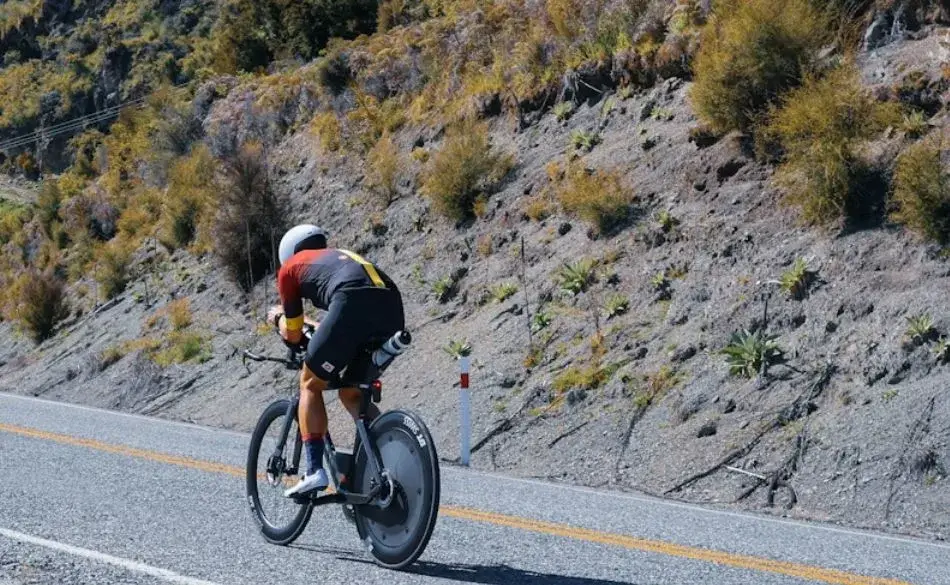
On the bike, strong glutes and hamstrings give you clean hip drive. That means steadier power and fewer hot spots in your lower back. Core control also locks your torso, so more force reaches the pedals. Over long rides, posture is everything. With simple resistance band workouts for triathletes, you can build that posture without heavy weights. Think about the last climb you rode. Did your form wobble at the top? For a deeper dive into building back and posture strength, check out our guide on Dumbbell Back Exercises for Runners, Cyclists & Triathletes.
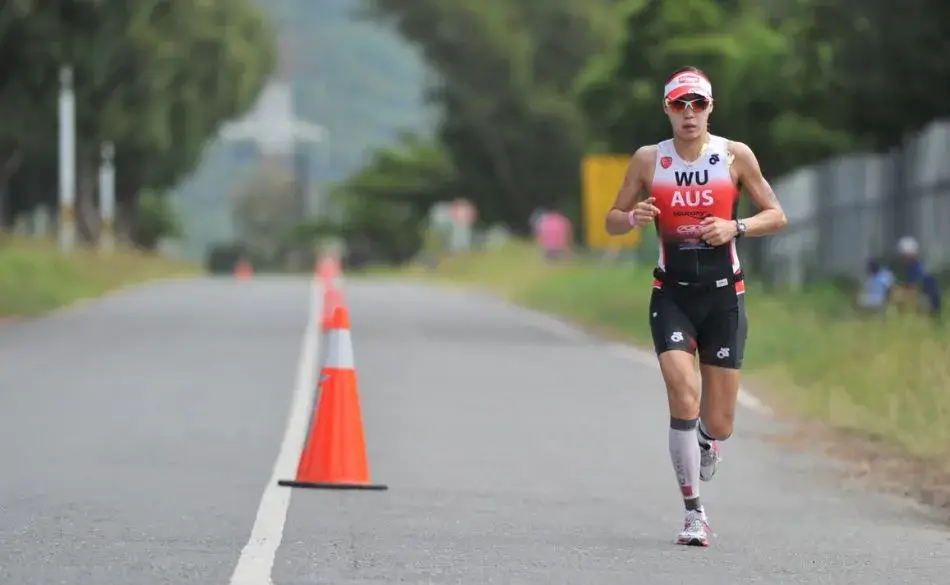
Running is where good strength pays off the most. Stable hips guide your knees and feet. Your stride stays straight when you’re tired. That’s how you protect your shins, calves, and Achilles. You don’t need fancy moves to get there. A simple triathlon strength program at home with split squats, hip hinges, and planks builds that control fast.
There’s another quiet win: rhythm. Strength work improves how muscles fire in order. That rhythm saves energy with each stroke, pedal, and step. You’ll notice smoother pacing and easier breathing at the same speed. It feels like the engine runs quieter.
Finally, strength helps with injury prevention for triathletes. Strong tissue handles load better. Your tendons feel more springy. Your joints track well. That means you can keep stacking weeks without the usual aches.
Ask yourself one more question. Where do you break down first, swim shoulders, bike back, or run hips? Start there. Then build out. That’s how home strength training for triathletes becomes race-day speed, not just another workout.
If your consistent strength work has you aiming for your first full event, our Beginner Ironman Training Plan bridges the gap between home fitness and race-day performance. Designed by a professional Ironman triathlon coach, this plan helps you build endurance, maintain strength, and arrive at the start line confident and ready.
- ✔ 24-week program combining swim, bike, run, and strength sessions
- ✔ Progressive workouts that balance endurance, recovery, and power
- ✔ Nutrition and pacing strategies tailored for first-time Ironman athletes
Take the strength you’ve built at home and apply it to a complete triathlon plan with expert coaching from SportCoaching.com.au.
View the Beginner Ironman Plan

Minimal Home Setup That Delivers Real Results
You don’t need a full gym. You need a simple setup you’ll use every week. That’s the power of strength training for triathletes at home. Keep it light, durable, and easy to grab. If your gear lives in a box under the bed, you’ll train more often. That’s what drives progress.
Start with resistance bands. They’re portable and smooth on your joints. Bands let you push and pull in many angles. That mimics real triathlon movement. Add a light and a medium band to cover most sessions. You’ll use them for rows, presses, and hip work.
A pair of adjustable dumbbells is the next step. They save space and scale with you. Think slow split squats, hip hinges, and presses. This is minimal-equipment strength training that still builds power and control.
A sturdy step or low box helps, too. Use it for step-ups and single-leg balance. It also supports calf work and easy mobility drills. A yoga mat keeps you stable and protects your floor. That means fewer excuses and smoother sessions.
Here’s a grab-and-go kit you can set by your bike trainer:
- Two loop bands and one long resistance band
- Adjustable dumbbells (or two fixed pairs)
- Stable step or box at knee height
- Yoga mat and small towel
- Timer app or watch for sets and rest
Now tie the setup to a plan. Keep sessions short and focused. Aim for strength training twice a week in your triathlon schedule. Pick four to six moves and repeat them for four weeks. That’s your triathlon strength program at home. Small changes each week, like slower tempos or an extra set, keep you improving.
Ask yourself one question. Will this setup stay out and ready? If the answer is yes, you’ll get it done. If not, simplify. The best home strength training for triathletes is the plan you can start in 60 seconds. Keep it close. Keep it simple. Then show up, again and again.
For more ideas to expand your home workouts without extra equipment, check out our guide on 20 Effective At-Home Exercises to Get Fit Without a Gym. For ideas on strengthening your lower legs, check out our guide on Toe Raises: How to, Benefits & Variations.


Common Mistakes to Avoid with At-Home Strength
Here’s the thing about strength training. It works when your habits are simple and your form is sharp. Most problems come from rushing, guessing, or doing too much on tired legs. You don’t need perfect sessions. You need repeatable ones.
The first mistake is chasing novelty over mastery. New exercises feel exciting, but progress comes from repeating the right basics. Stick with split squats, hip hinges, planks, rows, and presses. Own the tempo. Breathe through each rep. Add small progress each week, not big jumps.
The second mistake is loading before you’ve earned it. If your hips shift, your ribs flare, or your knees cave in, the weight is too heavy. Drop the load and keep range clean. Quality reps build the kind of strength that shows up late in a race.
Third, don’t stack hard strength on top of hard intervals. That’s how form breaks and niggles grow. Place your home strength training after easy aerobic work or on a light day. Keep the session short and precise. You’ll finish fresher and recover faster.
Another trap is skipping the upper back and core. When your lats and mid-back are weak, your swim suffers and your bike posture collapses. When your trunk is unstable, your run wobbles under fatigue. A few focused sets here protect every discipline.
Finally, avoid “max-out” tests. You’re an endurance athlete, not a powerlifter. Aim for controlled sets that stop one or two reps before failure. You’ll get stronger without the soreness that steals tomorrow’s training.
Ask yourself: can I repeat this session next week and do it a little better? If the answer is yes, you’re on track. Keep the room clear, the gear simple, and the plan steady. That’s how a triathlon strength program at home turns into faster swims, steadier watts, and smoother miles.

Progression and Recovery: How to Keep Improving at Home
Progress beats perfection. That’s the mindset that makes strength training for triathletes at home work week after week. You don’t need giant jumps in load. You need small, steady steps you can repeat when life gets busy. Think one change at a time. Add a set. Slow the tempo. Hold the plank longer. That’s how strength sticks.
Use simple progress markers. Pick three baseline moves, like split squats, hip hinges, and push-ups. Note your best clean reps and form cues. Then improve one variable each week. If form slips, keep the load the same and tighten your control. Your goal isn’t max effort. Your goal is clean effort that carries into swim, bike, and run.
Plan micro-cycles. Three weeks to build. One week to deload. In build weeks, increase total work by 5–10 percent. That could be one more set or 10–15 more seconds per hold. In deload weeks, cut volume in half and focus on range, breath, and mobility. This keeps your triathlon strength program moving forward without piling on fatigue.
Place mobility where it matters. Hips, thoracic spine, and ankles are high value. Five minutes before each session is enough. Try a half-kneeling hip flexor stretch, a child’s pose with reach, and ankle rocks by a wall. Better mobility means cleaner positions, fewer compensations, and less soreness the next day.
Recover on purpose. Sleep is your best tool. Aim for a steady bedtime and a cool, dark room. Light protein after training helps muscle repair. Easy walks or spins the next day boost blood flow without stress. This is injury prevention for triathletes in practice, not theory.
Take the next step in your journey with our Triathlon Coaching Programs . Each plan integrates customized strength sessions with swim, bike, and run training, helping you stay consistent, injury-free, and ready to perform when it counts.
- ✔ Personalized triathlon training built around your goals and schedule
- ✔ Expert feedback on technique, recovery, and race-day strategy
- ✔ Structured plans that balance endurance, strength, and mobility
Work with SportCoaching.com.au to turn consistent at-home training into lasting triathlon success.
Explore Triathlon Coaching Plans
Conclusion - Bringing It All Together
Strength doesn’t come from heavy weights. It comes from showing up. The beauty of strength training for triathletes at home is how sustainable it is. You control the schedule, the setup, and the pace. That consistency builds more than muscle, it builds durability and confidence. Every short session, every careful rep, adds to the engine you take to the start line.
When your body feels stable and strong, everything else improves. You swim with better rhythm, bike with smoother power, and run with more control. You start trusting your form when it matters most. That’s the quiet payoff of home strength training for triathletes. Steady progress that lasts beyond race day.
Don’t overthink it. Keep your plan simple. Two sessions a week, focus on quality, and track how you feel.