What Makes 30 Minutes Enough for Progress?
30 minutes is enough to get fitter. You just have to use it wisely.
When you structure a session correctly, 30 minute indoor trainer workouts can trigger the same aerobic and muscular adaptations as longer rides. The difference is focus. Instead of cruising for two hours, you target specific zones (threshold, VO2 max, or tempo) and stay there long enough to create stress your body adapts to.
In a well-designed indoor cycling training session, you might:
- Hold efforts just below FTP to build endurance
- Hit short bursts above threshold to improve max output
- Spin easy to flush the legs and promote recovery
A 2021 study in the Journal of Sports Science & Medicine showed that cyclists doing 3–4 short, intense workouts weekly saw gains in VO2 max and power output within two months.
I coach a rider with a full-time job and two kids. He trains just three times a week. Never more than 30 minutes. His FTP training improved by 15 watts in 6 weeks. No tricks. Just consistency and structure.
A quick FTP test helps you train in the right zones. Learn realistic benchmarks by age in our Average FTP by Age guide.
This approach works because you’re training systems, not just spinning your legs. You’re improving oxygen delivery, muscle recruitment, and lactate tolerance. All without needing to carve out hours.
If you stay consistent, your progress stacks up. One focused session won’t change much. But 3 or 4 per week over time? That’s where performance comes from.


Which 30-Minute Workouts Should You Actually Do?
You don’t need dozens of routines. Just a few well-structured 30 minute indoor trainer workouts can cover endurance, speed, and recovery.
These are the five core sessions I use most often when coaching cyclists with limited time:
1. Sweet Spot Builder
This session builds endurance and raises your functional threshold power (FTP).
- 5 min warm-up (Zone 2)
- 3 × 7 min at 88–94% FTP
- 90 sec recovery between intervals
- 3 min cool-down
It’s tough, but manageable. One rider I coach hit a 20-watt FTP gain doing this twice weekly.
2. Classic HIIT
For improving your top-end power and anaerobic capacity.
- 10 × 1 min at 120–130% FTP
- 1 min recovery
- 5 min warm-up / cool-down
Use this if you’re prepping for short, hard efforts like breakaways or hill sprints.
3. Lactate Tolerance
Helps you push through that heavy-leg feeling on punchy climbs.
- 4 × 90 sec at 110% FTP
- 2 min recovery
- Finish with 5 min at sweet spot
This one stings, but it teaches your legs how to recover faster between efforts.
4. Cadence Drills + Spin-Ups
Improves pedal efficiency and smoothness.
- 5 min warm-up
- 3 × 1 min spin-ups to 120+ rpm
- 3 × 5 min at 95–100 rpm
- 1 min easy between, 3 min cool-down
Perfect for improving your pedaling form without adding fatigue.
5. Recovery Ride
Light spinning in Zone 1–2 for 25–30 minutes. Keep your cadence steady and your breathing easy. You’re not chasing watts, just clearing fatigue.
Each of these bike trainer interval workouts serves a purpose. The trick is using the right one at the right time, depending on how your body feels and what your goals are. Two hard days a week, one technique day, one easy day. That’s a powerful mix.


How Should You Structure a Week of Training?
Even with just 30 minutes a day, you can train like a pro. That is, if your week is well planned.
Most riders I coach follow a simple 4-day split. It’s enough to drive progress without causing burnout. You get hard efforts, skill work, and recovery. Each with a purpose.
These 30-minute sessions fit into most schedules, but if you’re looking for something more progressive, check out our full Cycling Training Plans to level up your structure and goals.
Here’s a proven indoor cycling plan that works for busy athletes:
Sample Weekly Schedule (All 30 Minutes)
Swipe to view full table
| Day | Workout | Focus |
|---|---|---|
| Monday | Recovery Ride | Flush out fatigue |
| Tuesday | Sweet Spot Builder | Improve endurance & FTP |
| Wednesday | OFF or light stretching | Recovery |
| Thursday | Classic HIIT | Boost speed and power |
| Friday | Cadence Drills + Spin-Ups | Pedal efficiency |
| Saturday | OFF or easy outdoor ride | Flexibility |
| Sunday | Lactate Tolerance Session | Strength under fatigue |
This isn’t just theory. I used this format with an athlete prepping for a local time trial series. She only had 3–4 days a week, never more than 30 minutes per session. After 8 weeks, her average race speed jumped by 1.8 km/h and her training volume was still under 3 hours per week.
That’s the power of structured training.
Mixing intensity, technique, and recovery keeps your body adapting. Back-to-back hard days? Not necessary. Two key workouts per week are enough for most time-crunched cyclists. The rest builds support around them.
If you’re feeling fresh, add an extra Zwift workout on the weekend or extend your warm-up slightly. If you’re dragging, swap a harder session for recovery. Flexibility matters, but so does intention.
The best plan is the one you can stick to. And a consistent 30 minutes a day beats inconsistent 90-minute sessions every time.
Want a long-term progression beyond these short sessions? Check out our Cycling Training Program for structured plans that build endurance and strength.
Do Smart Trainer Workouts Really Make a Difference?
If you’re using a smart trainer, you’ve got a big advantage and here’s why.
Smart trainer workouts offer precision. You’re not guessing effort levels or spinning blindly. You get exact power targets, real-time feedback, and automatic resistance changes that match your session goals. That means every minute you ride is spent in the right zone.
When I onboard new athletes, I can quickly tailor sessions based on their actual data. For example, one rider I coach had never used power before. Once we switched to smart training, we identified his true threshold and adjusted his intervals. He saw a 30-watt FTP gain in 12 weeks, without adding more ride time.
Smart trainers also open the door to apps like Zwift workouts, TrainerRoad, and Rouvy. These platforms turn your training room into a virtual race, group ride, or focused interval lab. And let’s be honest, chasing a digital avatar up a mountain is way more motivating than watching your wall.
But even if you don’t have a smart trainer, you can still benefit from structured indoor cycling training. Use RPE (rate of perceived exertion) or heart rate. I coach a rider who uses nothing but feel and he’s improved just by dialing in his efforts and being consistent.
Still, smart tech makes it easier to train well. Here’s what it adds:
- Power-based intervals without constant shifting
- Erg mode for focused sessions without distractions
- Progress tracking over time
- Automatic workout syncing
Think of it like GPS versus a paper map. Both get you there, but one gives turn-by-turn clarity.
In the end, it’s not the tech that makes you faster, it’s how you use it. But if you’ve got the tools, don’t let them collect dust. Let them guide your next 30 minute indoor trainer workout with purpose.
Prefer something outside Zwift? Our Bike Erg Workouts article shows structured sessions to build power and speed indoors.
How Do You Stay Motivated When Training Indoors?
Let’s be honest, riding your bike in the same room, staring at the same wall, can feel like a grind. Even with the best equipment, motivation sometimes dips. So how do you stay on track?
The answer isn’t willpower, it’s strategy.
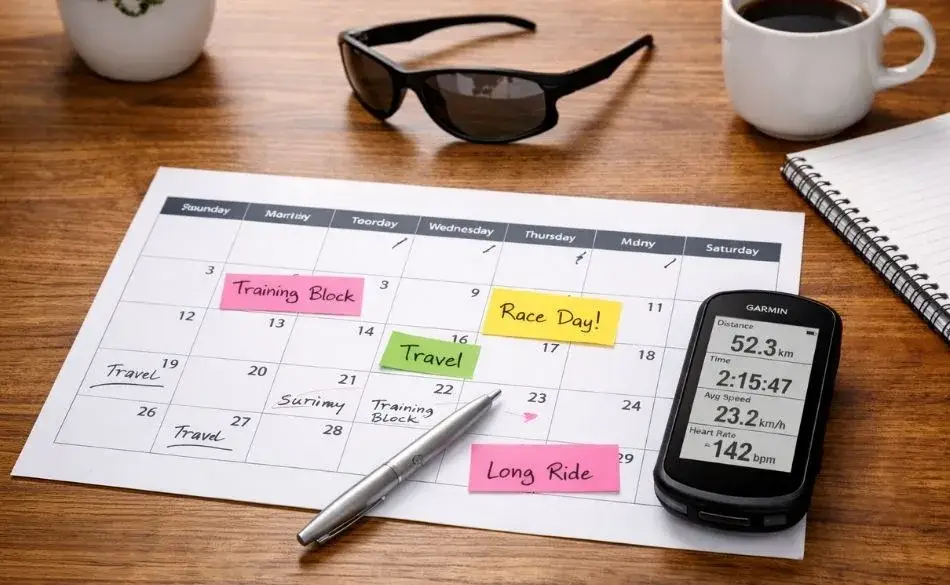
First, connect your workouts to a clear goal. That could be increasing your FTP training by 10 watts, completing a virtual event, or just sticking to your weekly plan. One of the athletes I coach keeps a sticky note on the wall that reminds him of he next event. It reminds him why he’s training, even when it’s tough.
Routine helps too. Set a consistent training time. Maybe it’s 6 AM before work, or during your lunch break. When it becomes habit, you don’t rely on motivation, you just show up.
Here are some strategies I give athletes to stay engaged with indoor cycling training:
- Use music that builds energy across intervals
- Match your effort with a motivating video or race replay
- Break sessions into segments (e.g., “just the first two intervals”)
- Use a towel to cover your screen and reveal the timer only halfway through
Smart trainer workouts and apps like Zwift workouts can help a lot. But even if you’re riding with basic gear, you can make it feel purposeful. Try writing down your average cadence or RPE after each ride. Tracking progress (even informally) builds confidence.
I had a cyclist who trained in a cold garage every night after putting three kids to bed. No fancy gear. Just commitment. He made it to his first century ride last year, purely on short trainer sessions.
Here’s the thing, motivation comes and goes. But discipline builds momentum. And when you’ve only got 30 minutes, knowing why you’re training makes every pedal stroke count.
Need a Challenge? Try These Bonus 30-Minute Workouts
Once you’ve got a rhythm going with your core sessions, it’s helpful to throw in something new every few weeks. Whether you’re chasing a performance bump or just keeping boredom at bay, rotating in a few fresh efforts keeps your legs and brain sharp.
These 30 minute indoor trainer workouts are ones I use with experienced athletes who want something a little different—but still time-efficient.
1. Microburst Intervals
- 5 min warm-up
- 10 × 30 sec at 135% FTP / 30 sec recovery
- 5 min Zone 2 spin
- Repeat microbursts again
- 2 min cool-down
Great for crit racers or triathletes needing surge control. One athlete I coach uses this in race build-up blocks and swears by it.
2. Over-Unders
- 5 min warm-up
- 3 × 6 min alternating:
- 1 min at 95% FTP
- 1 min at 105% FTP
- 2 min easy between sets
- 3 min cool-down
Expect a deep burn, but also noticeable improvements in how steady you feel during longer tempo rides.
3. Climb Simulation
- 5 min warm-up
- 15 min continuous seated climb at 85–90% FTP, low cadence (60–70 rpm)
- 5 min spin
- Optional: stand for last minute of each 5 min block to mimic gradient changes
Use resistance mode on your smart trainer workouts for better feel, or manually increase tension on basic trainers.
4. Progressive Tempo Build
- 5 min at 80% FTP
- 5 min at 85%
- 5 min at 90%
- 5 min at 95%
- 5 min all-out effort or final cool-down depending on energy
Each block gets harder, but the reward is mental and physical toughness.
These workouts aren’t daily drivers. I rotate them in every 2–3 weeks to help athletes break through plateaus or maintain interest. They work especially well when used in place of your usual Tuesday or Sunday session.
Conclusion: Small Time, Big Gains
If you’ve ever thought 30 minutes isn’t enough, think again. When you train with purpose, those short sessions stack up to serious results.
I’ve seen it time and time again. Athletes with full-time jobs, kids, and barely a window in their day still improve their strength, speed, and endurance. All from inside their garage or spare room. It’s not about how much time you have. It’s what you do with it.
With structured 30 minute indoor trainer workouts, you can:
- Raise your FTP
- Improve your cadence and pedal efficiency
- Build mental grit for longer efforts
- Stay consistent all year—even during bad weather or busy weeks
These sessions aren’t a compromise. They’re a powerful strategy. Whether you’re using basic rollers or dialing in with smart trainer workouts and Zwift workouts, every ride becomes a stepping stone toward your bigger goals.
And when life gets hectic (and it will) knowing that 30 minutes is enough keeps you in the game. No guilt about missed long rides. No waiting for a “perfect” training day. You just show up, ride with intent, and rack up progress over time.
A cyclist I coach once told me, “It’s just a half hour, but it’s the only half hour I truly own.” That mindset changed everything for him and it can for you too.
So here’s your next step: pick one of the workouts from this guide. Set your bike up. Pick your playlist or load your session. And just start pedaling.