





Want help turning consistency into progress? Coaching keeps your training simple, structured, and sustainable.
Start Coaching →
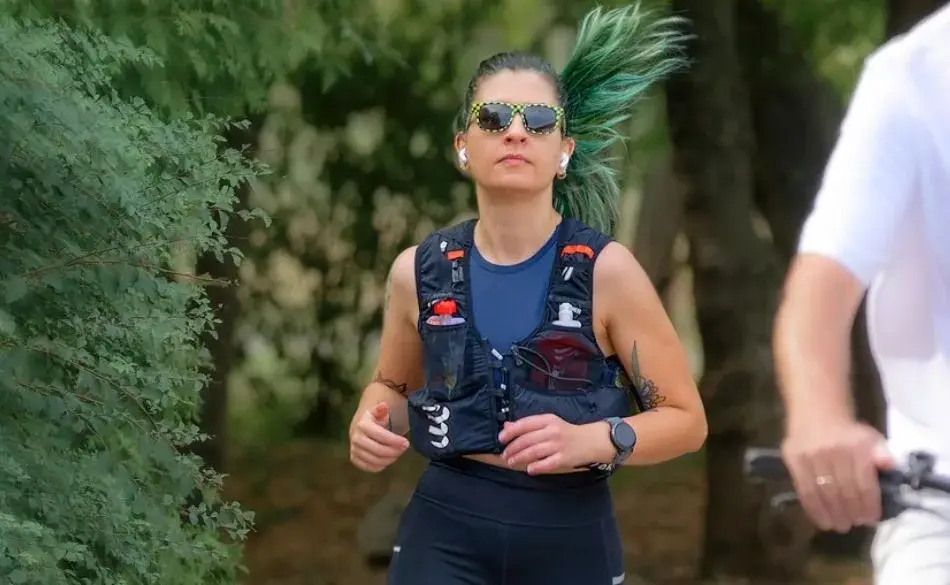
Runner jogging outdoors wearing earbuds to show how music can make you run faster

Last updated:

Can Music Make You Run Faster? The Research Explained

Music is one of the most widely used and least systematically applied running tools. Most runners listen to it, but few use it deliberately — choosing playlists by feel, playing them at random volumes, and not thinking much about the relationship between what they're hearing and how they're performing. The research on this is surprisingly rich and specific. Sports psychologist Costas Karageorghis at Brunel University London has published more than 100 studies on music and athletic performance across 25 years, and the findings go well beyond "upbeat music is motivating." This guide covers what the research actually shows, the BPM numbers that matter, how to match music to your cadence, and when music stops working — because there is a point where it does.

Chat with a SportCoaching coach

Not sure where to start with training?

Tell us your goal and schedule, and we’ll give you clear direction.

No obligation. Quick, practical advice.

Article Categories:

Explore our running training resources for more helpful articles and resources.

Quick Answer

Yes — music can make you run faster and farther, but with important caveats. Research shows music reduces perceived effort by up to 10%, improves running efficiency by up to 7% when synchronised to beat, and delays time to exhaustion by 10–15%. The effect is strongest at easy to moderate intensities. Above approximately 75% of VO2 max, the benefit weakens because fatigue cues override the music signal. For easy runs and long runs, music’s performance effect is at its most reliable. For hard intervals and race-pace efforts, the motivational boost persists but the physiological RPE reduction largely disappears.

What the Research Actually Shows

The scientific case for music as a running performance tool is stronger and more specific than most people realise. Karageorghis’s 25-year body of research, summarised across a 2020 meta-analysis drawing on data from over 3,500 participants, describes music as producing a reliable “ergogenic effect” — meaning it genuinely helps you work harder for the same perceived cost. The key findings:

Reduced perceived exertion (RPE). A review by Karageorghis and Priest found that music reduces ratings of perceived exertion by approximately 10% during physical tasks. For a runner, this is meaningful. On a two-hour long run where fatigue compounds progressively, a 10% reduction in how hard the effort feels can be the difference between holding target pace in the final kilometres and backing off. The mechanism is attentional narrowing — music diverts the brain’s processing capacity from fatigue signals, making the same physiological effort feel less strenuous.

Improved running efficiency. When runners synchronise their stride to the music’s beat (auditory-motor synchronisation), research shows oxygen consumption can be reduced by up to 7% for the same power output. Karageorghis’s team demonstrated this in cyclists matching cadence to music tempo vs. listening to unsynchronised music — the synchronised group required significantly less oxygen. For runners, consistent cadence produced by beat-matching reduces the energy wasted in micro-variations of stride that occur during unsynchronised running.

Mood and motivation enhancement. Listening to preferred music enhances mood by 10–20% according to Karageorghis’s research. Music triggers dopamine release — the neurotransmitter associated with reward and pleasure — and stimulates the ascending reticular activating system, the brain region responsible for wakefulness and the desire to move. This is the “pre-run pump-up” effect that most runners experience intuitively, and it translates into higher initial intensity and better sustained motivation during the effort.

Delayed time to exhaustion. A study published in the Journal of Human Kinetics found that listening to music during a running time trial led to a 10% increase in total distance covered and a 14% increase in speed. Blood lactate concentration was also 8% lower in those who listened to music — suggesting music may help with lactate clearance, though this finding needs more research to confirm. The same study found that runners who listened to music only during their warm-up also saw an 8% improvement in distance — evidence that the priming effect of music before a session carries into the effort itself.

The Ceiling Effect: When Music Stops Helping

The most practically important finding in the research is also the least commonly cited. Music’s effect on perceived exertion has a clear intensity limit. Karageorghis’s research shows that at running intensities above approximately 75% of aerobic capacity (roughly the upper end of Zone 3 / lower threshold effort), music becomes “ergonomically ineffectual” — it stops reducing perceived exertion because the brain is flooded with fatigue-related physiological cues that override the music signal.

In plain terms: when you’re running hard enough that your legs are burning and your breathing is laboured, you stop being distracted by the music. The fatigue is too loud to be drowned out. This is why elite athletes in serious competition don’t rely on music to manage race-day effort — at race intensity, the physiological demands dominate attention regardless of what’s playing.

For recreational runners, this means music works best where it’s most often used: easy runs, long runs, and moderate-intensity training. For threshold intervals, VO2 max sessions, and race-pace efforts, the motivational and mood benefits persist (you might still find the session more enjoyable with music), but the specific RPE-reduction effect that produces measurable performance improvement is largely absent at these intensities.

Understanding this limitation helps you deploy music more strategically. Our guide on running effort and how to gauge it covers how perceived effort works generally — music’s effect sits directly within that framework.

BPM: The Numbers That Matter

BPM (beats per minute) is the tempo of a song. It matters for running performance because the brain naturally synchronises rhythmic physical movement to external rhythmic auditory cues — a phenomenon called auditory-motor entrainment. When your footstrikes align with the beat, cadence becomes more consistent, which improves running economy. When the music tempo is significantly mismatched to your running pace, the effect is absent.

👉 Swipe to view full table
Run typeRecommended BPM (background)Recommended BPM (synchronised)Notes
Easy / recovery run120–130 BPMMatch your natural cadence (~150–165 for most beginners)Keeps the run enjoyable, prevents pushing too hard
Long run120–135 BPMMatch natural cadence, build BPM slightly in final thirdRising BPM in the back half helps resist late-run fatigue
Tempo / moderate130–140 BPMMatch cadence (~165–175 for most runners)Stronger beats support sustained effort
Intervals / hard effort135–145 BPMMatch or slightly exceed cadenceRPE effect limited at high intensity; motivational benefit persists
Warm-up100–120 BPM, buildingNot requiredProgressive tempo primes nervous system for the session
Race (where permitted)130–145 BPMMatch race cadenceMost competitive races prohibit headphones; check event rules

The ceiling effect on BPM is real: Karageorghis’s research shows that music faster than approximately 145 BPM doesn’t produce proportionally more performance benefit. There is no meaningful ergogenic advantage to running to 180 BPM music vs. 145 BPM music for the background-music effect. The ceiling applies specifically to the motivational/mood dimension. For cadence synchronisation, higher BPM (150–180) remains relevant if your running cadence is genuinely in that range.

Music and Cadence: The Synchronisation Effect

Cadence — the number of steps per minute — is one of the most trainable and most impactful variables in running efficiency. Consistent cadence means consistent energy expenditure per stride; variable cadence means energy waste. Music with a tempo matched to your running cadence produces more consistent footstrike timing, which translates directly to better running economy.

A 2022 study in the European Journal of Sport Science followed everyday runners through a 4-week training block using music set 7.5–10% above their natural cadence. Without any instruction to consciously change how they ran, the runners’ step rate increased. The rhythmic cue did the retraining work over time, without the runners having to think about it. This is the basis for using music as a cadence training tool — not just for motivation, but as a practical method for gradually shifting toward a more efficient stride rate.

To use this approach: measure your natural cadence (count right foot strikes for 60 seconds and double it), then choose music with a BPM matching or 5–10% exceeding that number. Most recreational runners have a cadence of 150–170 steps per minute — music in the range of 155–180 BPM provides the synchronisation stimulus. Increase gradually — no more than 5% above your natural cadence at a time — to avoid the fatigue and discomfort of a sudden mechanical change. Our guide on ideal running cadence by height covers the specific cadence targets and how they vary by runner physiology, and our cadence improvement guide covers how to systematically increase step rate over a training block.

Important caveat: one study (PubMed, 2023) found that simply playing faster BPM music did not automatically increase cadence in all runners tested. The synchronisation effect works best when runners are running at a pace where conscious rhythm-following is possible — at near-maximal effort, the brain doesn’t have the processing bandwidth to synchronise gait to music. This reinforces the intensity-ceiling finding: use music for synchronisation at easy-to-moderate effort, not during hard intervals.

How to Build a Running Playlist That Actually Performs

Most runners choose playlist songs based on personal taste and general “energy” — both valid criteria. But building a playlist that uses the research findings requires a few additional considerations:

Match BPM to the session, not just your mood. An easy recovery run does not benefit from high-BPM tracks — faster music may actually push you to run harder than the session demands, which is counterproductive on days that are supposed to be easy. Our guide on zone 2 running pace covers why keeping easy days genuinely easy matters, and music is one of the factors that can accidentally push effort above the intended zone. Even on short runs like daily 3km runs, choosing lower-BPM tracks keeps the effort appropriately relaxed.

Build progression into long runs. Start with 120–130 BPM tracks and gradually introduce faster songs across the session. By the time you’re in the final third of a long run — when mental fatigue is highest — the higher-BPM tracks provide the strongest motivational stimulus at exactly the moment you need it most.

Use music before hard sessions too. The 2022 warm-up study finding is practically significant: listening to motivating music during the warm-up produces a performance priming effect that carries into the session even after the headphones come off. Building a specific pre-session warm-up playlist that builds from 100 BPM to 130+ BPM over 15–20 minutes is a low-effort, evidence-based pre-session strategy.

Lyrics matter for motivation, beat matters for synchronisation. Karageorghis’s research separates the motivational and neuromuscular channels of music’s effect. Lyrics with strong associative content (references to effort, endurance, resilience) enhance motivation independently of tempo. For cadence synchronisation, the beat is what matters, not the words. For easy runs where you just want to enjoy the experience, either works. For hard sessions where you’re using music primarily for motivation, lyrics-driven tracks are more powerful than instrumental.

How to find the BPM of any song. Spotify’s desktop app shows BPM in the song details panel. Apps including Cadence (by Fit Radio) and RockMyRun can auto-match your playlist to your step rate in real time. The free website Jog.fm organises songs by BPM and running pace. Most streaming services have workout playlists organised by BPM that can be used as starting points.

When Not to Run With Music

Music is not appropriate for every run. Cases where running without music is the better choice:

Roads with traffic. Earbuds at meaningful volume substantially reduce awareness of approaching vehicles, cyclists, and hazards. The performance benefit of music does not outweigh safety risk on busy roads. Bone conduction headphones (which sit outside the ear canal) are the most practical compromise for road running — they allow music while maintaining situational awareness.

Trail running in complex terrain. Technical trail running demands attentional focus on the ground in front of you. Music competes for the same cognitive resource, increasing the risk of missteps on roots, rocks, and uneven surfaces. Most trail runners remove headphones on technical descents and rocky sections for exactly this reason.

Key hard interval sessions where you need to monitor effort. At threshold and above, the attentional narrowing that makes music beneficial at easy intensity becomes a liability — you need to be accurately reading your body’s feedback during high-intensity work. Many coaches recommend running key interval sessions without music for this reason, reserving it for easy and long runs. Our guide on interval training for runners covers the sessions where self-monitoring is most critical. If you notice your hard sessions feel harder than they should, our guide on sudden running struggles covers the broader factors — music use is one small piece of effort management among many. Consistency in training frequency matters more than any single session tool; our running frequency science guide explains how session distribution affects adaptation.

Competitive races (check regulations). Most World Athletics-sanctioned and major road races prohibit headphones for competitive runners. Local community races and parkruns typically allow them for recreational participants. Always check the specific event rules before race day to avoid disqualification.

Music for Different Types of Runners

The research base for music and running performance comes primarily from studies on recreational and intermediate runners. The effect varies by experience and fitness level in ways worth understanding.

Beginners. Music’s performance benefit is most pronounced for newer runners. When running itself is the primary cognitive challenge — managing breathing, managing effort, getting through a session that is hard simply because fitness is being built — music provides the strongest distraction from discomfort. A beginner training twice a week will likely find music dramatically changes how manageable a 30-minute run feels. Our guide on running twice a week covers the minimum effective training for beginners building their base.

Experienced recreational runners. The RPE-reduction benefit persists but is somewhat smaller, as experienced runners have developed a higher tolerance for running discomfort through training adaptation. The cadence synchronisation effect and motivational benefits are fully intact. Music is still genuinely useful at easy and moderate intensities.

Older runners. Research on music and exercise in older adults consistently shows strong mood and motivation benefits, and the RPE reduction effect is well-documented in this population. For runners over 60, music can make training feel more enjoyable and sustainable — directly relevant to the long-term consistency that produces results. Our running over 60 guide covers the broader training considerations for older runners where enjoyment and consistency matter more than performance optimisation.

Trained athletes. At higher training levels and race-relevant intensities, the RPE-reduction effect is weakest. University of North Carolina research found that fast, upbeat music was potentially counterproductive for trained runners at high intensity — possibly because it disrupts the internal monitoring that experienced runners rely on for pacing. Elite and competitive runners often prefer no music or low-volume music during quality sessions precisely to maintain this internal feedback loop.

Summary: Using Music Strategically by Run Type

👉 Swipe to view full table
Session typeUse music?Primary benefitBPM target
Easy / recovery runsYes — optimal use caseRPE reduction, enjoyment, cadence consistency120–130 BPM
Long runsYes — particularly in the final thirdFatigue resistance, motivation when hardestBuild 120→140 BPM
Warm-upYes — strong priming effectPre-session nervous system activationBuild 100→130 BPM
Tempo/threshold runsOptionalMotivation; reduced RPE benefit at this intensity130–140 BPM
Hard intervals (VO2)Optional — motivational onlyMotivation; RPE effect minimal above 75% VO2 max135–145 BPM
Trail running (technical)No / low volume onlyDistraction from terrain hazards outweighs benefits
Road running (heavy traffic)Bone conduction or noSafety awareness critical
Competitive racesCheck race rulesMotivational benefit if permitted and moderate intensity130–145 BPM

More to Your Running Than Just the Playlist

Music is one performance tool among many. A structured training plan builds the aerobic base, speed, and consistency that produce lasting improvement — with or without headphones.

FAQ: Can Music Make You Run Faster?

Can music make you run faster?
Yes, at low to moderate intensities. Research shows music reduces perceived effort by up to 10%, improves running efficiency by up to 7% when synchronised to beat, and delays time to exhaustion by 10–15%. Above approximately 75% of aerobic capacity, the RPE-reduction effect weakens but motivational benefits persist.

What BPM is best for running?
Background music without synchronisation: 120–125 BPM for easy running, 130–140 BPM for moderate effort, 140–145 BPM for hard efforts. Synchronised running (matching stride to beat): choose music matching your natural cadence, typically 150–180 BPM for most recreational runners. Faster than 145 BPM produces diminishing additional benefit for the motivational effect.

How does music improve running performance?
Through four main mechanisms: attentional narrowing (reduces focus on fatigue signals), dopamine release (improves mood and motivation), auditory-motor synchronisation (makes cadence more consistent, improving running economy), and nervous system priming before the session. The combination produces measurable performance improvement documented across hundreds of studies.

Does music help during races?
Most competitive events prohibit headphones. Where permitted, music is most helpful in the first two-thirds of the race at moderate effort. In the final hard kilometres, physiological fatigue dominates and music’s RPE-reduction effect diminishes.

Is it safe to run with headphones?
Safe in controlled environments. On roads and shared paths, volume should allow awareness of traffic and other runners. Bone conduction headphones are the best compromise for road running, sitting outside the ear canal to allow ambient sound while still delivering music.

Find Your Next Running Race

Ready to put your training to the test? Here are some upcoming running events matched to this article.

Graeme - Head Coach and Founder of SportCoaching

Graeme

Head Coach & Founder, SportCoaching

Graeme is the founder of SportCoaching and has coached more than 750 athletes from 20 countries, from beginners to Olympians, in cycling, running, triathlon, mountain biking, boxing, and skiing. His coaching philosophy and methods form the foundation of SportCoaching's training programs and resources.

750+
Athletes
20+
Countries
7
Sports
Olympic
Level

Start Your Fitness Journey with SportCoaching

No matter your goals, SportCoaching offers tailored training plans to suit your needs. Whether you’re preparing for a race, tackling long distances, or simply improving your fitness, our expert coaches provide structured guidance to help you reach your full potential.

  • Custom Training Plans: Designed to match your fitness level and goals.
  • Expert Coaching: Work with experienced coaches who understand endurance training.
  • Performance Monitoring: Track progress and adjust your plan for maximum improvement.
  • Flexible Coaching Options: Online and in-person coaching for all levels of athletes.
Learn More →

Choose Your Next Event

Browse upcoming Australian running, cycling, and triathlon events in one place. Filter by sport, check dates quickly, and plan your training around something real on the calendar.

View Event Calendar