





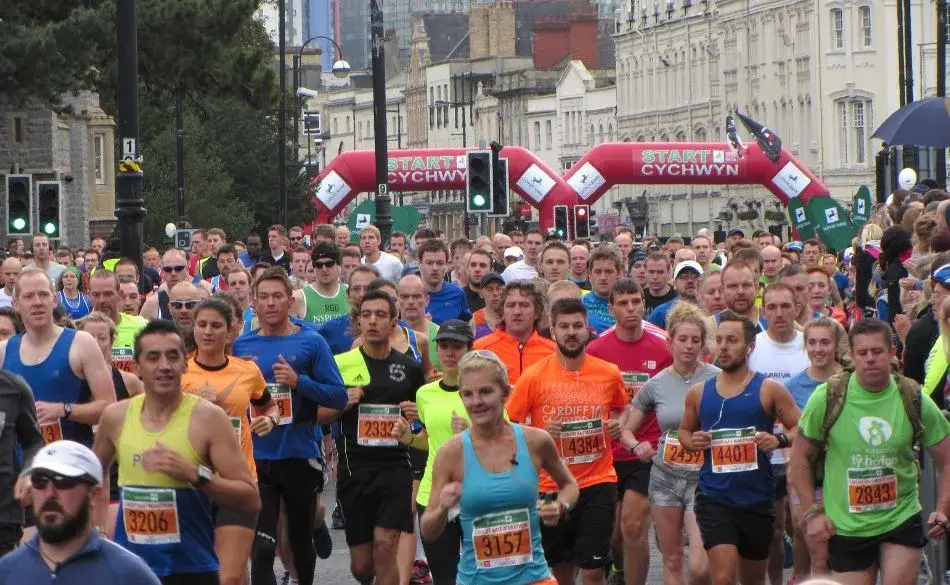









Find Your Next Running Race
Ready to put your training to the test? Here are some upcoming running events matched to this article.
 Coach Graeme

Last updated:
The most common training mistake in recreational running isn't insufficient effort — it's too much of it on the wrong days. Most runners who train consistently are running their easy sessions too hard. Not dramatically, not painfully, but persistently above the intensity that allows genuine recovery and aerobic adaptation. The consequence is familiar: fatigue that doesn't fully clear, easy runs that stop feeling easy, training blocks that produce effort without result. And because the pace feels manageable in the moment, the problem is hard to self-diagnose without data.
But data isn't the only way to measure effort. Your body generates reliable effort signals that don't require a GPS watch, a heart rate monitor, or a power meter. This guide covers those signals — the breathing cues, the body language, the post-run responses — and how to use them to train more effectively.
Not sure where to start with training?
Tell us your goal and schedule, and we’ll give you clear direction.
No obligation. Quick, practical advice.
Explore our running training content for more helpful articles and resources.
Running intensity doesn’t scale intuitively with pace. A small increase in pace — 15 or 20 seconds per kilometre — can represent a significant physiological shift. Heart rate rises disproportionately, lactate production increases, the aerobic system is stressed beyond the recovery zone. But in the moment, the effort feels like a modest step up. Nothing hurts. Breathing is controlled enough. The pace feels “productive.”
This is compounded by how most runners think about training. Running hard feels like training. Running easy feels like going for a jog. The cultural framing around running pushes toward effort — no pain, no gain, push yourself. But endurance physiology doesn’t work this way. The aerobic adaptations that make runners faster and more durable — increased mitochondrial density, improved fat oxidation, stronger cardiac output, better running economy — occur overwhelmingly in the easy, aerobic zone. Hard running produces different adaptations (lactate tolerance, neuromuscular power) that are essential but need to be balanced with — and built on top of — an aerobic base. When easy days are run too hard, neither adaptation happens optimally.
Research across elite endurance sport consistently finds that high-performing endurance athletes spend approximately 80% of their training volume at genuinely easy intensity and 20% at high intensity. Most recreational runners invert this ratio — most sessions sit in the moderate zone, which is too hard for aerobic base development and too easy for meaningful high-intensity adaptation. Our zone 2 running guide covers the specific physiological case for easy running in detail.
The talk test is the most widely validated watchless effort tool available. The principle is straightforward: as exercise intensity increases, breathing rate increases, and sustained speech becomes progressively harder. The connection between speech and effort is well-established in exercise physiology — it correlates closely with ventilatory threshold, which is the point where the body transitions from predominantly aerobic to increasingly anaerobic energy production.
How to perform the talk test while running:
Try to speak a full sentence — four to six words minimum — without needing to pause to breathe mid-sentence. If you’re running with someone, hold a conversation naturally. Running solo, recite something aloud: describe what you’re seeing, count to twenty, recite a few lines of something you know by heart. The test is simply whether speech flows naturally or requires interruption to breathe.
| What you can say while running | Effort level | Zone | Session type |
|---|---|---|---|
| Full conversation, multiple sentences, barely noticing breath | Very easy | Zone 1 | Recovery jog, warm-up |
| Full sentences comfortable, breathing deeper but controlled | Easy | Zone 2 | Easy runs, long runs |
| Can speak in sentences but aware of breathing between them | Moderate-easy | Zone 2–3 | Upper end of easy or marathon pace |
| Short phrases only, breath needed after 3–4 words | Tempo / threshold | Zone 3–4 | Tempo runs, longer intervals |
| One or two words before gasping | Hard | Zone 4–5 | Intervals, VO2 max work |
| Cannot speak at all | Maximal | Zone 5 | Short sprints only |
For easy and recovery runs, you should be firmly in the “full sentences comfortable” category throughout. If you slip into “short phrases only” during what’s meant to be an easy run, you’re running too hard. The correction is simple and immediate: slow down until the full-sentence speech returns. The pace that feels almost embarrassingly slow is usually close to the correct easy pace, especially for runners who have been chronically overrunning their easy days. Our guide on slow jogging vs fast walking addresses the common question of how slow is too slow — the honest answer is that slower than expected is almost always fine.
The Rate of Perceived Exertion (RPE) scale was developed by Swedish researcher Gunnar Borg in the 1960s. The original Borg scale ran from 6 to 20 (designed so the number multiplied by 10 roughly corresponded to heart rate), but the modern version most runners use is a simpler 0–10 scale. RPE is entirely internal — you’re rating how hard an effort feels, integrating all the physical signals your body is producing: breathing rate, muscle fatigue, heart rate sensation, temperature, and general exertion.
| RPE | How it feels | Breathing | Running context |
|---|---|---|---|
| 1–2 | Almost nothing — walk pace | Completely normal | Warm-up walk, cooldown |
| 3–4 | Easy, comfortable, could hold this for hours | Deeper than rest, nasal breathing possible | Easy runs, recovery runs, long runs |
| 5 | Moderate — noticeably working but sustainable | Breathing through mouth, controlled | Upper easy / marathon race pace for trained runners |
| 6–7 | Comfortably hard — focused effort required | Laboured, conversation difficult | Tempo runs, threshold sessions |
| 8–9 | Very hard — difficult to maintain | Heavy, only words possible | Intervals, VO2 max work |
| 10 | Maximum — all-out, unsustainable beyond seconds | Gasping | Short sprints only |
The critical zone for most recreational runners is the difference between RPE 4 and RPE 5–6. An RPE 4 easy run feels genuinely relaxed — you could maintain it for hours, you’re not monitoring your effort consciously, you finish feeling like you’ve done something useful but not depleted. An RPE 5–6 run feels like productive training — controlled but working, breathing deliberately, aware of your effort throughout. The problem: most running adaptations for easy days require RPE 3–4, not RPE 5–6. Consistently running easy days at RPE 5–6 produces the “moderate intensity trap” that plateaus performance and accumulates fatigue without delivering the aerobic base improvements that make hard sessions more effective. Our running frequency guide explains how this intensity distribution affects adaptation across a training week.
RPE is subjective and can be miscalibrated, particularly in two directions. New runners often rate efforts higher than they physiologically are because any running feels hard when the aerobic system is underdeveloped. Fit, competitive runners often underestimate RPE because they have high pain tolerance and can dissociate from discomfort. The talk test corrects for both biases — it’s more objective than pure feeling because it’s anchored to a measurable output (speech). Using both RPE and the talk test together produces the most reliable effort calibration.
The clearest in-run signal of effort is breathing mode. At easy pace, most runners can breathe through the nose or maintain a slow, deep mouth-breathing rhythm. When effort climbs above easy zone, breathing shifts: it becomes shallower, faster, and primarily mouth-driven. The transition isn’t binary — it’s a spectrum — but if you’re mouth-breathing hard from the first kilometre of what’s supposed to be an easy run, the pace is too high. Our guide on breathing techniques for runners covers the mechanics of this transition and how breathing pattern can guide effort management.
A useful self-check: can you briefly breathe through your nose for 20–30 seconds without feeling suffocated? If nasal-only breathing immediately feels desperate at your current pace, you’re above the aerobic easy zone. If it’s manageable but slightly odd-feeling, you’re probably in the right zone.
Easy pace should feel almost effortless in the legs — not like skating on flat ground, but like a comfortable, repeating pattern. If the quads are loading noticeably, calves are burning, or you feel driven to push off with deliberate force, the pace is beyond easy. Heavy legs from the first kilometre (when fresh) indicate the pace is too hard. Heavy legs later in a run can be normal fatigue but deserve attention if they appear consistently on what should be recovery days. Our guide on why running suddenly feels harder covers the distinction between normal fatigue and accumulated overtraining.
Running too hard produces visible body tension. Check your shoulders — are they creeping toward your ears? Jaw and face — are you grimacing? Hands — are they fisted rather than loose? All of these are signs that effort has climbed above comfortable aerobic pace. Easy running should look and feel relaxed. If you find yourself tensing to maintain pace, the pace needs to come down until relaxation returns. Our running form guide covers how tension in the upper body compromises running economy and what posture looks like at genuinely easy effort.
At easy pace, stride length and cadence settle into a natural, repeating rhythm. Running too hard often manifests as an overextended stride — reaching forward with the foot rather than landing under the hips — or a driving, effortful push-off. Easy running should feel like you’re going along for the ride, not powering through it. If you’re pushing deliberately on every stride, you’re working too hard. Our cadence guide covers the mechanical relationship between stride rate and effort level.
The body’s response after a run is one of the most reliable indicators of whether the effort was calibrated correctly. Easy runs should produce specific post-run feelings that are distinct from harder sessions:
Within 10–15 minutes of finishing: breathing should have returned to near-normal. If you’re still breathing heavily or feel like you need to sit down 15 minutes after finishing an “easy” run, the effort was too high.
An hour after finishing: you should feel fine — perhaps slightly pleasantly tired, but functional. If you feel wiped out, depleted, or like you need a nap after every run, easy runs are not easy.
The next morning: legs should feel normal or perhaps slightly heavier than usual. If the morning after an easy run reliably produces stiff, sore, or heavy legs that take a kilometre or two to shake out, the previous session was too hard for recovery purposes.
Performance on subsequent sessions: this is the most important signal. If hard sessions feel genuinely hard — producing the effort you expect — but also feel achievable, recovery is working. If hard sessions consistently feel harder than they should given the prescribed effort, or if easy sessions feel as hard as they used to feel for harder sessions, accumulated fatigue from overrunning easy days has likely built up.
One of the most consistently useful pieces of coaching advice for runners who habitually run easy days too hard: run at the pace that feels almost embarrassingly slow. Not genuinely uncomfortable slow — not a shuffle — but the pace where you’d be self-conscious if a faster runner saw you. For many runners, this feels like a significant deceleration from their normal easy pace. It should. That uncomfortable slowness is the calibration feeling for true easy effort.
The pace that confirms easy effort has been reached isn’t a number. It’s the experience of breathing that requires no thought, a stride that feels automatic rather than driven, and a level of exertion you feel certain you could maintain for another two hours. If any of those feel uncertain at your current pace, slow down further until they’re all true simultaneously.
This recalibration often feels like regression — it’s very common for runners to feel like they’re going backwards when they first start running genuinely easy. In practice, the opposite happens. Within 4–8 weeks of consistent correctly-paced easy running, hard session quality typically improves significantly because fatigue has reduced and the aerobic base is developing as intended. Many runners see their 5km and 10km times improve after slowing down their easy runs — the mechanism is that genuine zone 2 work was previously unavailable because easy days were too hard. See our sub-24 5km guide for how easy-day calibration fits into a performance training block.
Many pace-conscious runners find that wearing a GPS watch on easy days makes running too hard worse, not better. Seeing a “slow” pace on the watch produces an unconscious urge to push. The watch becomes a floor on effort rather than a ceiling. For these runners, deliberately running without a watch — or covering the pace display — on easy days removes the competitive trigger and allows genuine effort-based calibration.
This is not the same as abandoning data. Hard sessions still benefit from pace and heart rate data. Race prep benefits from split tracking. But easy runs exist to build aerobic base and facilitate recovery, and neither goal is served by pace optimisation. They’re served by sustained, low-intensity effort — which is better gauged by how your body feels than by what a number says.
Structured programmes that use RPE rather than pace for easy sessions often produce faster long-term improvement precisely because they force runners to calibrate effort rather than follow data that may push them too hard on bad days. Our running frequency guide explains how intensity distribution across the week determines training outcomes, regardless of whether you use a watch. And if you’re wondering whether your current watch data is reflecting your actual fitness, our guide on how Garmin calculates VO2 max covers how devices interpret effort data and where they can mislead.
Once per week, ask yourself these four questions. If most answers are “yes,” effort distribution is likely calibrated correctly. If most answers are “no,” easy runs are probably too hard.
1. Did my easy runs this week feel like I could have continued for another 30 minutes without meaningful extra effort? 2. Did I wake up the morning after each easy run without significant leg soreness or heaviness? 3. Did my hard session(s) feel hard in the way that felt appropriately challenging — not exhausting beyond what was expected? 4. Do I finish the week feeling like I’ve trained well but not beaten up?
If the answer to all four is yes consistently, training is working. If not, the diagnostic question is usually which runs were too hard — and the answer is almost always the ones that were supposed to be easy. Our guide on whether running twice a week is enough touches on the related question of training minimum and maximum volume — frequency and intensity interact in how the weekly load feels.
Want a Training Plan Where Easy Days Are Actually Easy?
A structured running programme prescribes effort zones for each session type — so you know exactly how hard each run is supposed to feel, not just what pace to target.
How do I know if I’m running too hard?
The most reliable check is the talk test: you should be able to speak comfortably in full sentences. Other signals include needing to breathe through your mouth from the start of an easy run, visible tension in your shoulders and jaw, legs feeling heavy within the first few kilometres, and needing more than 15 minutes to fully recover your breathing after finishing.
What is the talk test for running?
Try to speak a full sentence without pausing to breathe mid-sentence. Running with a companion, hold a natural conversation. Running solo, recite something aloud. If you can produce full sentences comfortably, you’re at easy or recovery pace. Short phrases only = tempo. Single words = threshold or above.
What is RPE in running?
Rate of Perceived Exertion — a 1–10 scale of how hard an effort feels. Easy running should be RPE 3–4 (full conversation comfortable, nasal breathing possible). Tempo is RPE 6–7. Threshold and VO2 max work is RPE 8–9. Approximately 80% of weekly running should sit at RPE 3–4.
What happens if you always run too hard?
Persistent moderate-intensity running prevents the aerobic base adaptations that build fitness, accumulates fatigue that impairs recovery, and produces the “moderate intensity trap” — too hard for recovery, not hard enough for meaningful high-intensity adaptation. Performance plateaus, and the runner trains hard while going nowhere. See our guide on why running suddenly feels harder for the physiological explanation.
Is it okay to run without a watch?
Yes — and for pace-fixated runners, watchless easy runs often produce better effort calibration than data-driven sessions. A watch can unconsciously become a pace floor, pushing effort above the easy zone. RPE and the talk test are sufficient for effort management on easy days. Retain data tracking for hard sessions and race-specific work where precise pacing matters.
How slow should easy runs be?
Slow enough that you could speak comfortably in full sentences and feel like you could continue indefinitely. For many runners, this is 60–90 seconds per kilometre slower than their “comfortable” running pace. The heuristic: if the pace feels almost embarrassingly slow, it’s probably about right. Our zone 2 running pace guide covers specific pace targets based on heart rate and effort for different fitness levels.
Ready to put your training to the test? Here are some upcoming running events matched to this article.


Head Coach & Founder, SportCoaching
Graeme is the founder of SportCoaching and has coached more than 750 athletes from 20 countries, from beginners to Olympians, in cycling, running, triathlon, mountain biking, boxing, and skiing. His coaching philosophy and methods form the foundation of SportCoaching's training programs and resources.
No matter your goals, SportCoaching offers tailored training plans to suit your needs. Whether you’re preparing for a race, tackling long distances, or simply improving your fitness, our expert coaches provide structured guidance to help you reach your full potential.
Smart, progressive training from 5km to marathon with weekly guidance.
What’s included
Browse upcoming Australian running, cycling, and triathlon events in one place. Filter by sport, check dates quickly, and plan your training around something real on the calendar.
Choose your plan to get started with personalized training plans designed to help you reach your goals.


Minna Backman
When you’re new, feedback is especially important, and Graeme is highly skilled at both analyzing numbers and understanding the importance of mental strength.











