Quick Answer
A half Ironman = 1.9km swim + 90km bike + 21.1km run = 113km total (70.3 miles). Average finish time: ~5:30–6:00 (men), ~6:00–6:45 (women). Cut-off: 8 hours 30 minutes. Also known as: Ironman 70.3, half-distance triathlon, middle-distance triathlon.Half Ironman Distance Breakdown
| Leg | Distance (metric) | Distance (imperial) | Average age-group time |
|---|---|---|---|
| Swim | 1.9 km (1,900m) | 1.2 miles | 30–50 minutes |
| T1 (swim-to-bike transition) | — | — | 3–8 minutes |
| Bike | 90 km | 56 miles | 2:20–3:00 |
| T2 (bike-to-run transition) | — | — | 2–5 minutes |
| Run | 21.1 km | 13.1 miles (half marathon) | 1:45–2:30 |
| Total | 113 km | 70.3 miles | 5:00–7:00+ |
Half Ironman vs Other Triathlon Distances
| Distance | Swim | Bike | Run | Total | Typical finish time |
|---|---|---|---|---|---|
| Sprint | 750m | 20km | 5km | ~25.75km | 1:00–1:45 |
| Olympic | 1.5km | 40km | 10km | 51.5km | 1:45–2:30 |
| Half Ironman (70.3) | 1.9km | 90km | 21.1km | 113km | 5:00–7:30 |
| Full Ironman (140.6) | 3.8km | 180km | 42.2km | 226km | 9:00–14:00+ |
The half Ironman is the most popular long-distance triathlon format worldwide — more athletes compete at the 70.3 distance than at full Ironman distance, primarily because it is achievable with realistic training volumes and does not require the extreme lifestyle adjustments that full Ironman preparation demands. Our half Ironman training plans cover structured programmes for every starting level. For context on how this distance fits into the broader triathlon world, our half marathon distance guide covers the run leg in detail, and our running training plans support the run-specific fitness that makes the half marathon run leg feel manageable.
The Swim: 1.9km
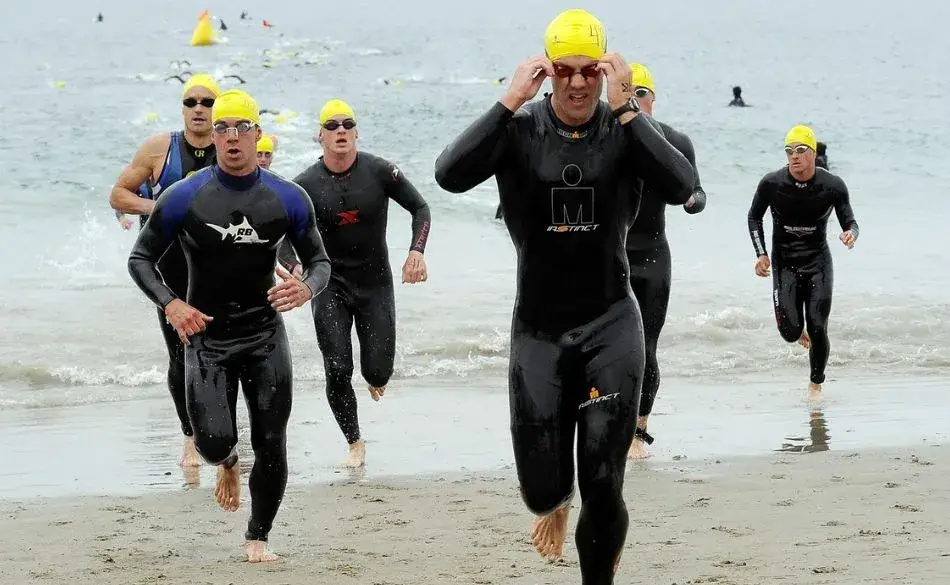
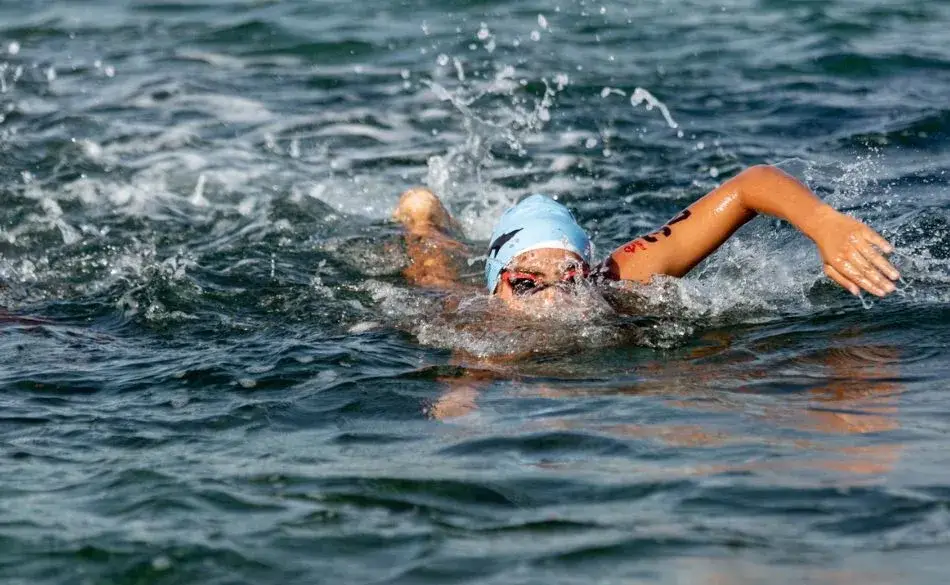
The half Ironman swim is 1.9 kilometres (1,900 metres, or 1.2 miles) in open water — a lake, river, or ocean depending on the race venue. For most athletes it is the shortest leg by time but often the most anxiety-inducing, particularly for those transitioning from pool swimming to open water racing.
The swim cut-off at most Ironman 70.3 events is 1 hour 10 minutes from wave start. Most age-group athletes complete the swim in 30–50 minutes. A pace of 2:00 per 100m produces a swim time of approximately 38 minutes; 2:30/100m produces approximately 47 minutes. Swimming ability varies more between athletes than any other discipline — the fastest age-groupers swim the 1.9km in around 22–25 minutes while beginners may take close to the cut-off.
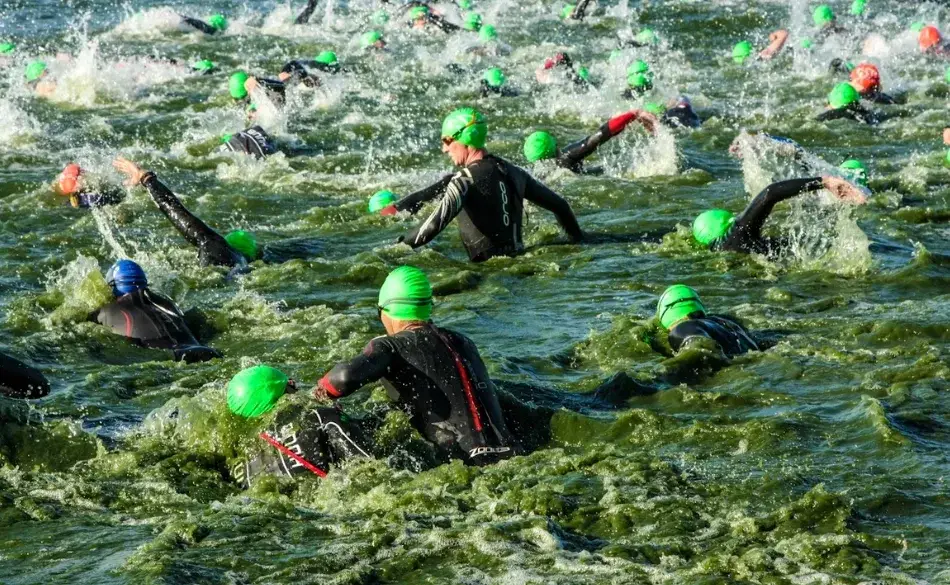
Key differences from pool swimming: open water has no lane markings to follow, requires regular sighting (lifting the head to check direction), and often involves contact with other swimmers in mass-start or wave-start formats. Wetsuit use is permitted at water temperatures below 24.5°C and significantly improves buoyancy and speed for most swimmers.
The Bike: 90km
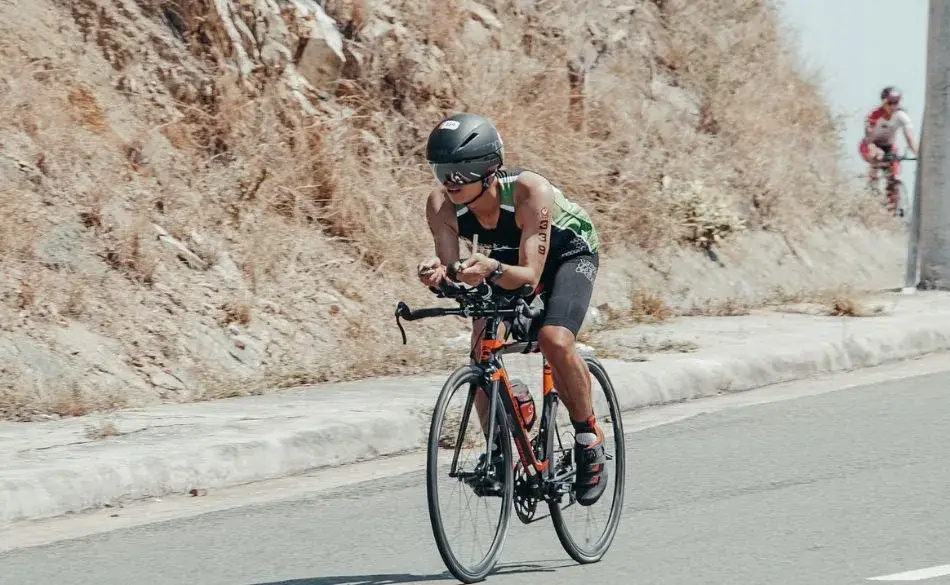
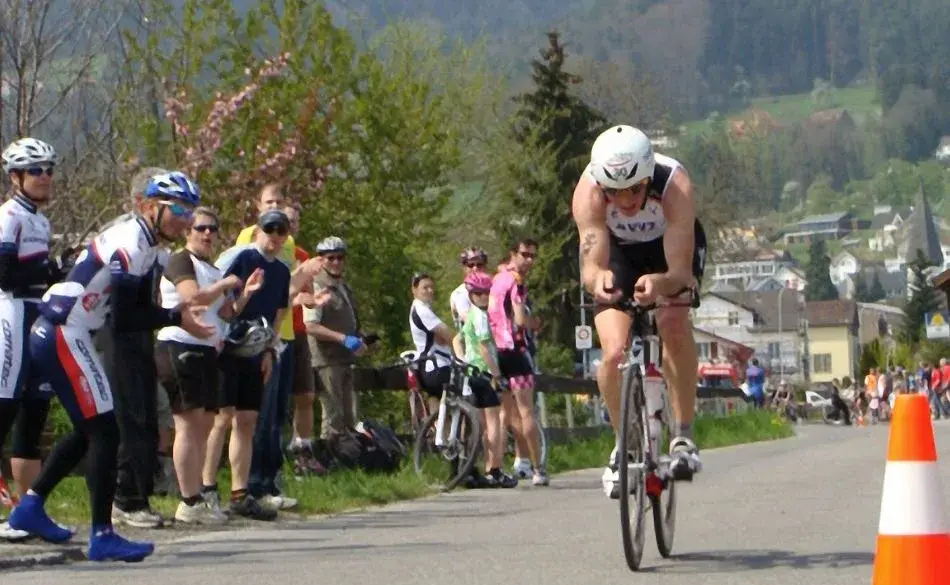
The bike leg is 90 kilometres (56 miles) — the longest segment by both distance and time for the majority of athletes. A well-paced half Ironman bike leg typically takes 2 hours 20 minutes to 3 hours for age-group competitors, corresponding to average speeds of 30–38 km/h.
The bike cut-off at most Ironman 70.3 events requires completion of the swim, both T1 and the bike within 5 hours 30 minutes of race start. Course profile varies enormously between events — a flat coastal course may be completed 30–40 minutes faster than a mountainous one at equivalent fitness. The 90km bike is where nutrition and pacing strategy matter most: athletes who go too hard on the bike almost invariably suffer on the run.
Target power or heart rate for the bike should be sustainable for the full 90km while leaving enough in reserve for a strong run. Most coaches recommend targeting 70–75% of FTP (functional threshold power) on the bike for athletes new to the 70.3 distance. Our cycling training plans cover the bike-specific fitness required to complete and race the 90km leg effectively.
The Run: 21.1km
The half Ironman run is 21.1 kilometres — a half marathon — completed immediately after the swim and bike. This is the leg where race execution is most clearly revealed: athletes who paced the swim and bike correctly will run strongly; those who overcook the earlier legs will struggle.
Average age-group run times at 70.3 events range from 1:45 to 2:30. Running off the bike (sometimes called “brick running”) feels different from a standalone half marathon due to residual fatigue and the physiological shift from cycling to running muscles. Most athletes run 8–15% slower at 70.3 than their standalone half marathon best in training. Pacing the first 5km conservatively and building into the second half consistently produces better outcomes than going out at target pace and fading — our negative split running guide covers this approach. There is no cut-off for the run leg specifically — athletes must simply complete the full course within the overall 8:30 cut-off.
Average Half Ironman Finish Times
| Athlete level | Men's time | Women's time | Description |
|---|---|---|---|
| First-timer | 6:30–8:00 | 7:00–8:30 | First 70.3; primary goal is finishing |
| Beginner | 6:00–6:30 | 6:30–7:00 | Some triathlon experience; solid training base |
| Recreational | 5:30–6:00 | 6:00–6:30 | Regular triathlete; structured training |
| Intermediate | 5:00–5:30 | 5:30–6:00 | Consistent training; multiple 70.3s completed |
| Advanced | 4:30–5:00 | 5:00–5:30 | Competitive age-grouper; high training volume |
| Elite age-group | Under 4:15 | Under 4:45 | Podium-competitive in age group |
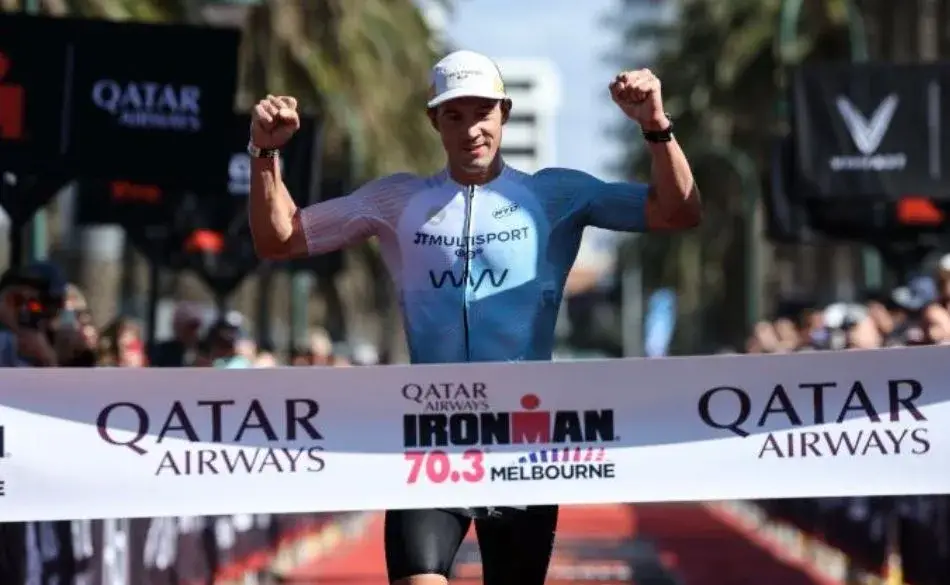
| Professional | ~3:26 | ~3:53 | Fastest recorded 70.3 times |
The three most common milestone goals for age-group athletes are sub-7 hours (the typical first-timer target), sub-6 hours (the intermediate milestone), and sub-5 hours (a strong performance that most experienced age-groupers aspire to). Unlike road running, half Ironman times are heavily influenced by course profile — a 5:30 on a hilly course may be equivalent in effort to a 5:00 on a flat one.
Half Ironman Cut-Off Times
Ironman 70.3 events enforce cut-off times to ensure athlete safety and race management. Standard cut-offs across most events:
Swim cut-off: 1 hour 10 minutes from wave start. Athletes who miss this are not permitted to continue.
Bike cut-off: Athletes must complete swim + T1 + bike within 5 hours 30 minutes of race start at most events.
Overall cut-off: 8 hours 30 minutes from official race start. Athletes who cross the finish line after this time do not receive an official finisher status. Cut-off times can vary by event — always check the specific race guide for the event you are entering.
How Long to Train for a Half Ironman
Training time depends heavily on existing fitness in each of the three disciplines. As a general framework:
Comfortable in one sport, beginner in the others: 24–30 weeks. Building competency in two new disciplines while maintaining the base in one requires a longer build. Swimming is typically the most time-consuming skill to develop for runners and cyclists new to triathlon.
Competent in all three, no triathlon race experience: 20–24 weeks. An Olympic-distance triathlon should be completed first as a stepping stone — the half Ironman is not recommended as a first-ever triathlon. Our half Ironman training plans start from this point.
Has completed an Olympic or sprint triathlon: 16–20 weeks. The triathlon-specific skills are established — training focuses on building volume and race-specific pacing at the longer distances.
Peak training volume for most age-group half Ironman athletes reaches 10–14 hours per week in the final 4–6 weeks before the race. This typically includes 2–3 swims, 2–3 bike sessions, and 3–4 runs per week at peak, with one long brick session (bike immediately followed by run) weekly. The final 2 weeks involve a taper — reduced volume at maintained intensity — to arrive at the start line fresh.
Ready to Train for Your Half Ironman?
SportCoaching's half Ironman training plans are structured for every level — from first-timers targeting the finish line to experienced athletes chasing a personal best. Every session has a purpose.
FAQ: Half Ironman Distance
How far is a half Ironman?
113km total (70.3 miles): 1.9km swim + 90km bike + 21.1km run. Exactly half the full Ironman distance of 226km (140.6 miles). The 70.3 in Ironman 70.3 refers to the total distance in miles.
How long does a half Ironman take?
Average age-group: ~5:30–6:00 (men), ~6:00–6:45 (women). First-timers: 6:30–8:00. Common goals: sub-7hr (beginner), sub-6hr (intermediate), sub-5hr (advanced). Overall cut-off: 8:30. Professional fastest: ~3:26 (men), ~3:53 (women).
How long is the swim in a half Ironman?
1.9km (1,900m / 1.2 miles) in open water. Swim cut-off: 1:10 from wave start. Average age-group swim time: 30–50 minutes. Wetsuit permitted in most events at water temperatures below 24.5°C.
How long is the bike leg in a half Ironman?
90km (56 miles). Average age-group time: 2:20–3:00. Bike cut-off: swim + T1 + bike within 5:30 of race start. Pacing conservatively on the bike (70–75% FTP) protects the run.
How long does it take to train for a half Ironman?
16–24 weeks depending on starting fitness. Competent in all three sports: 16–20 weeks. One sport background: 24–30 weeks. Complete an Olympic triathlon first. Peak volume: 10–14 hours/week. Taper: 2 weeks before race day.
Find Your Next Triathlon Race
Ready to put your training to the test? Here are some upcoming triathlon events matched to this article.
fisiocrem Triathlon Port Stephens 2026
You Yangs Off-road 2026