Quick Answer
Start with a sprint triathlon (750m swim / 20km bike / 5km run). Allow 12–16 weeks of training. Minimum useful frequency: 2 sessions per discipline per week + 1 brick session. Swim is typically the biggest challenge; transitions are where races are lost or saved. Essential gear is simpler than most people think — any roadworthy bike is legal for a first race.Understanding Triathlon Distances
| Distance | Swim | Bike | Run | Who it's for |
|---|---|---|---|---|
| Super sprint | ~400m | ~10km | ~2.5km | Absolute first-timers; building confidence |
| Sprint ← start here | 750m | 20km | 5km | First triathlon target for almost all beginners |
| Olympic | 1.5km | 40km | 10km | Second or third race; 6–12 months experience |
| 70.3 / Half Ironman | 1.9km | 90km | 21.1km | Experienced triathlete with solid base |
| Full Ironman | 3.8km | 180km | 42.2km | Multi-year commitment; serious athletes |
The sprint triathlon is the standard starting point for almost all new triathletes, and for good reason: it’s long enough to require genuine preparation and deliver a meaningful sense of achievement, but short enough to be achievable from a modest fitness base within a realistic training timeline. Most sprint triathlons take beginners between 1 hour 20 minutes and 2 hours to complete. If you are extremely new to all three sports, a super sprint is also a valid starting point — some races offer both distances on the same day, allowing beginners to “preview” the full sprint experience at a shorter distance.
The advice consistent with most triathlon coaches: even if you’ve got a solid base in one sport, you’ll need to learn the nuances of the other two. More importantly, you’ll need to learn how to string all three together into one cohesive race. The shorter distances let you master the fundamentals without a huge drain on your time or energy. Our triathlon training plans cover sprint through to Ironman distance with structured progressions for each. If you’re completely new to all three sports, our couch to triathlon guide covers building from zero fitness to race-ready. And if you’re wondering whether you’re already fit enough to attempt a triathlon, our guide on how fit you need to be for a triathlon gives an honest assessment of the baseline required.
How Long Does Training Take?
The training timeline depends on your starting point across all three disciplines:
From scratch (little current fitness): 16–20 weeks. This allows time to build an aerobic base in each discipline without rushing the adaptation process or accumulating injury risk from doing too much too soon.
Fit in one or two sports: 12 weeks is the standard recommendation from REI, Triathlete.com, and most experienced coaches. Twelve weeks is enough to develop reasonable competence in the weaker disciplines while maintaining and building the stronger ones.
Already comfortable in all three: 8 weeks. The minimum entry fitness for this timeline: able to swim 400 metres continuously, cycle for 30 minutes, and run for 20 minutes without stopping.
The minimum useful training structure is two sessions per discipline per week plus one brick session — six to seven sessions total per week. As race day approaches, the total training volume should allow you to comfortably complete 10–15% more than the race distance in each sport in a single session. For a sprint that means: 850m+ swim in the pool, 22–25km on the bike, and a 5.5–6km run.
Swimming: The Discipline That Worries Beginners Most
Swimming is the leg that causes the most anxiety among new triathletes — and for good reason. It’s the opening discipline, it happens in open water with dozens or hundreds of other people, and many adults haven’t swum regularly since childhood. The good news: you don’t need to be fast. You need to be safe and consistent.
The minimum swimming requirement for starting a 12-week sprint triathlon programme is being able to swim 400 metres continuously in a pool without stopping. If you can’t yet do this, add 4–6 weeks of swimming lessons or pool work before beginning a triathlon-specific plan.
Technique over speed. At sprint distance, swimming efficiency matters far more than raw speed. Efficient freestyle — good body position, bilateral breathing (breathing to both sides), smooth stroke — conserves energy for the bike and run. Beginners who thrash through the water inefficiently arrive at T1 already exhausted. Two pool sessions per week focused on technique and building to 750m+ total distance is the standard swim programme for sprint preparation.
Open water is different from pool swimming. There are no lane lines to push off, no lane markers to navigate by, and the water is typically darker, cooler, and occupied by other swimmers. Three specific skills need open water practice:
Sighting — lifting the eyes briefly above the water every 8–10 strokes to check direction toward the next buoy or shore. Without sighting, most swimmers drift significantly off course, adding distance and time. Practice this in the pool first (looking at the far wall), then in open water.
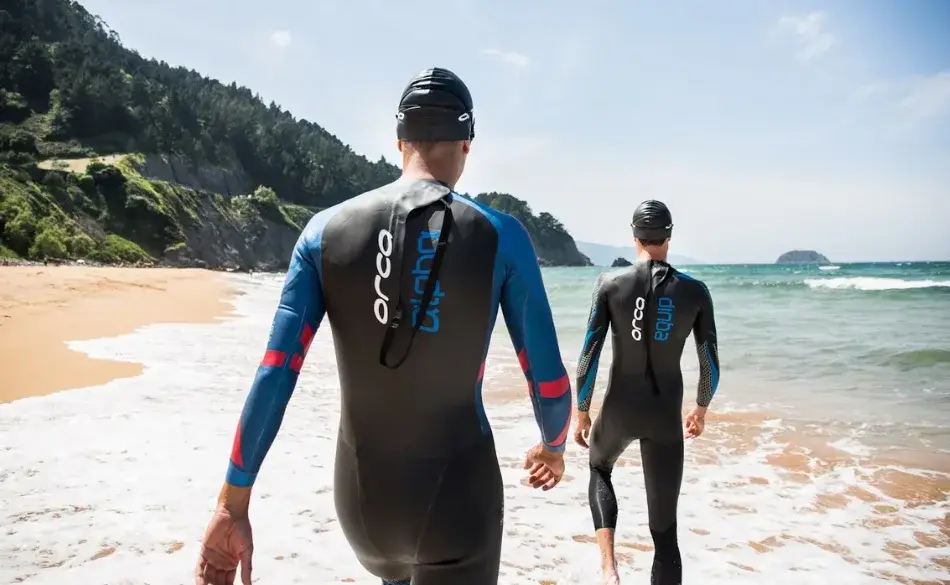
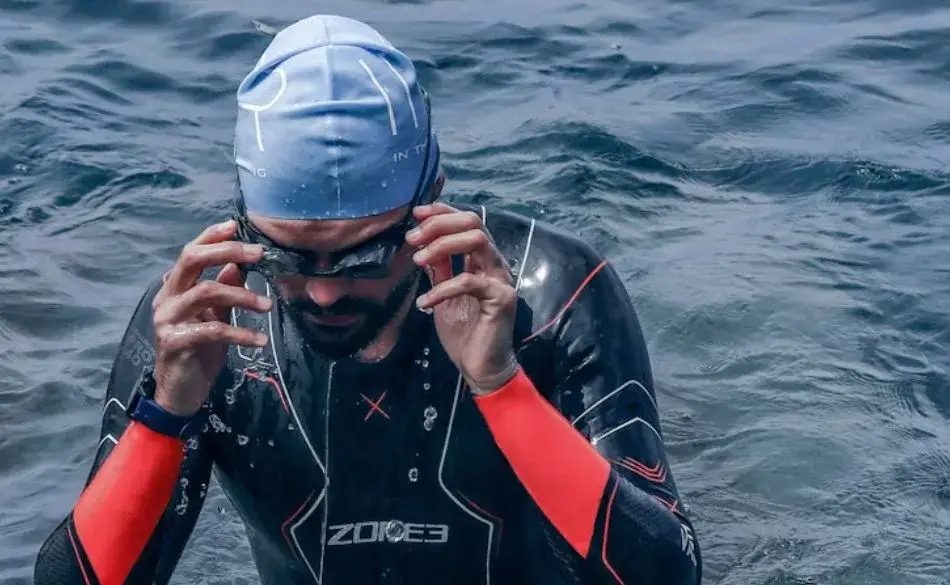
Wetsuit swimming — a wetsuit provides buoyancy (your legs and hips float higher, improving body position) and warmth. Most triathletes swim faster in a wetsuit, but it takes practice to get comfortable with the restricted shoulder movement. Wear your wetsuit for at least two training swims before race day.
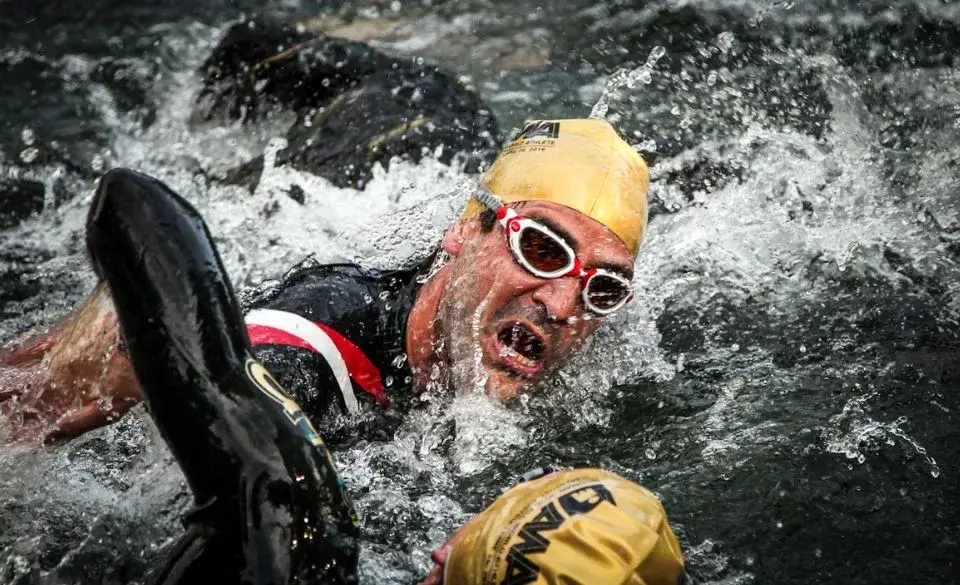
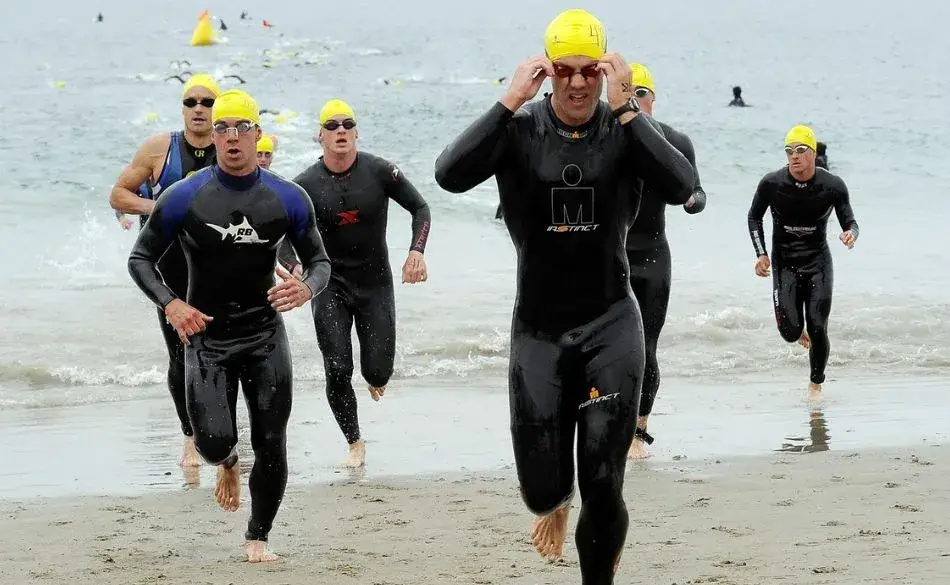
Race start — triathlon swim starts are chaotic. Beginners should seed themselves toward the outside or back of their wave, where contact with other swimmers is reduced. A conservative first 100–200 metres — slower than you think you need to go — prevents the panic response that causes many beginners to grab an emergency kayak in the opening minutes.
Aim for at least 2–3 open water swims in training before race day. The unfamiliarity of open water on race morning adds a layer of stress that prior experience substantially reduces.
Cycling: The Longest Discipline by Time
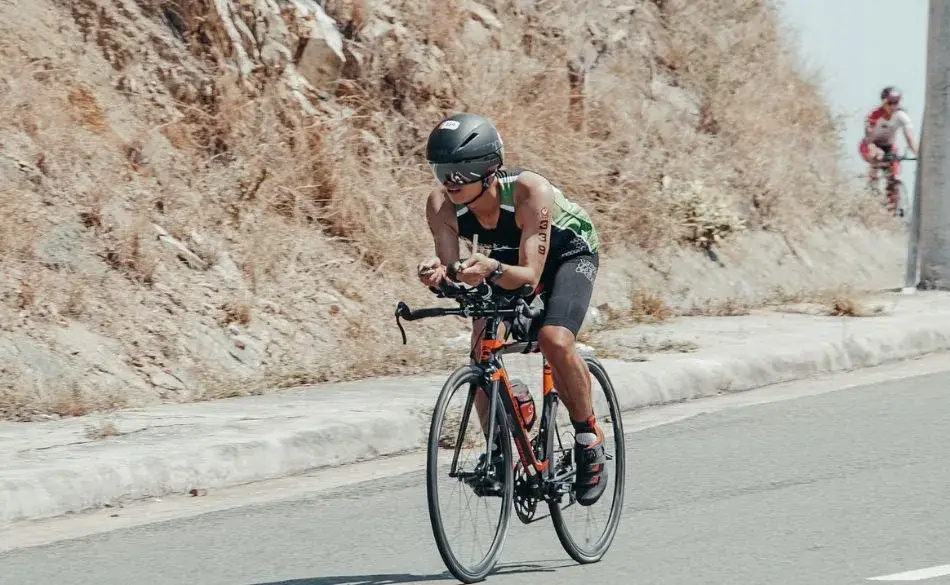
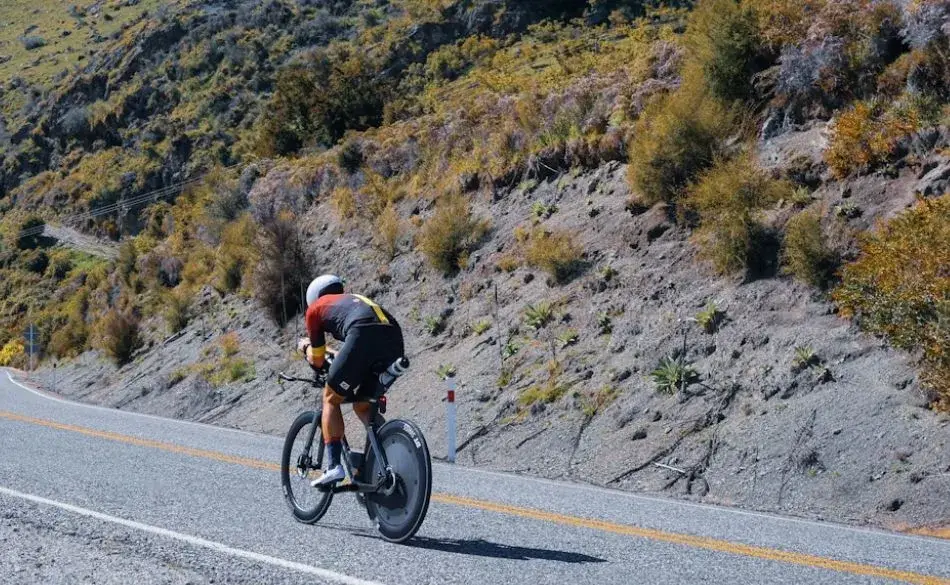
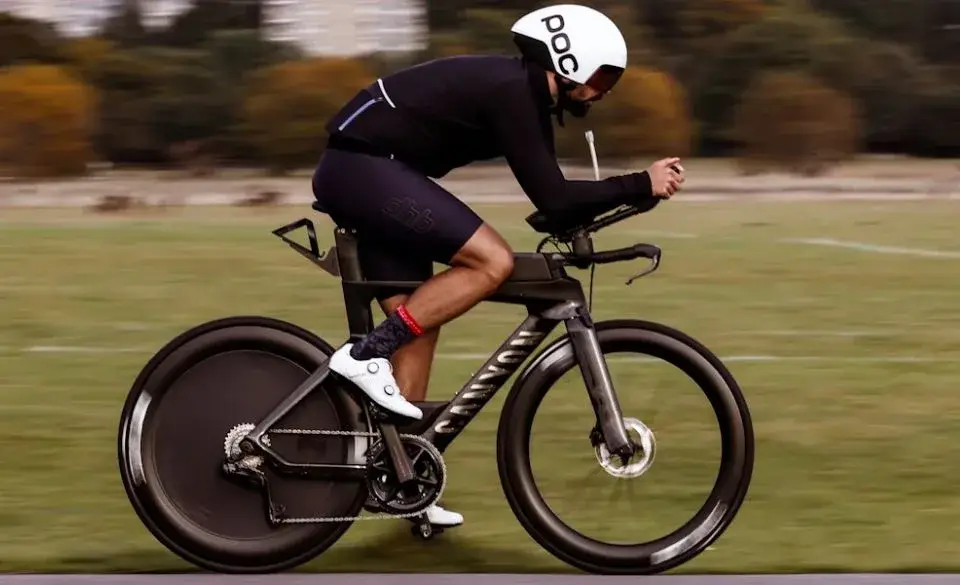
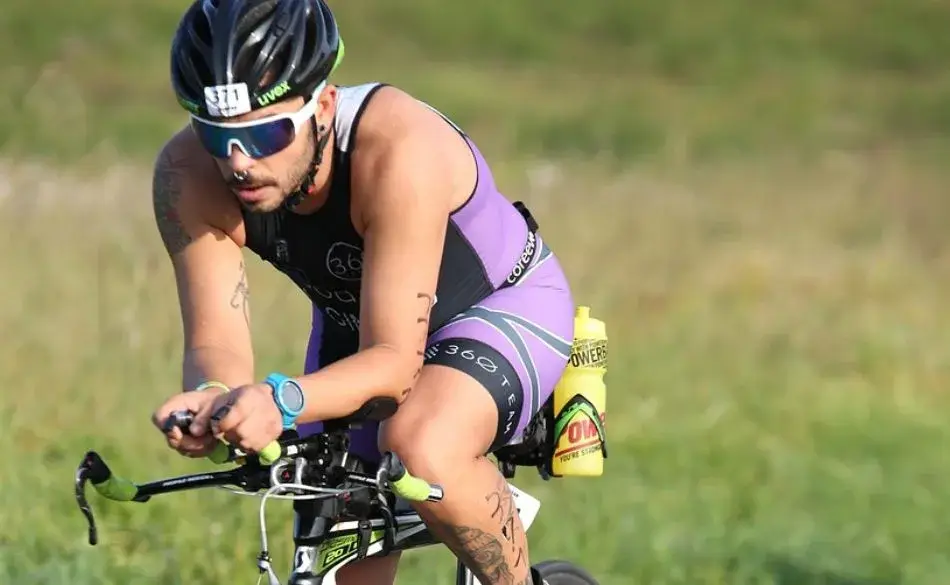
For most sprint triathletes, the 20km bike leg takes 40–55 minutes — the longest portion of the race by time, and the discipline with the most gear complexity. The good news for beginners: any roadworthy bike is legal for a sprint triathlon. A road bike, hybrid bike, or even a mountain bike is permitted — the sport does not require expensive equipment at the entry level.
The realistic upgrade path for committed beginners is: start on whatever bike you have → add clip-on aero bars ($50–150, significantly reduces drag) → upgrade to a road or entry-level triathlon bike when you’ve confirmed the sport is for you. Spending thousands on a triathlon-specific bike before completing your first race is the single most common expensive mistake in the sport.
Bike training priorities for a first sprint:
Build comfortably to 25–30km on the bike at an effort that leaves enough in reserve for a run immediately afterward. This is the key difference between triathlon cycling and solo cycling — you cannot ride as hard as your legs allow because the run follows. Most beginner triathletes go too hard on the bike and arrive at T2 with legs that won’t run properly.
Practice gear use, braking, and drinking from a bottle while moving — skills that are new to beginners and take time to become automatic. Practice clipping in and out of pedals (if using clipless) until it’s completely instinctive. Stopping at a red light and forgetting to unclip is a rite of passage; practice this out of the way of traffic before your first race.
Learn the mandatory transition rule: helmet must be buckled before the bike is touched or unracked. This is a non-negotiable rule in Australian and international triathlon — athletes are disqualified for removing their helmet before the bike is racked at T2. Practise this until it’s automatic. For race time predictions and split planning once you have your target pace, our triathlon calculator guide helps you model your swim, bike, and run splits before race day.
Running: Finishing on Tired Legs
The 5km run of a sprint triathlon is deceptively hard. It comes after 750m of swimming and 20km of cycling, with legs that have been in the cycling position for 40–50 minutes. The transition from cycling to running produces “brick legs” — a sensation of heaviness and unresponsiveness in the legs that can last the first 5–10 minutes of the run before normalising.
The specific solution to brick legs is brick sessions — running off the bike in training, repeatedly, so the neuromuscular adaptation occurs before race day rather than during it. Even a 10–15 minute run immediately after a 20-minute bike ride trains this adaptation. One brick session per week is sufficient for sprint distance preparation. Our sprint triathlon training plan covers exactly how brick sessions are sequenced through an 8–12 week programme.
Run training for a first triathlon: two to three runs per week, including one brick session. Build to running 5–6km comfortably in training at an easy pace. The run pace in a triathlon will be slower than a standalone 5km pace — plan for 15–30 seconds per kilometre slower than your fresh 5km pace, depending on how hard the swim and bike legs were. Starting the run conservatively and building pace is a better strategy than going out at 5km race effort and collapsing.
If running is new to you, our beginner triathlon training guide covers how to build run volume as part of a three-discipline programme from the ground up.
Transitions: Where Races Are Won and Lost
Transitions are the fourth discipline of triathlon — often called T1 (swim-to-bike) and T2 (bike-to-run). A chaotic, disorganised transition can cost 5–10 minutes in a sprint; a smooth, practised transition takes under 2 minutes each.
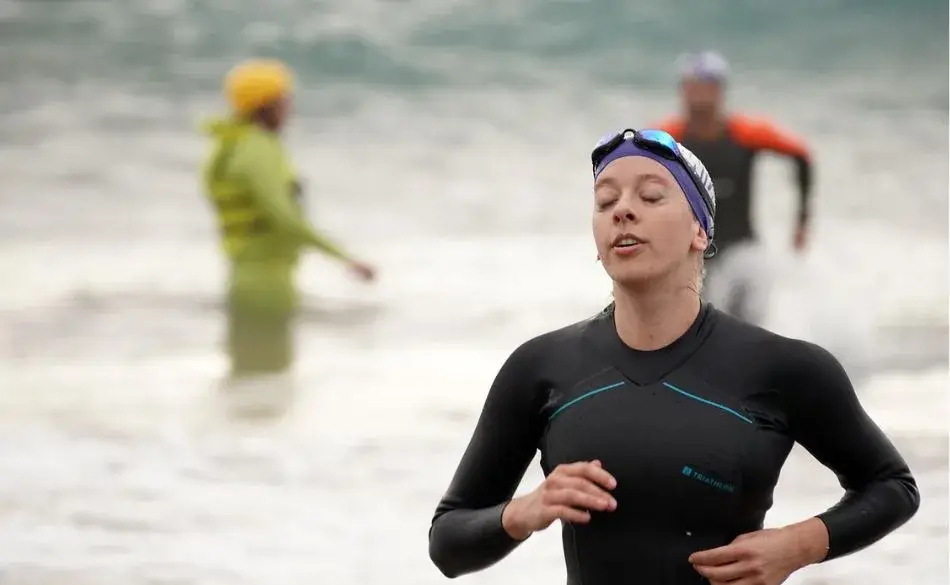
T1 (swim to bike): Exit the water, remove your swim cap and goggles, peel off your wetsuit (practice this — it’s harder and slower than it looks when you’re wet), put on your helmet and buckle it, put on cycling shoes or socks, unrack the bike, and run with the bike to the mount line before getting on. Do not get on the bike until you pass the mount line — marshals watch for this.
T2 (bike to run): Cross the dismount line before getting off (marshals watch here too), run the bike to your rack, rack it, unbuckle and remove your helmet, swap shoes if using cycling-specific footwear, clip on your race belt with your number, and head to the run exit.
Transition setup: lay your gear out in a logical order — in the sequence you’ll use it. Small towel to dry feet, running shoes open and ready, helmet on top of the bike or hanging from the bars, sunscreen already applied. Everything you need must be within your marked transition space. Visit your transition area before the race start to confirm the rack position and the route to the swim entry, bike mount, and run exit.
Triathlete.com recommends “creating a mock transition area and practising transitions” as part of training, not just on race day. Lay out your gear at home or in a park and run through the T1 and T2 sequence several times before the event. The race morning is not the time to discover your wetsuit takes 4 minutes to remove.
Essential Gear for a First Triathlon
Mandatory: swim goggles, wetsuit (if water below ~24°C — most Australian and international tri events require or strongly recommend a wetsuit for safety at cooler water temperatures), roadworthy bike in good mechanical condition, helmet (buckled before touching the bike), running shoes.
Highly recommended: tri suit or cycling shorts plus a singlet/top that works for all three legs (a tri suit is worn for the entire race, eliminating clothing changes), race belt (clips the race number on without safety pins — saves time and means you don’t have to pin through your kit), elastic laces in running shoes (saves 20–30 seconds versus standard laces), small towel in transition to dry feet before putting on socks/shoes.
Useful upgrades for later: clip-on aero bars for the bike, triathlon-specific bike, aero helmet, GPS triathlon watch, power meter. None of these are needed for a first sprint — the gear priority for a first race is that everything works reliably, fits correctly, and has been used in training. Racing in new gear for the first time is a recipe for unexpected problems.
Race-day gear rule: Never race in anything untested in training. New shoes, a new wetsuit, aero bars you haven’t practised with, a race suit worn for the first time — all of these carry real risk of causing discomfort or mechanical problems mid-race. Test every piece of gear in training before the event.Race Day: What to Expect
The race day experience is considerably calmer once you know what’s happening. Most sprint triathlons follow this sequence: registration and body marking (race number written on your arm and leg with marker), transition area setup, pre-race briefing (attend this — it covers course-specific rules and safety information), swim warm-up if permitted, wave start, T1, bike leg, T2, run leg, finish.
Swim starts are either mass start (all athletes in one wave), wave starts (groups released at intervals), or time-trial starts (athletes released individually every few seconds). Beginners should check their event format in advance — time-trial starts are the calmest and least chaotic, mass ocean starts are the most intense.
Pacing strategy for a first sprint: start the swim easy — the adrenalin of race day makes almost every beginner go out too fast in the water, leading to panic or unsustainable breathing in the first 100 metres. Settle into a rhythm and let pace come from there. On the bike, ride at a controlled effort (7 out of 10, not 9) — you need to run 5km at the end. On the run, start conservatively and push if you have anything left in the final kilometre. The goal for a first triathlon is completion, not time.
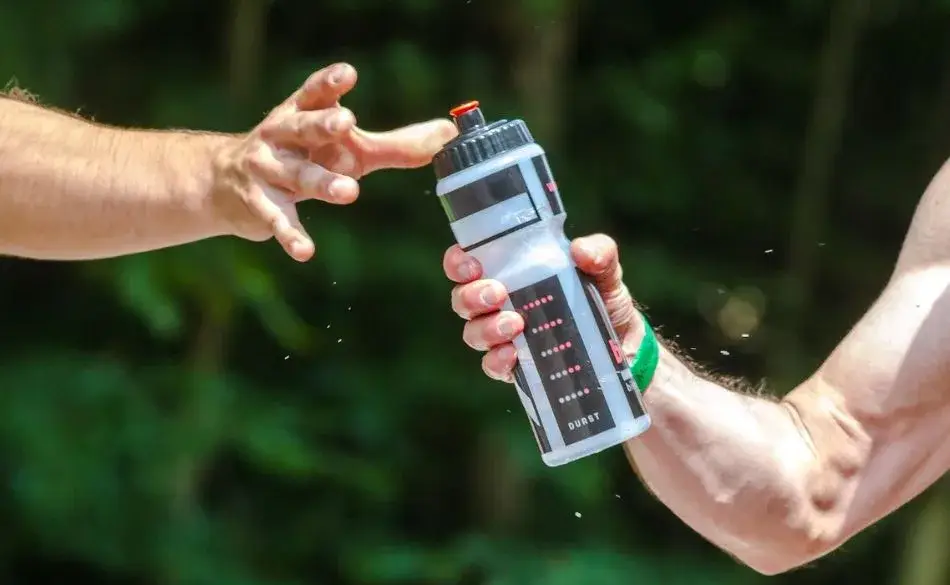
Fuelling: for a sprint triathlon of 90–120 minutes, some fuelling is beneficial. Drink water or electrolyte at the aid station on the run. On the bike for a sprint, a single water bottle is usually sufficient. For your first race, avoid unfamiliar gels or drinks — stick to what you’ve used in training.
Building Beyond Your First Triathlon
Most triathletes cross their first finish line and immediately wonder when the next one is. The sport is highly progressive — each distance presents new challenges and the community is one of the most welcoming in endurance sport. After a sprint, the natural progression is a second sprint (to implement lessons learned from the first), then Olympic distance, then longer if it appeals.
For runners adding triathlon to their repertoire, the swim and bike are the primary development areas — the run is already there. Our triathlon training app guide covers the best tools for tracking swim, bike, and run training across all disciplines. For competitive athletes progressing toward Half Ironman or full Ironman, our Half Ironman training plans and Ironman training plans provide the structured progression that takes athletes safely to longer distances. Curious about what the elites can achieve? Our guide to the fastest Ironman times in the world puts elite performance in perspective.
Start Triathlon With a Plan and a Coach Behind You
SportCoaching's triathlon training plans and coaching cover sprint through to Ironman — with structured progression across all three disciplines, transition training, and expert guidance from a coach who has helped hundreds of triathletes cross their first and fastest finish lines.
FAQ: How to Start Triathlon
What triathlon distance should a beginner start with?
Sprint triathlon: 750m swim / 20km bike / 5km run. Achievable with 12–16 weeks of training from a reasonable fitness base. Takes 1:20–2:00 hours to complete. Super sprint (~400m / 10km / 2.5km) is also a valid option for absolute beginners.
How long does it take to train for a first triathlon?
8 weeks with existing base in all three sports; 12 weeks if fit in one or two; 16–20 weeks from scratch. Minimum 2 sessions per discipline per week + 1 brick session. Build no more than 10% per week.
What gear do I need for my first triathlon?
Mandatory minimum: goggles, wetsuit (below ~24°C), any roadworthy bike, helmet, running shoes. Recommended additions: tri suit, race belt, elastic laces. Everything else is optional for a first race. Any bike is legal — road, hybrid, or mountain bike.
What is a brick session in triathlon training?
Cycling immediately followed by running in the same session. Trains the legs to adapt to the heavy, unresponsive “brick legs” feeling of running after cycling. One brick session per week is sufficient for sprint preparation — even 20 minutes cycling + 10 minutes running counts.
Do I need to be a strong swimmer to do a triathlon?
No — safe and consistent is the requirement. Minimum: swim 400m continuously in a pool. Build to 750m+ for sprint distance. Technique matters more than speed. Practice open water swimming (sighting, wetsuit, race-start positioning) at least 2–3 times before race day — it’s meaningfully different from pool swimming.
Find Your Next Triathlon Race
Ready to put your training to the test? Here are some upcoming triathlon events matched to this article.
Swimrun Australia: Sydney East 2026
Byron Bay Triathlon 2026