Want help turning consistency into progress? Coaching keeps your training simple, structured, and sustainable.
Start Coaching →
Large field of Ironman triathletes swimming in open water during the swim leg of a full distance triathlon

Last updated:

How Far Is an Ironman? Distance, Times and What to Expect

A full Ironman triathlon is a 3.8km swim, a 180km bike ride, and a 42.2km run — 226.3 kilometres (140.6 miles) in total, completed back-to-back in a single day. It is widely regarded as one of the most demanding one-day endurance events in the world. The 140.6 in the name Ironman 140.6 refers to the total distance in miles, which also happens to equal the perimeter of the island of O'ahu, Hawaii — where the race was first held in 1978.

This guide covers the exact distance of every leg, average finish times, cut-off times, how the full Ironman compares to other triathlon distances, and how long to train.

Chat with a SportCoaching coach

Not sure where to start with training?

Tell us your goal and schedule, and we’ll give you clear direction.

No obligation. Quick, practical advice.

Article Categories:

Explore our triathlon workouts and tips for more helpful articles and resources.

Quick Answer

A full Ironman = 3.8km swim + 180km bike + 42.2km run = 226.3km total (140.6 miles). Average finish time: ~12:55 (men), ~13:59 (women). Overall cut-off: 16–17 hours. Also known as: Ironman 140.6, full-distance triathlon, iron-distance triathlon.

Ironman Distance Breakdown

👉 Swipe to view full table
LegDistance (metric)Distance (imperial)Average age-group time
Swim3.8 km (3,800m)2.4 miles55 min – 1:20
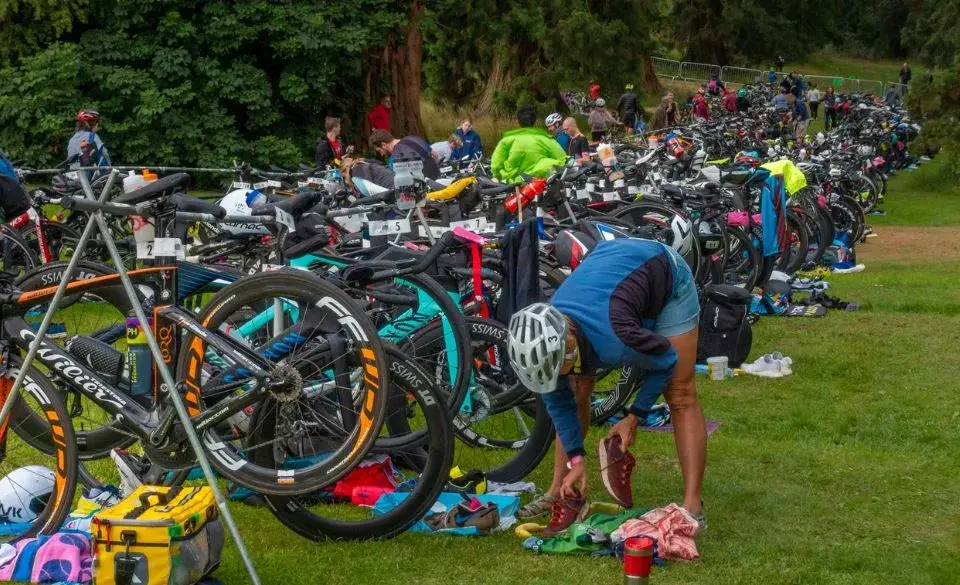
T1 (swim-to-bike)5–15 minutes
Bike180 km112 miles5:00–7:00
T2 (bike-to-run)5–10 minutes
Run (marathon)42.2 km26.2 miles3:30–5:30
Total226.3 km140.6 miles10:00–14:00+

Full Ironman vs Other Triathlon Distances

👉 Swipe to view full table
DistanceSwimBikeRunTotalTypical finish time
Sprint750m20km5km~25.75km1:00–1:45
Olympic1.5km40km10km51.5km1:45–2:30
Half Ironman (70.3)1.9km90km21.1km113km5:00–7:30
Full Ironman (140.6)3.8km180km42.2km226.3km10:00–16:00+

The jump from half Ironman to full Ironman is more than a doubling of distance — the physiological and logistical demands increase disproportionately. Race day itself is an all-day event for most athletes, requiring fuelling strategies, pacing discipline, and mental resilience across 10–16 hours of continuous effort. Our Ironman training plans cover structured programmes for athletes making this step up. For a complete breakdown of the half Ironman, see our half Ironman distance guide.

Why Is an Ironman 140.6 Miles?

The Ironman distance was not designed — it was assembled. In 1977, US Navy Commander John Collins proposed combining three existing Hawaiian endurance events into a single race to settle a debate about which athletes were fitter: swimmers, cyclists, or runners. The three events were the Waikiki Roughwater Swim (2.4 miles), the Around-Oahu Bike Race (shortened from 115 miles to 112 miles to make logistics work), and the Honolulu Marathon (26.2 miles).

When Collins added up the three distances, he discovered they totalled 140.6 miles — almost exactly the perimeter of the island of O’ahu. The handwritten note on the original race description read: “Swim 2.4 miles! Bike 112 miles! Run 26.2 miles! Brag the rest of your life!” The first race was held on February 18, 1978, with 15 starters. The winner, Gordon Haller, finished in 11:46:58. The race moved to Kona on the Big Island of Hawaii in 1981 and has grown into one of the world’s most recognisable endurance events.

The Swim: 3.8km

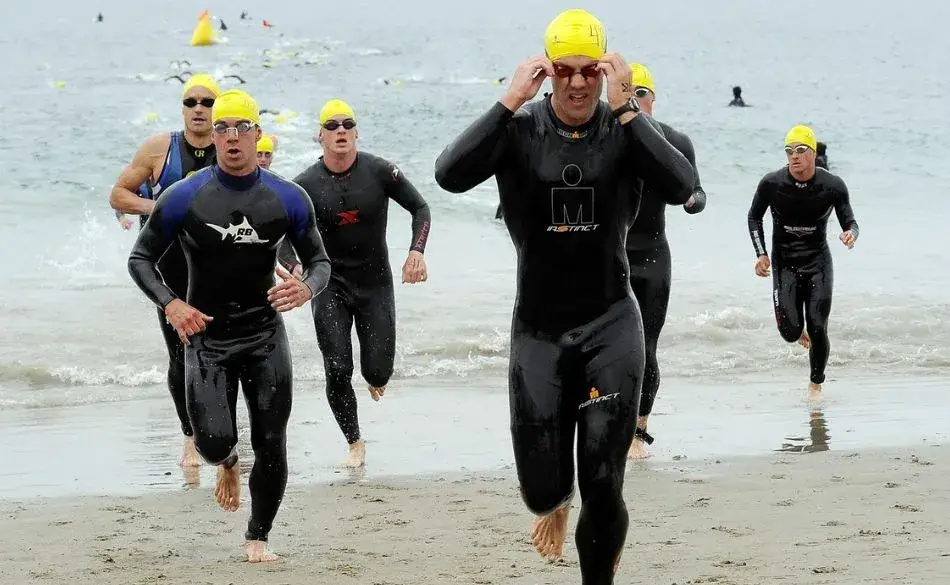
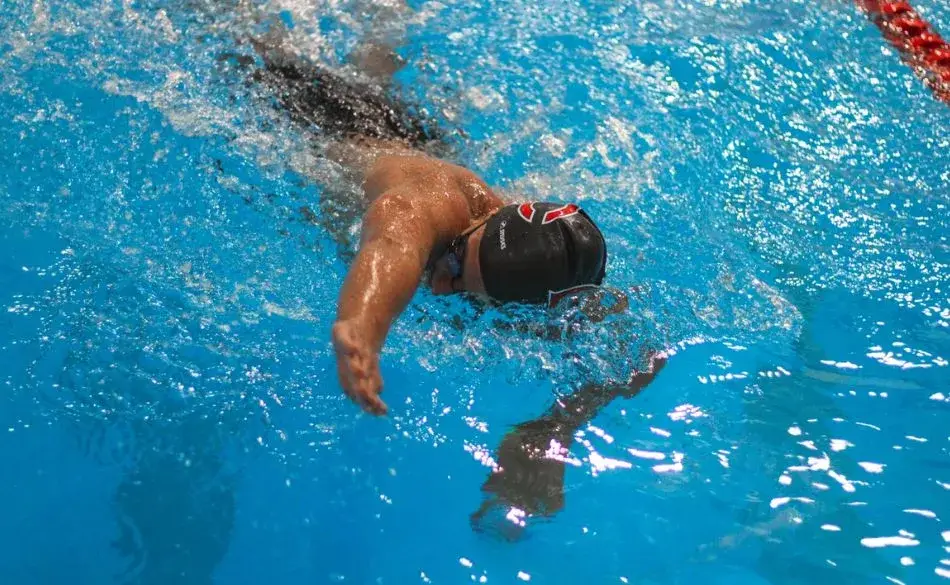
The Ironman swim is 3.8 kilometres (3,800 metres / 2.4 miles) in open water — a lake, river, or ocean depending on the venue. It is the shortest leg by time but the one that most athletes find most psychologically demanding, particularly in mass-start formats where hundreds of athletes enter the water simultaneously.

The swim cut-off at most Ironman events is 2 hours 20 minutes from individual swim start. Most age-group athletes complete the Ironman swim in 55 minutes to 1 hour 20 minutes. A pace of 2:00 per 100m produces a swim time of approximately 76 minutes; 1:45/100m produces approximately 66 minutes. Wetsuit use is permitted at water temperatures below 24.5°C for age-group athletes and significantly improves buoyancy and speed. The 3.8km swim is one of the longest competitive open water swims most age-group athletes will ever complete — building comfort and competence in open water swimming is a prerequisite for Ironman preparation.

The Bike: 180km

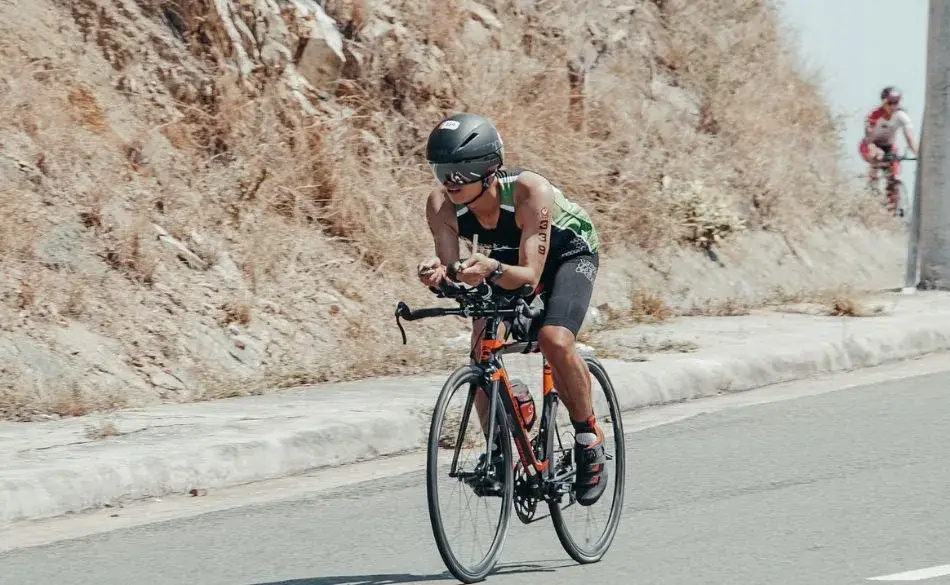
The 180km (112-mile) bike is the defining leg of an Ironman — the longest by distance and the one that determines whether the marathon run is a strong performance or a survival march. Most age-group athletes spend between 5 and 7 hours on the bike, making it the largest time investment of any segment by a significant margin.

The bike cut-off at most Ironman events requires athletes to complete the swim, T1, and bike within 10 to 10 hours 30 minutes of swim start. Pacing is the critical factor — athletes who ride aggressively early almost universally pay for it during the marathon. Most experienced Ironman coaches recommend targeting 65–70% of functional threshold power (FTP) on the bike, which feels deceptively easy in the first two hours but allows the body to retain enough glycogen and muscular integrity for a strong run.

Nutrition during the bike is equally critical. At 180km, athletes burn through glycogen stores that must be continuously replaced — most experienced Ironman athletes consume 60–90g of carbohydrate per hour on the bike, alongside consistent hydration and electrolyte intake. Our cycling training plans build the bike-specific fitness required to sustain 180km pacing.

The Run: 42.2km (Full Marathon)

The Ironman run is a full marathon — 42.2km (26.2 miles) — completed immediately after the swim and 180km bike. It is the leg that most athletes either dread or use as their differentiator, and the one that determines final overall result more than any other segment for age-group athletes.

Ironman marathon times are typically 10–20% slower than an athlete’s standalone marathon personal best, due to accumulated fatigue from the swim and bike. An athlete who runs a standalone 3:30 marathon might expect to run 3:50–4:10 at an Ironman — if the bike was paced correctly. Athletes who overcook the bike can see their Ironman marathon blow out to 5:00–6:00+ regardless of their running ability.

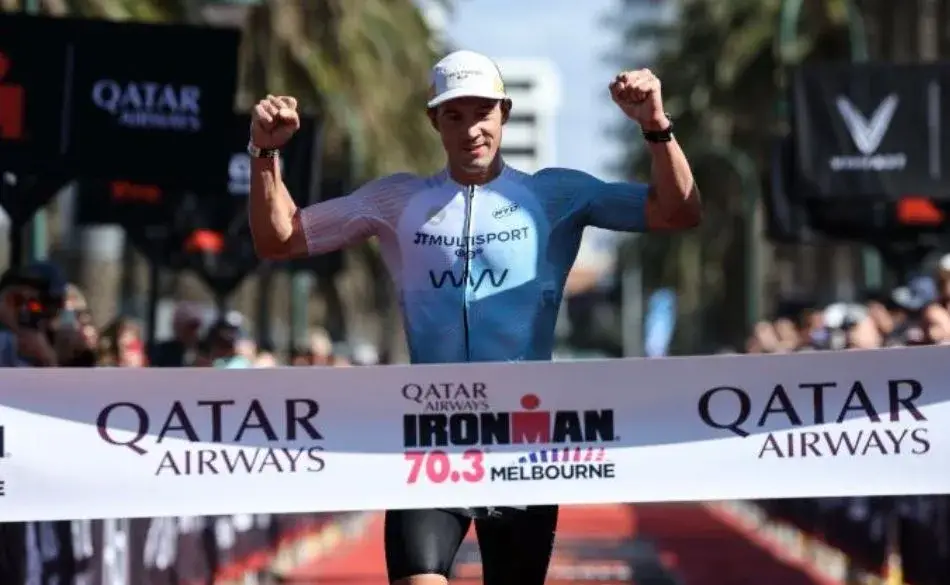
The run cut-off is the overall event cut-off: athletes must cross the finish line within 16–17 hours of swim start. At most Ironman events, finishing before the cut-off triggers the famous announcer call: “You are an Ironman!” — one of the most celebrated moments in endurance sport. Our running training plans build the marathon-specific endurance that makes the final 42.2km manageable, and our negative split running guide covers the pacing approach that best protects the Ironman marathon.

Average Ironman Finish Times

👉 Swipe to view full table
Athlete levelMen's timeWomen's timeDescription
First-timer13:00–16:0014:00–16:30First Ironman; primary goal is hearing "You are an Ironman!"
Beginner12:00–13:0013:00–14:30Some long-course experience; solid training base
Recreational11:00–12:0012:00–13:00Regular triathlete; 15+ hours training/week at peak
Intermediate10:00–11:0011:00–12:00Consistent Ironman competitor; structured training
Advanced9:00–10:0010:00–11:00Competitive age-grouper; Kona qualification territory
Elite age-groupUnder 9:00Under 10:00Kona qualifiers and top age-group performers
Professional~8:00~8:30–9:00World Championship level
Course record (Roth)7:35:398:18:13Frodeno (2016) / Wellington (2011)

The three most common milestone goals for age-group Ironman athletes are finishing under the cut-off (the first-timer’s primary goal), sub-12 hours (the intermediate milestone), and sub-10 hours (a strong performance that puts you in the top tier of age-group competitors). Kona World Championship qualification — the ultimate age-group goal — typically requires sub-9 hours at most qualifying events, though the required time varies by age group and race field.

Ironman Cut-Off Times

Ironman events enforce cut-off times to ensure athlete safety and event management. Standard cut-offs across most WTC Ironman events:

Swim cut-off: 2 hours 20 minutes from individual swim start.

Bike cut-off: Swim + T1 + bike must be completed within 10:00–10:30 of swim start (varies by event).

Overall cut-off: 16–17 hours from swim start (varies by event — always check the specific race guide). Athletes who finish within the cut-off receive official Ironman finisher status and hear the famous announcer declaration. For a full breakdown of how cut-offs work across every segment and what happens if you miss one, see our complete Ironman cut-off times guide.

How Long to Train for an Ironman

Has completed a half Ironman: 24–28 weeks. The physiological base is established — training focuses on extending bike and run distances to full Ironman levels and building the nutrition strategy for an all-day effort.

Competent triathlete, no half Ironman experience: 30–36 weeks. Complete a half Ironman race during the build as a stepping stone and fitness benchmark.

New to triathlon: 12–18 months minimum. Build through sprint and Olympic distances first, complete a half Ironman, then begin a full Ironman build. Attempting a full Ironman without prior long-course experience significantly increases injury and DNF risk.

Peak training volume for most Ironman athletes reaches 15–20 hours per week in the final 6–8 weeks of preparation — including 5–7 hour long rides, 2+ hour long runs, and multiple swim sessions per week. Time management for full-time working athletes is one of the most significant challenges of Ironman preparation. Our Ironman training plans are structured to maximise Ironman readiness within realistic weekly time constraints.

Ready to Train for Your Ironman?

SportCoaching's Ironman training plans are built for every level — from first-timers targeting the finish line to athletes chasing Kona qualification. Every session has a specific purpose and paced target.

FAQ: Ironman Distance

How far is an Ironman?
226.3km (140.6 miles) total: 3.8km swim + 180km bike + 42.2km run. Exactly double the half Ironman (113km / 70.3 miles). The 140.6 miles equals the perimeter of O’ahu, Hawaii — where the race began in 1978.

How long does an Ironman take?
Average age-group: ~12:55 (men), ~13:59 (women). First-timers: 13:00–16:00. Common goals: finish under cut-off, sub-12hr, sub-10hr. Overall cut-off: 16–17 hours. Course records: 7:35:39 (Frodeno, Roth 2016) / 8:18:13 (Wellington, Roth 2011).

How long is the swim in an Ironman?
3.8km (2.4 miles / 3,800m) in open water. Swim cut-off: 2:20 from swim start. Average age-group swim time: 55 min–1:20. Wetsuit permitted in most events at water temperatures below 24.5°C.

How long is the bike leg in an Ironman?
180km (112 miles). Average age-group time: 5:00–7:00. Bike cut-off: swim + T1 + bike within 10:00–10:30 of swim start. Target 65–70% FTP to protect the marathon run.

How long does it take to train for an Ironman?
Has completed a half Ironman: 24–28 weeks. New to long-course triathlon: 30–36 weeks. New to triathlon: 12–18 months. Peak volume: 15–20 hours/week. Not recommended as a first triathlon — complete sprint, Olympic, and half Ironman first.

Find Your Next Triathlon Race

Ready to put your training to the test? Here are some upcoming triathlon events matched to this article.

Graeme - Head Coach and Founder of SportCoaching

Graeme

Head Coach & Founder, SportCoaching

Graeme is the founder of SportCoaching and has coached more than 750 athletes from 20 countries, from beginners to Olympians, in cycling, running, triathlon, mountain biking, boxing, and skiing. His coaching philosophy and methods form the foundation of SportCoaching's training programs and resources.

750+
Athletes
20+
Countries
7
Sports
Olympic
Level

Start Your Fitness Journey with SportCoaching

No matter your goals, SportCoaching offers tailored training plans to suit your needs. Whether you’re preparing for a race, tackling long distances, or simply improving your fitness, our expert coaches provide structured guidance to help you reach your full potential.

  • Custom Training Plans: Designed to match your fitness level and goals.
  • Expert Coaching: Work with experienced coaches who understand endurance training.
  • Performance Monitoring: Track progress and adjust your plan for maximum improvement.
  • Flexible Coaching Options: Online and in-person coaching for all levels of athletes.
Learn More →

Choose Your Next Event

Browse upcoming Australian running, cycling, and triathlon events in one place. Filter by sport, check dates quickly, and plan your training around something real on the calendar.

View Event Calendar