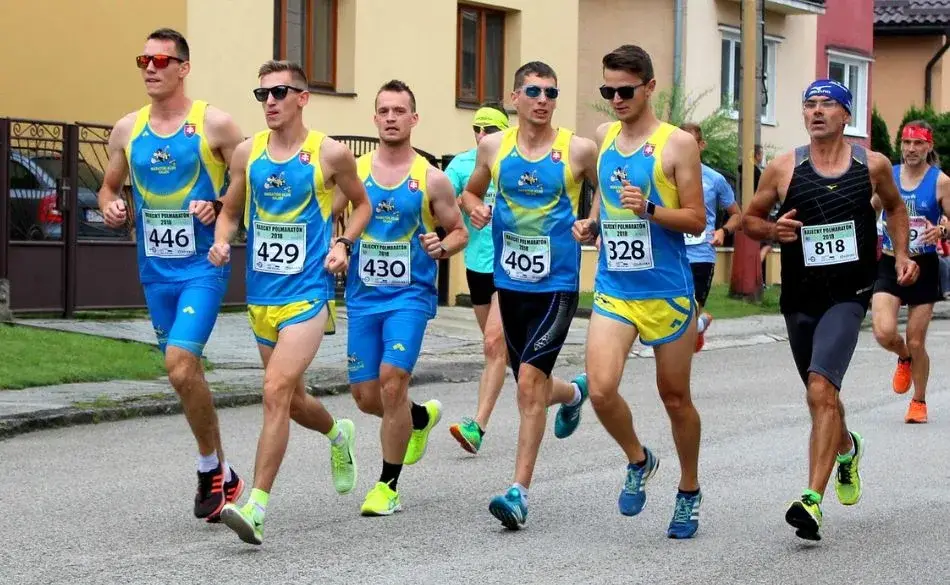
Cross Country Race Distances in the United States
Cross country running in the United States has a long tradition, especially at the high school and college levels. Most people associate it with the 5k distance, which has become the standard for high school races. A 5k cross country race in the US is about 3.1 miles, and it’s often run across grass, dirt trails, and rolling hills.
Middle school events are usually shorter. Depending on the state, distances range from 2k to 3k (1.2–1.8 miles). These races are designed to introduce younger athletes to the sport without overwhelming them. By high school, nearly all competitions are set at 5k, which gives athletes a clear benchmark to train toward.
At the collegiate level, distances increase. In men’s NCAA cross country, the race length is typically 8k (5 miles) during the regular season, with 10k (6.2 miles) reserved for championship meets. For women, the standard has shifted to 6k (3.7 miles) at most competitions, although some smaller meets may still offer a 5k.
Beyond school and college, cross country clubs and open races in the US often include a wide variety of distances. These can range from community 3k fun runs to demanding 10k races that mirror the intensity of international championships.
What makes cross country unique in the US is consistency. If someone asks, “how many miles is a cross country race in high school?”, the answer is almost always 3.1. That standardization makes it easy to compare times across states, courses, and seasons, even though the terrain itself can be unpredictable.
Cross country in the US blends speed, endurance, and adaptability. From middle school to NCAA championships, race lengths are carefully structured to challenge athletes at each stage of their development.
Whether you're chasing your first **5k high school cross country race in the US** or trying to cut time off your **school 4–6 km race in Australia**, our 5KM Running Training Plan walks you through a smart, stage-appropriate program built just for runners targeting that distance.
- 10–16 week structure tailored to beginner, intermediate, and experienced runners
- 3–8 hours per week, so it fits school, training, and life
- Delivered via TrainingPeaks with heart rate, pace, or effort-based workouts
- Includes a personal consultation to craft your plan based on your fitness and goals
- One-time payment — no subscriptions, delivered within 24 hours
Train smarter, run faster, and enjoy your next cross country race.
Grab Your 5 km Plan →Cross Country Race Distances in Australia
Cross country in Australia uses kilometers, and distances vary by age and event level. That’s why you’ll see more range than in the US.
At primary school, races are commonly 2km to 3km. The goal is participation and safe exposure to hills, grass, and uneven ground.
By high school, events usually stretch to 4km for girls and 6km for boys, though some state systems tweak distances by age group. If you’re wondering how many kilometers is a cross country race in Australia, these school standards are the most common answer.
Club and school association meets often mirror those ranges. You’ll also find mixed-community races at 3km, 4km, 6km, and sometimes 8km, which help athletes progress without a big jump in distance.
At the Australian Cross Country Championships, senior men typically race 10km, and senior women usually race 8km. Junior championship races scale down by age, keeping development in mind and aligning with World Athletics formats.
Terrain changes the feel of any distance. Courses may run through parklands, golf fairways, sandy fire trails, or winter-muddy fields. In northern regions, heat and hard ground can make even 3km feel demanding. In southern states, wind and cold add their own challenge.
Most school courses are looped and clearly marked, with marshals at turns and distance boards or flags to manage pacing. Official championship courses use measured wheels and certified layouts, so posted distances match the race label.
For training, match your weekly long run and intervals to your race length. A 4km race rewards steady threshold work and short hills. A 6km or 8km race benefits from longer tempos and aerobic volume.
If you’re new, start with 3km community races to learn pacing. If you’re experienced, target state championships and step up to 8km–10km as your endurance grows.


Comparing US and Australian Cross Country Distances
When you look at cross country race distances in the US and Australia, you’ll notice both similarities and key differences. The most obvious is measurement: the US uses miles, while Australia sticks to kilometers. This small detail often makes comparisons tricky for athletes following results internationally.
In the United States, the 5k high school race (3.1 miles) is the most consistent distance. Nearly every student runner faces it, and it’s become the benchmark for youth endurance. By contrast, in Australia, high school athletes usually run 4km for girls and 6km for boys. The slight variation highlights how each country designs races to match developmental stages.
At the college level, the NCAA sets clear standards with 8k and 10k races for men and 6k for women. Australia’s national championships are very similar, with senior men racing 10km and senior women covering 8km. This alignment ensures Australian athletes can step seamlessly into international competition without needing to adjust to new distances.
Another key difference lies in the environment. US races are often held on school grounds, golf courses, or rolling parkland. In Australia, sandy trails, open fields, and harsher climates add extra challenge. Running 6km in hot Queensland conditions feels very different from a cool autumn 5k in New England.
Here’s a quick comparison of common distances:
- Middle School US: 2k–3k (1.2–1.8 miles)
- High School US: 5k (3.1 miles)
- NCAA Men: 8k–10k
- NCAA Women: 6k
- Primary School AUS: 2k–3k
- High School AUS: 4k girls, 6k boys
- Australian Seniors: 8k women, 10k men
Both systems develop endurance progressively, but the US favors a single iconic distance while Australia adapts race length by age and gender. This makes cross country a truly global sport shaped by culture and environment.
👉 Swipe to view full table
| Warning Sign | What It Looks/Feels Like | Why It Matters |
|---|---|---|
| Flattened cushioning | Shoes feel flat, little to no bounce | Midsole no longer absorbs impact → higher stress on joints |
| Creased midsole | Wrinkles along foam sidewalls | Indicates foam compression and reduced shock absorption |
| Worn outsole | Smooth, bald patches or uneven tread | Loss of traction, risk of slips, altered stride mechanics |
| New aches or pains | Knees, hips, or shins sore after easy runs | Shoes no longer support natural movement → higher injury risk |
| Uneven wear | One shoe more worn down than the other | Leads to imbalance and inefficient running stride |


Average Times and What to Expect in a Cross Country Race
Knowing the distance is one thing, but understanding average cross country race times helps you prepare mentally and physically. Because cross country courses vary—hills, grass, mud, heat, or wind—the same distance can feel very different depending on location.
In the United States, a high school 5k cross country race usually takes competitive boys between 16–20 minutes and girls between 18–22 minutes. Beginners often finish between 24–30 minutes. At the NCAA level, men often run 8k in 24–27 minutes, while women complete 6k in 20–23 minutes.
In Australia, the shorter 4km and 6km school races typically see times of 14–18 minutes for experienced runners, while community-level competitors might take 20–30 minutes. At national championships, senior men running 10km may clock 29–32 minutes, with women covering 8km in 26–30 minutes.
Your time depends on training, course design, and weather. Racing a 5k in hot, humid conditions or an 8k through deep mud can add minutes compared to flat, dry courses.
Here are some useful benchmarks:
- Middle School US (2k–3k): 8–15 minutes depending on age
- High School US (5k): 16–30 minutes, wide range by experience
- College NCAA Men (8k–10k): 24–34 minutes
- College NCAA Women (6k): 20–28 minutes
- Primary School AUS (2k–3k): 9–15 minutes
- High School AUS (4k–6k): 14–30 minutes
- Australian Seniors (8k–10k): 26–36 minutes
These times are not strict cutoffs. They’re guides to help you set realistic expectations and measure progress. If you’re a beginner, finishing strong is more important than comparing yourself to elite runners. Cross country rewards consistency, not perfection.
Average Cross Country Race Times by Level
Knowing how long it takes to finish a cross country race helps set realistic goals. While times vary widely due to terrain and weather, there are reliable benchmarks from high school to elite levels.
In the United States, average high school boys complete a 5k in 18–20 minutes, while high school girls average 22–24 minutes. These numbers represent typical varsity-level runners, though beginners may run slower, and top athletes can dip under 16 minutes for boys and 19 minutes for girls.
At the elite level, times shorten dramatically. At the 2024 US Cross Country Championships, the men’s 10k winner finished in 29:06.5, while the women’s 10k champion crossed in 32:58.6. These performances show just how fast the best in the country can cover challenging terrain.
Here’s a fact-checked breakdown of average times across levels:
👉 Swipe to view full table
| Level / Age Group | United States (Typical Time) | Australia (Typical Time) | Notes |
|---|---|---|---|
| Primary / Middle School (2–3k) | 8–15 min | 9–15 min | Introductory youth races |
| High School Boys (5k / 6k) | 18–20 min (5k) | 20–28 min (6k) | Average varsity level |
| High School Girls (5k / 4k) | 22–24 min (5k) | 16–24 min (4k) | Average varsity level |
| Senior Men (10k) | ~29:06 (2024 US Champs winner) | 30–34 min (Championship level) | Elite national times |
| Senior Women (8k–10k) | ~32:59 (2024 US Champs winner, 10k) | 26–32 min (8k) | Elite national times |
These averages show the wide gap between everyday high school competition and elite national performance. For most runners, the goal isn’t to match elite times. It’s to build fitness, finish strong, and improve season after season.
If you’re curious how your pace stacks up over longer distances, you might also like our breakdown of average 10 km finish times. From beginners breaking an hour to elites chasing sub-30.
Whether you're targeting a **5k high school race in the US** or preparing for a **6km–10km championship in Australia**, your training should match your level. Our Running Training Plans are personalized, structured, and designed for every stage—from first timers to seasoned competitors.
- Custom pacing and distance progression built around your specific cross country goals
- Plan flexibility that adapts whether you’re training for a 3 km fun run or a 10 km championship
- Sport-specific workouts for trail, grass, hills, and changing race terrains
- Delivered via TrainingPeaks for real-time guidance and easy tracking
- Coaching for all levels—novice runners to competitive athletes all get the same strategic edge
Run smarter and build your endurance the right way—with a plan built around you.
View Training Plans →

Training and Preparation for Cross Country Races
The distance of a cross country race (whether it’s a 5k in the US or a 6km in Australia)demands preparation. Training should build both endurance and strength because courses rarely stay flat or predictable.
A good plan includes easy runs, threshold workouts, hills, and long runs. These improve aerobic capacity and prepare your legs for uneven terrain. Core stability and strength exercises also help with balance and injury prevention.
Here are key elements of a balanced training approach:
- Endurance Runs: Steady runs of 30–60 minutes build your aerobic base.
- Intervals: Repeated efforts at 5k pace sharpen speed and efficiency.
- Hill Workouts: Short, hard climbs mimic race conditions and build leg strength.
- Tempo Runs: Sustained efforts just below race pace improve stamina.
- Long Runs: Weekly sessions extending beyond race distance strengthen both body and mind.
In the United States, high school runners preparing for a 5k often log 20–40 miles per week, while NCAA athletes may run 60–80 miles. In Australia, secondary school athletes training for 4km or 6km events usually cover less weekly mileage but include plenty of grass and trail running to simulate championship courses.
Don’t underestimate pacing practice. Running too fast in the opening kilometer can ruin your performance. Practice starting steady, then building effort so you finish strong.
Race-day preparation also matters. Walk the course if possible, noting hills, sharp turns, or uneven ground. In warmer Australian climates, hydration becomes a priority, while US fall races may demand warmer gear to manage cold winds.
With structured training, cross country becomes more than a test of speed, it’s a test of adaptability. Preparing for uneven terrain, shifting weather, and varied distances ensures you’re ready for whatever course lies ahead.
If you’re targeting a 5k cross country race in the US or a 4–6 km race in Australia, this pacing and training strategy might help you break through your personal barrier in a smarter, more structured way. Check out our detailed 24-Minute 5K Training Guide – it walks you through pacing, workouts, and race-day tactics to help you run faster.


Cross Country vs Track Distances
One of the most common questions runners ask is, “how does cross country compare to track?” While both test endurance and speed, the distances and conditions make them very different experiences.
In track running, distances are fixed: 1500m, 3000m, 5000m, and 10,000m are standard. Every lap is 400 meters, the surface is even, and times can be compared directly across meets. For example, a 5,000m track race will always be exactly 12.5 laps.
Cross country is far less predictable. A 5k cross country race in the US and a 6km high school event in Australia might look short on paper, but uneven grass, hills, and weather conditions make them feel longer and tougher than their track equivalents. Times also vary widely—one athlete might run 16 minutes on a flat park course but 18 minutes on a muddy, hilly layout.
Another key difference is terrain. Track rewards rhythm and pacing, while cross country requires constant adjustment. Tight turns, steep climbs, and sharp downhills demand agility and resilience. This makes cross country a better test of overall strength and adaptability.
Here are some quick contrasts:
- Track: Standard distances (1500m, 3000m, 5000m, 10,000m), consistent surface, times highly comparable.
- Cross Country: Distances vary (2k–10k depending on country and level), surfaces change from grass to mud, times less comparable.
- Track: Focused on speed efficiency and pacing discipline.
- Cross Country: Demands endurance, terrain awareness, and mental toughness.
Both disciplines complement each other. Many US and Australian athletes race cross country in the fall or winter, then switch to track in spring or summer. The endurance base built on trails carries over to faster track performances, while track sharpening helps athletes handle the surges and fast finishes of cross country.
In short, track measures pure speed over fixed distances, while cross country challenges you to conquer whatever terrain the course presents.


Key Challenges and Benefits of Cross Country
Every cross country race comes with its own challenges, but those obstacles are also what make the sport rewarding. Unlike track, you can’t predict the course perfectly, and that unpredictability teaches resilience.
One of the biggest challenges is the terrain. Grass, mud, sand, and gravel all change how your legs feel. A 5k race in the US or a 6km event in Australia can feel completely different depending on whether it’s run on a flat golf course or a hilly parkland trail. Weather adds another layer: heat in Queensland or freezing rain in New England both push runners to their limits.
Pacing is another hurdle. On the track, laps are even, but in cross country, hills force surges and slowdowns. Learning when to push and when to conserve energy is a skill that takes time to develop.
Despite the challenges, cross country offers unique benefits:
- Strength and Endurance: The varied terrain builds stronger muscles than flat-surface running.
- Mental Toughness: Racing in mud, wind, or heat builds resilience that translates to other sports.
- Community: Cross country has a strong team culture. Even though races are individual, points are scored as a team, giving runners shared purpose.
- Transferable Fitness: Endurance from cross country carries into track, road running, and even triathlon.
Both in the US and Australia, these benefits make cross country a foundation sport. Many athletes use it to prepare for longer careers in running, cycling, or multisport events.
The combination of unpredictable terrain, challenging conditions, and team spirit makes cross country more than just a race against the clock. It’s a race against yourself and the elements.
If you’re working through how to tackle hilly cross country courses (whether you’re preparing for a 5K in the US or a 6–10 km course in Australia) you might find our detailed Complete Guide to Hill Running for Runners especially useful.


Cross Country Race Distance Comparison Table
👉 Swipe to view full table
| Level / Age Group | United States (Miles / Km) | Australia (Km) | Notes |
|---|---|---|---|
| Middle School | 1.2–1.8 miles (2k–3k) | 2k–3k | Introductory races |
| High School | 3.1 miles (5k) | 4k girls / 6k boys | Most common races |
| College / NCAA | Men: 8k–10k / Women: 6k | Not applicable (follows senior formats) | Structured training focus |
| Senior / National Champs | Men: 10k / Women: 6k–10k | Men: 10k / Women: 8k | International standards |
| Community / Fun Runs | 3k–10k+ | 3k–10k+ | Flexible and inclusive |
This table shows how distances evolve as athletes progress. In the US, the 5k dominates high school, while in Australia, race lengths vary by gender and age. By the senior level, both countries converge around 8k–10k, matching international expectations.
For athletes, the table is more than numbers. It’s a reminder that preparation should match distance. A high school student running 4km in Australia might focus on short threshold sessions, while a US runner tackling a 5k will mix in intervals at race pace. Seniors racing 10k need long runs and strength training to endure the distance.
Whether you’re aiming for a short school race or a national championship, understanding these comparisons helps you set clear training goals.
Whether you're stepping up from a high school 5k in the US or pushing beyond a 6 km school race in Australia, our 10 KM Running Training Plan delivers a structured, goal-focused program to help you build endurance, speed, and confidence over the full 10 km.
- Custom 10–16 week training cycle, crafted for beginners, intermediates, and experienced runners
- 4–9 hours of weekly training, designed to fit around school, life, and your growing mileage
- Strength, tempo, intervals, and recovery all wrapped into periodized structure via TrainingPeaks
- 1-hour consultation included to personalize the plan around your fitness, goals, and terrain
- One-time payment, delivered within 24 hours—no subscriptions, no fuss
Build your 10 km base, conquer any terrain, and run with confidence through every finish line.
Get Your 10 km Plan →Conclusion: Cross Country Distances at a Glance
So, how long is a cross country race? The answer depends on where you live and what level you compete at. In the United States, the standard high school race is a 5k (3.1 miles), while college athletes run 6k, 8k, or 10k depending on gender and championship level. In Australia, races are measured in kilometers and vary more. 2k–3k for primary school, 4k for girls and 6k for boys in high school, and 8k–10k for senior championships.
What ties the two systems together is progression. Both countries structure race distances to match athlete development, starting with shorter races for youth and building up to longer ones for adults. By the time athletes reach senior or international competition, distances align closely at 8k–10k, creating consistency on the world stage.
For you as a runner, understanding these distances means you can set better goals. If you’re just starting, a 2k or 3k school race in Australia is a perfect introduction. If you’re in the US, preparing for the 5k high school distance is the natural target. Experienced athletes should look toward championship events, where endurance and strategy combine to test every skill you’ve built.
Cross country is more than numbers on a course map. It’s mud on your shoes, hills that test your strength, and weather that pushes your limits. The varying distances in the US and Australia highlight the adaptability of the sport, it’s built for anyone willing to lace up and run.
No matter where you are, cross country offers the same lesson: every race is a chance to test your endurance, build resilience, and discover just how far you can go.