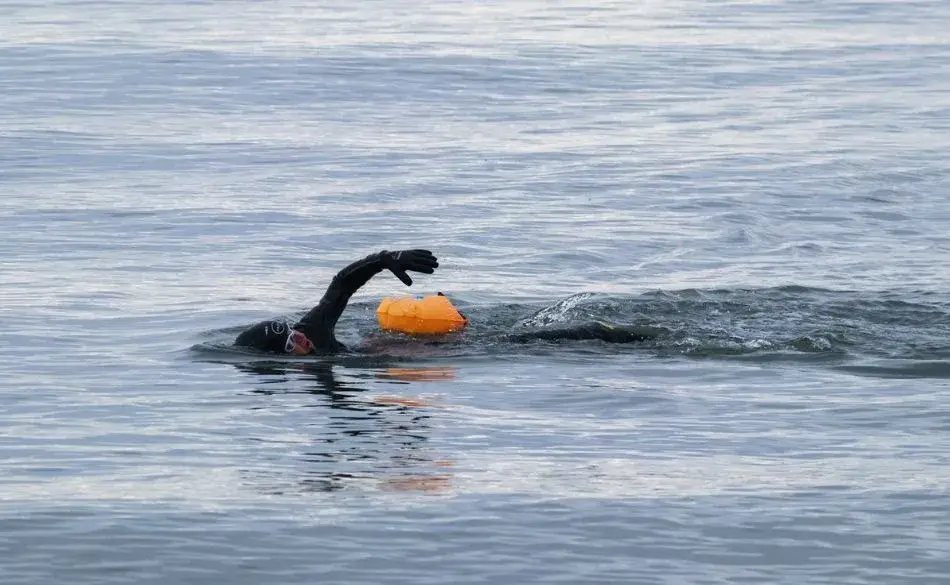
Why Breathing Is the Key to Confidence in the Water
For most beginner triathletes, the hardest part of swimming isn’t the distance. It’s learning how to breathe when swimming without losing rhythm or panicking. The water feels endless, your heart rate climbs, and every time you turn your head you risk taking in a gulp of water instead of air. That’s a familiar story for nearly every new triathlete I’ve coached.
Your freestyle breathing technique sets the tone for the entire swim leg. When you breathe steadily, you help regulate heart rate and maintain oxygen delivery to working muscles – a fact confirmed by research in the Journal of Sports Sciences (2013), which found that controlled rhythmic breathing improves efficiency and reduces perceived exertion. When your heart rate stays steady, your confidence builds, and swimming begins to feel fluid rather than frantic.
Here’s what happens when your swim breathing pattern works correctly:
- Your body alignment stays horizontal, reducing drag and conserving energy.
- Your muscles receive a consistent oxygen supply, delaying fatigue.
- Your mind remains calmer, because steady exhalation lowers carbon-dioxide buildup that often triggers anxiety in new swimmers.
When breathing is off (for example, when you hold your breath underwater or lift your head too high) you upset this rhythm. Lifting the head causes hips and legs to drop, increasing resistance. Holding your breath traps CO₂, making you feel breathless even with plenty of oxygen available. I’ve seen this often: an athlete’s form collapses halfway through a lap, yet once they learn to exhale underwater and breathe every two or three strokes, their effort level drops while pace improves.
Think of breathing like the beat of a song. Each exhale and inhale set the rhythm that guides your movement. The best triathlon swim breathing tips aren’t about forcing technique; they’re about relaxing into the rhythm that lets you glide, not fight, through the water.
Once you’ve learned how to breathe when swimming confidently, the next step is combining your new technique with personalized coaching. Our Triathlon Coaching programs are designed by professional coaches to help you transfer that smooth breathing rhythm into stronger, more efficient race performance across all distances.
- ✔ One-on-one coaching to optimize swim, bike, and run performance
- ✔ Plans for Sprint, Olympic, Half, and Full IRONMAN distances
- ✔ Personalized feedback, pacing, and recovery strategies
Take what you’ve learned in the water and carry it into your full triathlon preparation with expert guidance from SportCoaching.com.au.
View Triathlon Coaching
How to Master Breathing Rhythm and Timing in Freestyle
Once you understand why breathing matters, the next step is learning how to make it work smoothly. Timing is everything when figuring out how to breathe when swimming. You want each breath to fit naturally into your stroke, not interrupt it. The secret is rhythm, this means letting your breathing flow with your movement instead of fighting against it.
Start by exhaling slowly and continuously while your face is in the water. Don’t wait until you turn your head to blow out; doing that causes panic and rushed breathing. When your mouth clears the surface, inhale quickly and easily through your mouth before rolling your head back down.
Here are some triathlon swim breathing tips that help you build consistent timing:
- Start with every 2 or 3 strokes. Breathing every three strokes (bilateral breathing) is a common pattern that helps you stay balanced and adapt to open-water conditions. You can also alternate between every two or three strokes depending on your comfort level and race situation.
- Exhale underwater through nose and mouth. Continuous exhalation prevents carbon-dioxide buildup, which helps you stay calm and avoid that breathless feeling.
- Keep one goggle in the water. When you roll to breathe, aim to keep half your face submerged — this keeps your body streamlined and reduces drag.
- Rotate your body, not just your head. Good body rotation naturally lifts your mouth into the air pocket created by your shoulder, so you don’t have to lift your head.
- Use rhythm drills. Try “bubble, bubble, breathe” drills or side-kick with fins while focusing on slow, steady exhalation to train timing and relaxation.
These adjustments can completely change how you feel in the water. I’ve coached athletes who could barely swim 25 meters without gasping for air. After practicing controlled exhalation and body rotation, they were able to swim continuous laps calmly and confidently. Remember, mastering freestyle breathing technique isn’t about forcing the motion; it’s about letting your breath and movement sync together. Once you find that rhythm, swimming feels natural, steady, and even enjoyable.


Finding the Right Breathing Pattern for You
Every swimmer’s ideal rhythm looks a little different. When learning how to breathe when swimming, there’s no single pattern that works for everyone. What matters is finding a breathing rhythm that matches your effort level, comfort, and the demands of your triathlon swim. In sprint races, you may need more frequent breaths to keep oxygen flowing, while longer open-water swims often reward a slower, more controlled rhythm.
Below is a guide to help you identify which swim breathing pattern might best fit your current skill level and training goals:
👉 Swipe to view full breathing pattern comparison
| Breathing Pattern | When to Use | Pros | Considerations |
|---|---|---|---|
| Every 2 strokes | Useful for beginners or higher-intensity efforts | Provides frequent oxygen and helps maintain relaxation under pressure | May cause uneven rotation if always to the same side; alternate sides to stay balanced |
| Every 3 strokes (bilateral) | Ideal for balanced technique and open-water awareness | Promotes symmetry, helps sight buoys, and adapts to wind or light changes | Can feel limiting at higher speeds; switch to 2-stroke when fatigued |
| Every 4+ strokes | Occasionally used by experienced swimmers during drills or technique sets | Builds breath control and focuses attention on stroke rhythm | Not recommended for long triathlon swims; may increase breath-holding if overused |
Many triathletes mix these breathing patterns within one session. You might start with bilateral breathing to warm up evenly, then shift to every two strokes for harder efforts. In open water, alternating sides frequently helps you stay oriented, balanced, and responsive to waves and glare. For specific sets and structured sessions designed for beginner triathletes, check out our resource on swim workouts for triathletes that complement these breathing patterns.
Research in the Journal of Human Kinetics and the Journal of Sports Sciences shows that both bilateral and two-stroke breathing patterns can improve performance when matched to a swimmer’s fitness and comfort.
Finding your rhythm takes awareness and practice. Start with what feels natural, observe how your body reacts, and adjust as your endurance grows. When breathing syncs with your movement, you’ll feel smoother, faster, and more at home in the water.
Once you’ve learned how to breathe when swimming confidently, the next step is combining your new technique with structured training. Our Triathlon Training Plans are built by professional coaches to help you transfer that smooth breathing rhythm into stronger, more efficient race performance across all distances.
- ✔ Structured swim, bike, and run sessions that reinforce endurance and breathing control
- ✔ Plans for Sprint, Olympic, Half, and Full IRONMAN distances
- ✔ Smart recovery and pacing guidance to sustain rhythm throughout training
Take what you’ve learned in the water and carry it into your full triathlon preparation with expert guidance from SportCoaching.com.au.
View Ironman Training Plans
Drills to Build Better Breathing Control
Once you understand how to breathe when swimming, the next step is training your body to do it safely and automatically. Breathing becomes easier with deliberate practice and calm focus. The following drills build steady exhalation, body alignment, and confidence. Essential for both pool and open-water triathlon swims.
Try these freestyle breathing technique drills to develop rhythm and relaxation:
- Bubble Drill: Stand or float in shallow water. Inhale above the surface, then exhale gently through your nose and mouth until your lungs are empty. Repeat slowly. This improves continuous exhalation and prevents the panic caused by trapped carbon dioxide.
- Side-Kick Breathing: Use a kickboard, keeping one arm extended. Kick on your side and roll slightly to inhale. Keep one goggle in the water to maintain alignment and reduce drag.
- 3-3-3 Drill: Swim three strokes breathing right, three left, three bilateral. This teaches you to switch swim breathing patterns smoothly and builds confidence breathing on both sides.
- Sink-Down Exhale: Take a deep breath, then exhale completely underwater and let your body sink. It teaches you to release air early and improves CO₂ tolerance.
- Hypoxic 25s (with caution): Swim one length breathing every five strokes. Focus on relaxed exhalation and a quick inhale. Perform only at light effort with plenty of rest between lengths. Avoid extended or unsupervised sets as excessive breath-holding can be dangerous
Start with short intervals (25–50 m) so your breathing stays controlled and your form stays clean. Exhale early and steadily underwater, then take a calm, quick inhale as your mouth clears the surface. If you feel rushed or breathless, slow your pace and lengthen your exhalation instead of forcing a bigger breath.
Pair your breathing with body roll, not neck twist. Rotation naturally brings your mouth to the air pocket beside your shoulder, reducing drag. You can also vary your breathing rhythm (every two strokes for higher intensity, every three for balanced control). These triathlon swim breathing tips help you stay relaxed, safe, and efficient, whether you’re training in the pool or racing in open water. For more drills to improve confidence and control, see our beginner swimming exercises guide that complements these breathing techniques.
When pool time is limited or you’re training at home, you can also explore resistance-style gear to maintain technique and rhythm. One excellent option is the Swim Bungee Training for Triathletes setup, which lets you swim in place and focus on controlled exhalation, body roll and consistent breathing without relying on lane space.

How to Breathe Calmly in Open Water
Many triathletes can breathe well in the pool but lose control the moment they hit open water. Cold temperatures, waves, and the chaos of mass starts can make even experienced swimmers panic. Learning how to breathe when swimming in these unpredictable conditions is about preparation, mindset, and rhythm under pressure.
Start with controlled exposure. Before your next race, practice in open water whenever possible (even short sessions help). Get used to how it feels to submerge your face in cooler water and how your breathing changes with mild stress. If you can’t access open water, simulate it in the pool by practicing sighting, drafting, and breathing with minimal lane space.
Here are proven triathlon swim breathing tips to keep calm in open water:
- Find your rhythm early: Begin your swim with slower, longer exhales to steady your heart rate before building pace.
- Breathe to both sides: Bilateral breathing helps you adapt to sun glare, chop, and other swimmers beside you.
- Use sighting breaths: Every 6–8 strokes, lift your eyes slightly forward before turning to the side to inhale. This keeps your navigation smooth without disrupting rhythm.
- Draft efficiently: If you’re swimming behind another athlete, time your breaths with their bubbles it reduces chop and helps you maintain a steady pace.
- Stay relaxed under pressure: If you start to hyperventilate, switch to breathing every two strokes and focus on slow exhalation until your rhythm returns.
One of the triathletes I coach, Sarah, used to panic every time she entered open water. Her breathing would spiral out of control after the first 100 meters. We spent three weeks practicing exhalation drills and gradual immersion. On race day, she started calmly, breathing every three strokes and sighting confidently through the chop. She not only finished strong but said it was the first time she actually enjoyed the swim leg.
Open water rewards rhythm over raw strength. When your breathing stays steady, everything else (stroke, sighting, and confidence) falls into place. Remember: you can’t control the waves, but you can always control your breath.


What to Do When Your Breathing Falls Apart Mid-Swim
Even experienced triathletes have moments when their breathing slips out of rhythm. Maybe another swimmer cuts across your line, a wave hits your mouth, or nerves spike halfway through a race. The good news is that you can recover quickly if you know what to do. Regaining control of your breathing when swimming under pressure is about slowing down, resetting your rhythm, and focusing on calm, deliberate actions.
Here’s a quick reset plan you can use anytime your breathing starts to unravel:
- Ease your effort for 10–15 strokes. Slow your kick and glide longer between pulls. Lower intensity helps your body catch up with oxygen demand.
- Switch to breathing every two strokes. This keeps fresh air coming in and signals to your body that it’s safe to relax.
- Focus on exhaling fully underwater. A complete exhale clears built-up carbon dioxide (the real cause of that breathless feeling) and resets your rhythm.
- Count your strokes. Counting to six or eight before your next sighting breath distracts your brain from panic and brings rhythm back.
- Check your head position. If your face is too high, you’re fighting the water. Keep one goggle in and your head aligned with your spine.
These techniques work in both training and racing. I’ve seen triathletes go from tight-chested panic to steady breathing within just a few breaths by following this reset plan. The secret is awareness, these means noticing tension early and acting before panic sets in. If you ever feel dizzy or can’t regain rhythm, roll onto your back or tread water until your breathing steadies. And if you’re training for a half-Ironman distance, our detailed guide on mastering the 70.3 swim distance offers tips for pacing, breathing and open-water strategy that build on these fundamentals.
Remember, losing rhythm isn’t failure; it’s feedback. Every triathlete experiences it. What separates confident swimmers from the rest is how quickly they recover. With these breathing resets in your toolkit, you’ll be ready to handle any race condition.
Once you’ve mastered how to breathe when swimming, the next challenge is maintaining that rhythm during long-distance triathlon swims. Our Half Ironman Triathlon Training Plans include detailed swim sessions that teach pacing, sighting, and breath control — all crucial for steady open-water performance.
- ✔ Step-by-step swim workouts to refine breathing rhythm and endurance
- ✔ Training plans for beginner, intermediate, and advanced triathletes
- ✔ Includes brick sessions, pacing guidance, and open-water preparation
Build confidence in your swim leg and carry your breathing efficiency through every stroke with expert coaching from SportCoaching.com.au.
View Half Ironman Training Plans

Breathing With Confidence Every Swim
Learning how to breathe when swimming isn’t just about technique, it’s about trust. Trusting your body, your rhythm, and the water itself. Once you stop fighting for air and start working with the flow, everything about swimming changes. You move smoother, feel calmer, and finish stronger.
Breathing well isn’t a talent; it’s a practiced skill. It begins with steady exhalation underwater and quick, relaxed inhales at the surface. It grows through drills, repetition, and awareness. Over time, your breath becomes as natural as your stroke. Whether you’re training in a calm pool or battling chop in open water, you’ll always have one thing under control, your rhythm.
So, the next time you dive in, focus on calm breathing first. Let every exhale guide your pace, every inhale reset your rhythm, and every stroke build confidence. With patience and practice, you’ll reach a point where the water no longer feels like resistance but like partnership. That’s when swimming stops being hard and starts feeling free.
Ready to put these techniques into practice? Keep refining your breathing rhythm during every session and carry that control into your next triathlon.