Want help turning consistency into progress? Coaching keeps your training simple, structured, and sustainable.
Start Coaching →
swimming exercises for beginners freestyle technique in pool

Last updated:

Start Strong in the Pool with These Beginner Swimming Exercises

Starting something new in the water can feel both exciting and intimidating. Whether you’re learning for fitness, confidence, or your first triathlon, these swimming exercises for beginners will help you build skill and strength from day one.
Swimming isn’t just about staying afloat. It’s a full-body workout that boosts endurance, tones muscles, and improves breathing control. The water supports your body, making it one of the best low impact cardio workouts around.
In this guide, you’ll learn practical beginner swim drills, key techniques, and easy workouts to help you feel comfortable and capable every time you jump in the pool. Let’s get started; the first splash is always the hardest.
Chat with a SportCoaching coach

Not sure where to start with training?

Tell us your goal and schedule, and we’ll give you clear direction.

No obligation. Quick, practical advice.

Article Categories:

Explore our triathlon training advice for more helpful articles and resources.

Mastering Basic Freestyle Swimming Techniques Before You Begin

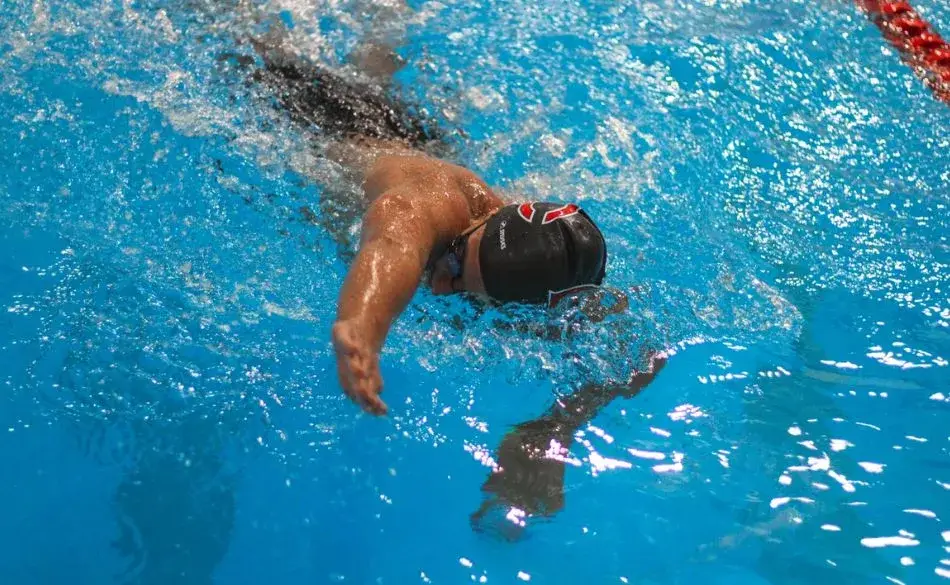
Before you start full workouts, it’s important to focus on your basic swimming technique. The freestyle stroke, also known as the front crawl, is usually the first stroke beginners learn. It’s fast, efficient, and easy to build endurance with once your form is correct.

Think of good technique as your foundation. Without it, you’ll tire quickly and fight against the water instead of flowing through it. Three elements matter most: body position, breathing, and balance.

  • Body Position: Your body should stay long and streamlined, as if you’re floating on a narrow board. Keep your head in line with your spine and your eyes looking slightly down. This helps reduce drag and allows your hips to stay near the surface.
  • Breathing: Learning how to breathe while swimming is often the hardest part for beginners. Breathe out steadily through your nose underwater, then turn your head gently to the side to inhale during your arm recovery. Don’t rush, find a rhythm that feels natural.
  • Balance: Think of your body as a balanced seesaw. If your head lifts too high, your legs sink, slowing you down. When your head stays low and relaxed, your hips rise, and your stroke becomes smoother.

A few minutes spent practicing these basics during every swim session can transform your progress. Use simple tools like a kickboard to improve leg strength or a pull buoy to isolate arm technique. Small corrections lead to major improvements in how efficiently you move through the water.

🎯 Ready to Turn Swim Progress into Triathlon Success?

If your confidence is growing in the pool and you’re eyeing your first multisport race, our Olympic Distance Triathlon Training Plan bridges your swim foundation into a balanced triathlon build. It includes structured swim, bike, and run workouts for your first 1.5K swim, 40K bike, and 10K run race.

  • ✅ Periodised 8–16 week programs designed by SportCoaching experts
  • ✅ Swim progression that leverages your beginner drills and builds endurance
  • ✅ Integrated bike/run sessions focused on pacing, transitions, and recovery

💡 Turn your early swim gains into multisport confidence with guidance from SportCoaching.

View Olympic Triathlon Plan

Essential Beginner Swim Drills to Build Confidence

Once you’ve learned to stay balanced and breathe comfortably, it’s time to turn those skills into smooth movement. The best swimming exercises for beginners are simple, repeatable drills that teach your body how to move efficiently in the water. These drills build both muscle memory and confidence, two things that every new swimmer needs.

Here are a few beginner swim drills you can try in almost any pool:

👉 Swipe to view full table

Drill Purpose How to Do It Tip
Kickboard Flutter Kicks Builds leg strength and body alignment Hold a kickboard with arms extended. Keep your body straight and kick gently from the hips. Focus on small, steady kicks instead of splashing.
Side Kicking Drill Improves balance and breathing control Float on your side with one arm extended and the other by your hip. Kick steadily while rotating your head to breathe. Try alternating sides every 25 meters.
Catch-Up Drill Refines freestyle timing and coordination Start a normal freestyle stroke, but wait for one hand to “catch up” with the other before beginning the next pull. Helps you feel the full extension of each stroke.
Fingertip Drag Drill Encourages high elbow recovery and relaxed technique Lightly drag your fingertips across the water as your arm recovers forward. Focus on smooth, slow movement rather than speed.

You don’t need to rush through them. Spend five to ten minutes per drill during your swim workouts  and notice how each one feels. The goal isn’t to swim harder, it’s to swim smarter and more relaxed.

One of my athletes once struggled to complete a single pool length without gasping for air. After a few weeks of focused drills, her breathing rhythm improved so much she could swim continuously for 20 minutes. It’s proof that consistency, not intensity, creates results.

When you combine patience with proper technique, your progress becomes unstoppable. The water starts to feel less like resistance and more like an ally helping you glide forward.

Building Endurance and Strength Through Swim Workouts

Once you’ve mastered your basic technique and feel confident with beginner drills, the next step is to build stamina. Endurance in the pool isn’t just about swimming longer; it’s about learning how to stay efficient as fatigue sets in. The best swim workouts for beginners mix short intervals, recovery breaks, and focused technique practice to help you develop strength and rhythm without feeling overwhelmed.

A great starting point is swimming for time instead of distance. Many new swimmers find pacing easier this way because it focuses on consistent effort rather than lap counting. For instance, try this simple swim training plan for beginners:

  • Warm-up (5 minutes): Swim easy freestyle laps or alternate between freestyle and backstroke. Focus on relaxed breathing.
  • Main set (15–20 minutes):
    • 4 × 25m freestyle, rest 30 seconds between each
    • 4 × 50m kickboard flutter kicks, rest 45 seconds between each
    • 4 × 25m catch-up drills, rest 30 seconds between each
  • Cool-down (5 minutes): Gentle laps or floating stretches to help your muscles recover.

For days when you want to mix it up, add short sprints (like 4 × 15m fast swims) to build power and improve your heart rate recovery. Always keep form your top priority – swimming efficiently for 20 minutes beats flailing through 40.

As your confidence grows, increase your total time in the water by five minutes each week. You’ll be surprised how quickly your endurance improves. Within a few weeks, you’ll be able to complete 1,000 meters or more without needing extended breaks.

The key is consistency. Just two or three focused sessions per week will help you build steady progress. Every stroke you take becomes smoother, stronger, and more controlled. The moment when swimming shifts from feeling like effort to feeling like freedom.

Once you feel confident completing steady laps and your breathing rhythm feels natural, it’s time to explore more structured sets. Adding distance intervals or skill-based drills can help improve your stamina and prepare you for longer sessions. If you’re starting to think about how your pool fitness could lead into open-water events or triathlon training, there’s a smart way to make that transition.

Read next: Swim Workouts for Triathletes

These workouts take the foundation you’ve built here and apply it to endurance, pacing, and race-focused swim sessions. They’re ideal for anyone ready to move beyond beginner drills and start training with purpose. Whether that’s your first sprint triathlon or just a stronger, more efficient swim routine.

Curious what pace you should aim for in your next swim? Try the Swimming Pace Calculator to help guide your training and pacing strategy. 

🚀 Want to Turn Your Swim Progress into Race Readiness?

If your confidence and fitness in the pool are growing, why stop there? Our Half Ironman Training Plans help you evolve from swim-focused training into balanced triathlon preparation. These plans blend structured workouts across swimming, cycling, and running to power you toward your first 70.3 finish.

  • ✅ Customized 12–16 week plans built by SportCoaching experts
  • ✅ Weekly training hours from 7 to 12 (or more, depending on goal) :contentReference[oaicite:0]{index=0}
  • ✅ Swim training blocks designed to build endurance from your beginner foundation
  • ✅ Integrated bike and run sessions with pacing, recovery, and strength elements

💡 Use your early swim gains as a launching pad — let SportCoaching guide you to balanced, confident triathlon performance.

View Half Ironman Plans

Which Swim Gear Actually Helps Beginners?

Good tools can speed up learning when you use them the right way. The goal is not to depend on gear. It is to use it to understand how your body should feel in the water. Start with a kickboard if your legs tire quickly. It lets you focus on hip-driven kicks and steady breathing without worrying about your arms. Keep your knees soft. Point your toes. Think small, quick kicks that move from the hips, not the knees.

A pull buoy helps you sense a long, balanced body line. Place it between your thighs and keep your core tight. You will feel how a higher hip position reduces drag. This feedback is useful when you return to full stroke and want to keep that smooth glide. Short training fins can improve ankle flexibility and teach you a gentle, rhythmic kick. Choose soft fins that feel natural. If your lower back arches, switch to shorter sets and reset your posture. The goal is better timing, not bigger power.

Paddles can wait. Many beginners grip the water too hard with paddles and lose feel. If you try them later, pick small, technique paddles and keep the stroke light. Your shoulder should feel stable and comfortable at all times. A basic snorkel can help with improving swim form when breathing is stressful. With the head still, you can focus on arm path, rotation, and a steady kick. Keep the mouthpiece relaxed and exhale gently to avoid breath holding.

Bring gear into your plan with purpose. Use one tool at a time for short sets, then swim without it to test your skill. This approach fits well with swim workouts for beginners and supports building swim endurance without breaking form. Over time, use less gear and more awareness. The best equipment is the calm feeling of control you get when each stroke starts to click. 

Are You Breathing the Right Way in Freestyle?

Breathing can make or break your swim. Most new swimmers don’t struggle with strength, they struggle with air. Learning how to breathe while swimming keeps your body relaxed, your rhythm smooth, and your mind calm. When breathing feels easy, swimming feels effortless.

In freestyle, exhale continuously underwater and rotate your head slightly to inhale as one arm recovers forward. Keep one goggle in the water while turning your head. This keeps you streamlined and reduces drag. Beginners often lift their heads too high, which drops the hips and slows the stroke.

Here’s a quick look at what good breathing technique looks like compared to common mistakes:

👉 Swipe to view full table

Technique Correct Form Common Mistake Correction Tip
Head Position One goggle stays in water while breathing Head lifted completely out of water Keep chin low and rotate with shoulder roll
Exhalation Continuous, gentle bubbles underwater Holding breath until turning to inhale Start exhaling as soon as face enters water
Timing Inhale quickly as arm recovers forward Late or rushed breath disrupting stroke Match breath to arm rhythm (every 2–3 strokes)
Body Roll Hips and shoulders rotate naturally Twisting neck without body rotation Think of rolling your body like a log, not turning your head alone

Practice bilateral breathing (alternating sides every three strokes) to keep your stroke even and reduce shoulder fatigue. If you feel dizzy or out of rhythm, shorten your sets and focus on exhaling gently through your nose.

The goal is comfort, not speed. Once your breathing feels smooth, your endurance improves naturally. You’ll glide instead of gasp and finish your swim workout feeling refreshed rather than exhausted.

🏁 Thinking About Taking Your Swimming to a Triathlon?

If your new confidence in the pool has you dreaming of bigger goals, our Beginner Ironman Training Plan helps you transition from building swim endurance to preparing for the full triathlon challenge. Designed by a professional Ironman triathlon coach, it provides a safe, structured path from your first training weeks all the way to the finish line.

  • ✅ 24-week program combining swim, bike, run, and recovery sessions
  • ✅ Progressive swim workouts that build open-water confidence and stamina
  • ✅ Nutrition, pacing, and endurance strategies for first-time Ironman athletes

💡 Take your swimming foundation and turn it into complete triathlon readiness with structured, proven guidance from SportCoaching.com.au.

View the Beginner Ironman Plan

The Best Swimming Exercises for Beginners to Build Skill and Fitness

Once your breathing and technique start to feel more natural, you can begin adding specific swimming exercises for beginners to improve endurance, coordination, and comfort in the water. These exercises focus on small, achievable goals that help you progress without feeling overwhelmed.

The secret is repetition. Just like learning to ride a bike, every lap you swim builds memory and confidence. Aim for short, focused sessions that balance technique with light intensity. Here are a few exercises I often recommend to new swimmers starting out in their swimming  journey:

  • Freestyle Kick Drill: Use a kickboard to focus only on your leg movement. Keep kicks fast, small, and steady.
  • Backstroke Glide: Float on your back, alternating gentle arm strokes. This improves balance and helps you feel how the water supports your body.
  • Breathing Bubbles Exercise: Stand in shallow water and practice exhaling bubbles underwater. This simple drill reduces anxiety and teaches natural breathing rhythm.
  • Streamline Push-Offs: Push gently from the pool wall in a straight line, holding your arms overhead. It’s perfect for learning body alignment and glide control.
  • Vertical Kicking: In deeper water, kick upright for short bursts. It builds leg power and improves your feel for the water.
  • Lap Intervals: Swim one easy lap, rest 20 seconds, and repeat. Gradually increase to four or six laps as your comfort grows.

Try these exercises two or three times a week. The goal isn’t to swim endlessly, it’s to move efficiently. After each session, note how your breathing, posture, and confidence improve.

Small gains add up fast. Within a month, most beginners can double their swim time with less effort and more joy. The water starts to feel less like a challenge and more like a partner helping you stay strong and calm.

Are You Making These Common Beginner Mistakes?

Everyone starts somewhere, and the fastest way to improve is by spotting small errors early and fixing them before they become habits. These are the most common mistakes I see during swimming exercises for beginners, along with easy ways to correct them.

Holding your breath
This is the number one issue for new swimmers. Holding your breath raises tension and heart rate, making swimming harder. Instead, exhale gently underwater and inhale as you rotate. Remember the rhythm: “bubbles out, quick breath in.”

Lifting your head to breathe
When your head lifts too high, your hips drop and you lose balance. Keep one goggle in the water and turn your head with your shoulders. Low head, high hips, smooth glide.

Big, splashy kicks
Large kicks waste energy and tire your legs. Aim for small, fast kicks that start from your hips, not your knees. Point your toes and keep your legs relaxed. If your legs burn quickly, shorten your kick sets and rest well.

Crossing your arm over the midline
If your hand crosses in front of your nose, your body wobbles side to side. Keep your fingertips entering the water in line with your shoulder and pull straight back. This instantly improves swim form and stability.

Straight, stiff arms
Overreaching and stiff arms create drag and shoulder tension. Lead with your elbow, keep recovery loose, and let your fingertips skim the surface.

Skipping warm-ups and cool-downs
Jumping straight into hard sets feels clunky. Begin every session with 3–5 minutes of easy laps or drills, and finish with gentle swimming to lower your heart rate.

Swimming too hard, too soon
Progress in swimming comes from rhythm, not force. Keep sets short and rest 20–45 seconds between repeats. Build your base before you chase speed.

Neglecting body roll
Freestyle isn’t flat, it’s a controlled roll. Rotate your shoulders and hips together about 30–45 degrees each side. This helps with breathing and makes your stroke longer.

Overusing gear
Gear can be helpful, but too much prevents progress. Use one aid per session and then swim without it to test your control.

Focus on fixing one thing at a time. Small improvements add up fast. Soon, your stroke will feel lighter, your breathing smoother, and your beginner swim workouts  will flow naturally from start to finish.

Your First 4 Weeks in the Pool — A Simple Progression

Now that you’ve learned core skills and tried a few drills, it’s time to put them into a plan. A short, steady progression helps you turn practice into habit without feeling overwhelmed. Think of this as your on-ramp to consistent lap swimming for beginners.

Week 1: Comfort and control. Swim two sessions. Keep each one around 20–25 minutes. Focus on relaxed breathing, easy kick sets with a board, and 25m freestyle repeats with generous rest. End with quiet floating or backstroke to calm your heart rate. Your only goal is smooth rhythm.

Week 2: Balance and timing. Swim two or three sessions. Nudge total time to 25–30 minutes. Add catch-up and fingertip drag drills to refine timing. Keep rests between repeats, but shorten them a little. If you feel tense, pause and practice bubble breathing at the wall. You’re still prioritizing improving swim form over speed.

Week 3: Gentle endurance. Swim three sessions if possible. Aim for 30–35 minutes each, with a main set like 6 × 50m at easy effort and 20–30 seconds rest. Sprinkle in short kick or side-kick sets for alignment. This is where building swim endurance begins to click.

Week 4: Confidence and flow. Keep three sessions. Hold 35–40 minutes and try one continuous easy swim of 10–12 minutes. Use a second session for technique focus and a third for a mixed set with a few controlled 25m pick-ups. Your pace should still feel conversational for most of the work.

Keep every session simple: a brief warm-up, one focused main set, and a calm cool-down. If you get tired, shorten the repeat, not the quality.

By the end of four weeks, most swimmers can complete 800–1,200 meters per session with steady breathing. You’ll feel the water support your body, your stroke will quiet down, and your swimming exercises will start to feel like a relaxing routine you look forward to.

If you’re ready to go beyond beginner workouts and build endurance for longer races, check out Mastering the 70.3 Swim Distance for expert pacing strategies and training advice.

🏊 Ready to Take Your Swimming Further?

Whether you’re learning the basics or preparing for your first triathlon, our Triathlon Coaching Programs provide personalized swim training plans, technique feedback, and expert guidance to help you build endurance and confidence in the water.

  • ✅ Custom swim sessions designed for beginners through advanced triathletes
  • ✅ Focused drills to improve technique, breathing, and body position
  • ✅ Coaching that integrates swim, bike, and run training into one balanced plan

💡 Work with SportCoaching.com.au to improve your swimming technique, gain endurance, and train smarter for your next race or fitness goal.

Explore Swim & Triathlon Coaching Programs

Accountability and Motivation: The Extra Edge of Coaching

Every swimmer starts as a beginner, learning to balance, breathe, and trust the water. Progress in the pool comes from repetition and awareness, not force. Each of the swimming exercises for beginners in this guide builds a specific skill (body position, breathing rhythm, or stroke efficiency) that works together to form strong fundamentals. These aren’t random drills; they follow proven learning progressions used by coaches worldwide to help beginners become confident swimmers.

After the first few weeks, you’ll start noticing measurable changes. Your breathing becomes steadier, and you’ll cover more distance with less effort. The water resistance that once felt heavy starts to feel supportive, almost like a training partner guiding your movements. This happens because your nervous system adapts. Every stroke trains your body to move with more coordination and control. Improvements in cardiovascular endurance and flexibility often appear within the first month when you swim two to three times per week.

As a coach at SportCoaching, I’ve seen these transformations countless times. One athlete I worked with started by struggling to complete 50 meters without gasping for air. We structured her sessions around short, efficient sets focusing on breathing technique and body alignment. Within six weeks, she could comfortably swim 800 meters with consistent pacing and clean form. Her success came not from pushing harder, but from refining her technique and building endurance gradually.

The key takeaway is this: progress in swimming isn’t about speed, it’s about consistency and attention to detail. Every movement in the water provides feedback. When your stroke feels uneven, adjust your rotation. When your breathing feels rushed, slow your exhale. Tracking small improvements, such as reduced rest time between sets or a smoother kick rhythm, gives you data to measure success objectively.

Want personalized coaching to tie all your swim gains into your triathlon journey? Explore Triathlon Coaching in Melbourne (Swim-Bike-Run) for tailored guidance across all three disciplines.

Find Your Next Triathlon Race

Ready to put your training to the test? Here are some upcoming triathlon events matched to this article.

Graeme - Head Coach and Founder of SportCoaching

Graeme

Head Coach & Founder, SportCoaching

Graeme is the founder of SportCoaching and has coached more than 750 athletes from 20 countries, from beginners to Olympians, in cycling, running, triathlon, mountain biking, boxing, and skiing. His coaching philosophy and methods form the foundation of SportCoaching's training programs and resources.

750+
Athletes
20+
Countries
7
Sports
Olympic
Level

Start Your Fitness Journey with SportCoaching

No matter your goals, SportCoaching offers tailored training plans to suit your needs. Whether you’re preparing for a race, tackling long distances, or simply improving your fitness, our expert coaches provide structured guidance to help you reach your full potential.

  • Custom Training Plans: Designed to match your fitness level and goals.
  • Expert Coaching: Work with experienced coaches who understand endurance training.
  • Performance Monitoring: Track progress and adjust your plan for maximum improvement.
  • Flexible Coaching Options: Online and in-person coaching for all levels of athletes.
Learn More →

Choose Your Next Event

Browse upcoming Australian running, cycling, and triathlon events in one place. Filter by sport, check dates quickly, and plan your training around something real on the calendar.

View Event Calendar