Why Knee Pain Shows Up During Cycling
Knee pain during cycling usually develops gradually rather than appearing after a single ride. Most riders first notice a dull ache, mild stiffness, or a vague sense that something feels off during or after riding. These early signs often fade quickly, which makes them easy to ignore until the discomfort becomes harder to manage.
Your knee is not built to create power. Its main role is to transfer force from your hips to your feet as smoothly as possible. When that force moves through the joint in a straight, controlled line, the knee generally tolerates cycling very well. Problems begin when that force drifts slightly off line, which can happen even when your fitness is improving.
Climbing is often where symptoms become noticeable. Riders who experience knee pain when cycling uphill are usually dealing with higher joint load rather than poor conditioning. Hills encourage slower cadence and heavier gears, which increases pressure through the knee on every pedal stroke. It feels controlled at the time, but the joint absorbs far more force than it does on flat terrain.
How you pedal matters as much as how hard you ride. Sustained low cadence riding increases stress through the knee joint, especially late in a ride when form starts to slip. Over time, this pattern can lead to knee pain from cycling cadence, even in cyclists with strong aerobic fitness.
Bike setup plays a quiet but critical role. Small changes in saddle height or cleat alignment affect how your knee tracks thousands of times per ride, which explains why bike fit knee pain is so common. A rider dealing with saddle too high often feels discomfort behind the knee, while a slightly low saddle tends to load the front of the joint instead.
Indoor riding can bring these problems to the surface faster. Trainers limit natural movement and keep your body locked into one position, which is why some cyclists notice knee pain after indoor cycling even when outdoor rides feel comfortable. Without subtle posture changes, stress concentrates in the same tissues again and again.
In most cases, knee pain during and after cycling is not a sign that cycling is harming your joints. It is a signal that load, movement, and bike setup are no longer working together as they should.
Many riders train regularly but struggle with niggles that keep interrupting progress. Some weeks feel smooth and controlled, while others leave you backing off or second guessing your training. Without clear structure, it’s easy to accumulate fatigue faster than your body can adapt.
Personalised coaching helps you manage training load, recovery, and progression so your riding supports long-term consistency. Instead of reacting to problems after they appear, your training is adjusted proactively, helping you stay confident, comfortable, and moving forward.
Explore Personalised Cycling Coaching
Where Knee Pain Shows Up and What It Usually Means
Knee pain does not feel the same for every cyclist. The location of the discomfort often gives you a useful clue about what is being overloaded and why. Paying attention to where you feel pain can help you fix the problem faster instead of guessing.
Pain at the front of the knee is one of the most common patterns cyclists report. This area sits directly behind the kneecap and takes a lot of load when knee bend is excessive or force is high. Riders who describe pain in front of knee are often dealing with a saddle that is slightly too low, a cadence that drops under fatigue, or long periods of seated climbing, which aligns with clinical descriptions of cyclist’s knee linked to patellofemoral stress. The knee bends more, pressure increases, and irritation builds slowly.
Pain on the outside of the knee feels very different. It often shows up as a sharp or pulling sensation that worsens as the ride goes on. Outer knee pain is commonly linked to how the knee tracks side to side during the pedal stroke. Cleat alignment, stance width, and hip control all influence this pattern. It can feel sudden, but it usually develops after weeks of subtle stress.
Pain behind the knee is less common but still important. It often points to overextension at the bottom of the pedal stroke. Riders sometimes notice this discomfort after longer rides or harder efforts, especially when they try to “reach” for the pedals late in a session.
Here are the most common pain locations and what they often suggest:
- Front of the knee: Excessive knee bend, low saddle height, low cadence under load
- Outside of the knee: Poor knee tracking, cleat misalignment, limited hip stability
- Back of the knee: Overextension, high saddle height, locking the knee at the bottom of the stroke
One coaching client I worked with complained of knee pain only after long weekend rides. During the week, everything felt fine. After reviewing his setup, we found his saddle was just a few millimetres too high. On short rides it was tolerable. On longer rides, fatigue made the problem obvious. A small adjustment and a cadence focus resolved the pain within weeks.


Training Habits That Quietly Overload Your Knees
Knee pain during and after cycling is not always about your bike. In many cases, it comes from how you train rather than how you’re set up. These habits often feel normal, productive, or even smart, which is why they slip under the radar until pain shows up.
One of the biggest issues is doing too much of the same kind of riding. When every ride looks similar in intensity, cadence, and terrain, the same tissues take the same load again and again. Your aerobic fitness might improve, but your knees never get a break from repeated stress.
Long rides are another common trigger. Many cyclists only notice knee pain after long bike rides, even though shorter sessions feel fine. Fatigue changes how you pedal. Cadence drops slightly, you push harder through the downstroke, and your knee starts absorbing force it normally shares with muscles. The pain is not sudden. It is cumulative.
Indoor training can magnify this effect. Riding indoors removes natural variation and keeps you locked into one position. This is why some riders feel discomfort only after trainer sessions, especially during winter blocks when volume increases quickly.
Beginners are especially vulnerable, not because they are weak, but because their tissues are not yet conditioned. Beginner cyclists experiencing knee pain often comes from enthusiasm outpacing adaptation. Fitness improves faster than joints and connective tissue can handle.
The following training habits commonly overload the knees without obvious warning signs:
- Riding at low cadence for long periods, especially on climbs or into headwinds
- Increasing weekly volume or intensity too quickly without recovery weeks
- Doing most rides at a moderate “always hard” effort instead of clear easy or hard days
- Spending long blocks exclusively on the indoor trainer without adjusting setup
- Ignoring early stiffness or soreness because it disappears during the ride
The challenge is that none of these habits feel reckless. They feel disciplined. They feel like training. But knees respond best to variety, gradual load, and clear recovery.
If you want to reduce knee pain, look beyond single rides. Step back and look at patterns across weeks. Small changes in how you distribute effort often make a bigger difference than stretching or strengthening alone.


Practical Fixes That Reduce Knee Pain Without Killing Your Training
Fixing knee pain does not usually require drastic changes or long breaks from riding. In most cases, small, targeted adjustments reduce stress enough for symptoms to settle while you keep training. The key is focusing on changes that improve how force moves through your knee, not just masking discomfort.
Start with cadence awareness. Many cyclists unknowingly ride at a cadence that is lower than ideal, especially when tired or climbing. Spinning slightly faster reduces peak force on the knee with every pedal stroke. This does not mean riding unnaturally fast. It means choosing gears that allow smoother pressure rather than heavy pushing.
Bike setup is the next priority. You do not need a full professional fit to make meaningful improvements, but you do need to respect small measurements. Saddle height, saddle fore-aft position, and cleat alignment all influence knee tracking. Even adjustments of a few millimetres can noticeably change how your knees feel during longer rides.
Training structure also matters. Knee pain often improves when intensity and volume are distributed more clearly across the week. Riders who feel sore often train in a constant moderate zone that never allows full recovery or true adaptation. Clear easy days protect the knees just as much as they build fitness.
The following practical fixes consistently help reduce knee pain when applied together:
- Increase cadence slightly during climbs and late in rides to reduce joint load
- Check saddle height carefully and avoid changes larger than a few millimetres at once
- Use easier gears earlier instead of waiting until fatigue forces the change
- Limit long indoor sessions without breaks or position changes
- Build recovery weeks into training blocks rather than pushing continuously
Strength work can help, but it should support riding rather than compete with it. Simple exercises that improve hip control and leg stability often reduce knee stress more effectively than isolated knee exercises, which is why guidance on cycling and weight training for beginners can be useful when knee pain is part of the picture. You do not need heavy gym sessions for this to work.
Recovery deserves attention as well. Knee tissues respond to load slowly, so consistent sleep, hydration, and fueling matter more than most riders expect. Pain that eases within a day or two is often manageable. Pain that lingers or worsens is a sign that adjustments are not enough yet.

How Bike Setup Changes Knee Stress During and After Cycling
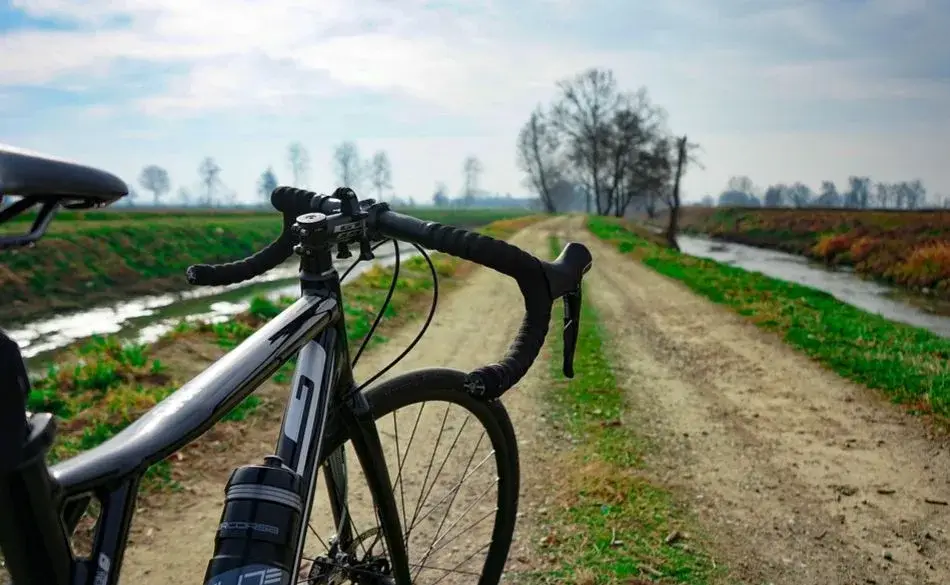
Your bike setup quietly shapes how much stress your knees absorb on every ride. Small adjustments can change where force goes, how smoothly your knee tracks, and whether discomfort builds during or after cycling. This is why riders with similar fitness can have very different knee experiences.
Saddle height is often the biggest influence. A saddle that sits too low increases knee bend and pressure at the front of the joint. A saddle that sits too high pushes the knee toward overextension, stressing tissues behind the joint. These patterns explain why riders sometimes feel fine early in a ride, then develop discomfort as fatigue changes control.
Fore-aft saddle position matters as well. Sliding the saddle too far forward increases load at the knee by shifting work away from the hips. Moving it slightly back often spreads effort more evenly, especially during steady riding and climbing, which is why approaches such as the KOPS method (knee over pedal spindle) are often used as a reference point rather than a rigid rule.
Cleat position and alignment affect how your knee tracks side to side. Even a few degrees of rotation can change how the joint loads under pressure. This is one reason bike fit knee pain can appear after new shoes or cleats, even when nothing else has changed.
Indoor riding can make setup issues more noticeable. Without natural movement, errors show up faster, which explains why some riders report knee pain after indoor cycling but not outdoors. The bike did not suddenly become wrong. The environment simply removed your ability to compensate.
The table below shows how common setup choices influence knee stress patterns.
👉 Swipe to view full table
| Setup Factor | Too Low or Too Far Forward | Too High or Too Far Back | Common Knee Sensation |
|---|---|---|---|
| Saddle Height | Excessive knee bend increases compressive load | Overextension stresses posterior tissues | Front or back of knee ache |
| Saddle Fore Aft | More load shifts to the knee | More load shifts to hips and glutes | Deep joint fatigue over time |
| Cleat Position | Knee tracks inward or outward | Improved alignment and tracking | Side of knee tightness |
| Stance Width | Knees collapse or flare | Neutral knee tracking | Lateral knee discomfort |
| Indoor Setup | Repetitive stress without movement | Micro adjustments reduce overload | Stiffness after sessions |
Many cyclists know their pain points and frustrations, but progress still feels haphazard. Some weeks feel like forward momentum, while others feel like recovery and repair with little progress. Without a thoughtful plan, it’s easy to overload tissues or miss opportunities to adapt and improve.
Cycling training plans provide structure around ride intensity, volume, and recovery so you’re not guessing whether your workouts are helping or hurting. A good plan helps you balance hard efforts with recovery days and gradually build fitness without unnecessary setbacks.
Explore Cycling Training Plans
When Knee Pain Needs More Than Adjustments
Most knee pain during and after cycling improves once load, training habits, and bike setup are brought back into balance. However, there are times when discomfort is a signal to pause and look deeper rather than push through and hope it settles.
Pain that appears suddenly, worsens quickly, or changes the way you pedal deserves attention. This includes sharp pain that alters your stroke, swelling around the knee, or discomfort that lingers for several days despite lighter riding. These patterns suggest irritation is no longer just mechanical overload and may involve tissue inflammation that needs time to calm down.
Pain that continues off the bike matters as well. If you feel knee discomfort walking stairs, sitting down, or getting up from a chair, the issue has moved beyond simple riding stress. Cycling is low impact, so symptoms that persist during daily movement often point to accumulated overload rather than a single setup error.
There is also a difference between soreness and pain. Mild stiffness that fades with movement is common during heavy training blocks. Pain that grows sharper, more focused, or more frequent is not part of normal adaptation. Learning to tell the difference protects long term progress.
Situations where extra support is worth considering include:
- Pain that does not improve after one to two weeks of reduced load and setup changes
- Swelling, warmth, or visible inflammation around the knee
- Pain that changes your pedal stroke or causes limping after rides
- Discomfort that worsens with each session rather than easing
Seeking help does not mean you have failed or done something wrong. It means you are responding early rather than letting a small issue become a long interruption. A sports-focused physiotherapist or bike fit professional can often identify subtle issues quickly and guide adjustments that are hard to see on your own.
The encouraging reality is that cycling remains one of the most knee-friendly endurance sports available. When knee pain appears, it is usually a message, not a warning sign to quit. Listening early, adjusting calmly, and respecting recovery almost always allow you to keep riding comfortably.

How to Return to Riding Without Making Knee Pain Worse
How to Return to Riding Without Making Knee Pain Worse
When knee pain shows up, the goal is not to stop riding completely or rush back into hard training. The goal is to keep your knees moving while removing the stress that caused the irritation in the first place. Most setbacks happen when riders either push through pain or rest too long and then return too aggressively.
A smart return to riding starts with lowering joint load without removing consistency. For the first one to two weeks, riding should feel controlled, smooth, and repeatable. That usually means flatter routes, lighter gears, and a focus on cadence rather than speed or power. You are not detraining during this phase. You are giving your knee space to settle while keeping the movement pattern intact.
Pain should guide decisions, but only if it is interpreted correctly. Mild discomfort that stays stable during a ride and fades within a day is usually acceptable. Pain that increases as the ride goes on, changes how you pedal, or lingers into the next day is a sign that the load is still too high.
Indoor riding can be used, but it needs extra care. Trainers remove natural movement and make poor habits more stressful. Shorter sessions, frequent posture changes, and a smooth cadence matter more indoors than outdoors during this phase.
The table below outlines a simple two-week return to riding structure that works well for most cyclists dealing with knee pain.
👉 Swipe to view full table
| Phase | Ride Focus | Duration | Cadence Guidance | Terrain | What to Avoid |
|---|---|---|---|---|---|
| Days 1–5 | Calm, steady riding | 30–60 minutes | Comfortably high, smooth | Flat or gently rolling | Hard efforts, big gears, long climbs |
| Days 6–10 | Consistency and rhythm | 45–75 minutes | Stable cadence, no grinding | Mostly flat, short rises only | Low cadence fatigue riding |
| Days 11–14 | Gradual load return | 60–90 minutes | Cadence first, effort second | Introduce light climbing | Standing climbs, late-ride surges |
After this phase, progression should be gradual. Add time before intensity. Reintroduce hills before hard efforts. Let cadence stay smooth even when effort increases. If knee discomfort returns, it usually means progression moved faster than adaptation.
The aim is not to test your knee. The aim is to rebuild trust in movement. When that happens, strength and confidence return naturally.


Bringing It All Together for Long Term Knee Health
Knee pain during and after cycling can feel discouraging, especially when you enjoy riding and rely on it for fitness, stress relief, or competition. The reassuring truth is that this type of pain is rarely random and rarely permanent. In most cases, it reflects how load, movement, and recovery are interacting over time rather than damage to the knee itself.
When you step back and look at the full picture, patterns usually emerge. Cadence drops when fatigue sets in. Bike setup drifts slightly out of range. Training weeks stack up without enough variation or recovery. None of these choices are wrong on their own, but together they can quietly overload the knee. Once you see that pattern, progress becomes much easier.
The most effective approach is calm and methodical. Make one change at a time and give it space to work. Adjust cadence before changing saddle height. Modify training load before adding strength work. Respect early signals instead of waiting for pain to force a break. Small, consistent adjustments almost always outperform aggressive fixes.
It also helps to remember that cycling remains one of the most knee-friendly endurance sports available. When managed well, it supports joint health rather than undermines it, which is why many riders benefit from understanding whether cycling is good for your knees instead of assuming pain means damage. Many riders train for decades without ongoing knee problems once they understand how their body responds to load.