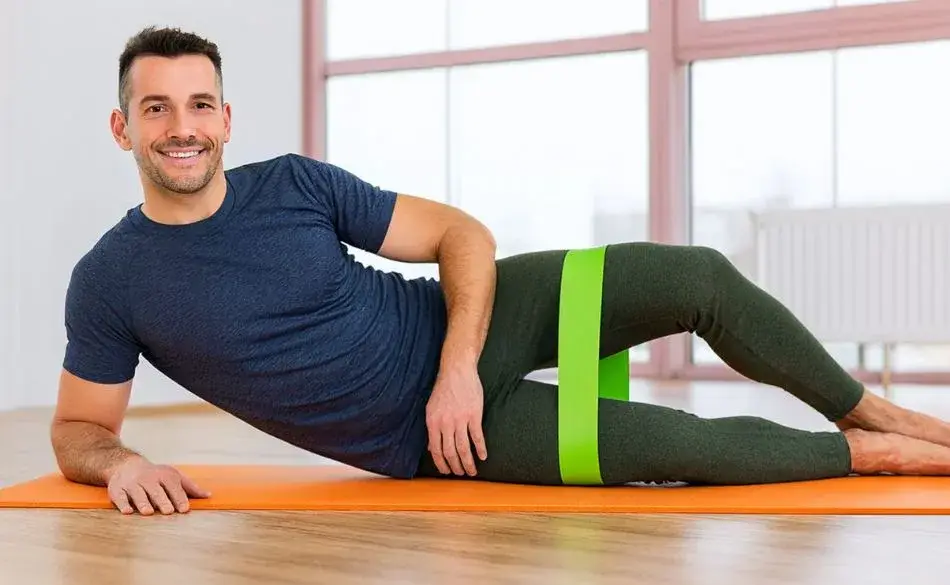
How the Psoas Influences Movement Efficiency in Endurance Sports
The psoas muscle works quietly in the background, but it has a big influence on how efficient you feel when you move (psoas major muscle). It connects your lower spine to the top of your thigh, which means every step you take and every pedal stroke you push passes through this area. If that connection is smooth, movement feels light. If it is not, effort leaks away.
For runners, the psoas helps lift the knee and guide the leg forward. When it functions well, your stride feels longer without forcing it. When it does not, your body often compensates by overusing the quads or tightening the lower back. This is why a targeted psoas workout for runners often improves running form before it improves pace. You feel more upright and less restricted, even at easy speeds. Supporting the psoas with strong surrounding hip muscles is part of this process, which is why these hip strengthening exercises for runners can play an important role in reducing compensation and improving overall running mechanics.
Cyclists experience a different version of the same problem. Long hours seated on the bike can leave the psoas shortened and underactive. Over time, this limits hip extension and makes it harder to apply power smoothly at the top of the pedal stroke. Carefully chosen psoas exercises for endurance athletes help restore balance so power feels more connected instead of forced.
One detail many athletes miss is timing. The psoas is not meant to be tense all the time. It needs to engage at the right moment and relax when its job is done. When this timing is off, stiffness builds and performance drops. That is why psoas activation exercises are often more useful early on than heavy strengthening.
Think of the psoas like a hinge on a door. A strong hinge still fails if it sticks. When it moves freely, everything else works better. By understanding this role, you stop blaming your legs or lungs and start addressing the real link in the chain. This shift alone can change how you approach training, especially during long runs, steady rides, and race preparation.
If you want clear guidance on how to combine strength work, mobility, and running sessions without guessing, our Running Coaching gives you structured, personalised training built around your goals.
Your coach helps you understand how different pieces of training fit together, when to push, when to ease back, and how to stay consistent without overcomplicating things.
With experienced coaching support, you can train with confidence, avoid common mistakes, and keep progressing week after week.
Learn More →
How to Tell When Your Psoas Is Holding You Back
Once you understand what the psoas does, the next step is learning how it shows up when something is off. This muscle rarely announces itself clearly. Instead, it whispers through small changes in how your body feels and moves.
For many endurance athletes, the first sign is stiffness rather than pain. You might feel fine once you warm up, but the first few minutes of a run feel awkward. Your stride feels short. Your hips feel slow to open. Over time, this can turn into what many runners describe as tight psoas from running, especially during higher mileage phases or hill-heavy weeks. For runners dealing with this early stiffness, improving overall movement quality with drills like these 10 mobility exercises for runners can help restore smoother mechanics alongside targeted psoas work.
Cyclists often notice it differently. After long rides, standing upright can feel uncomfortable. Your hips stay slightly folded forward, and your lower back takes over when you try to extend. This is not a strength issue yet. It’s usually a coordination problem.
The psoas is designed to change length smoothly. When training load rises or posture stays fixed for too long, that smooth transition disappears. The muscle stays “on” when it should relax. Other muscles then step in to protect you, which increases effort and reduces efficiency.
Here are a few common signs that the psoas may be limiting you:
- You struggle to stand tall after sitting or riding
- Your lower back tightens during easy runs
- One hip feels tighter or heavier than the other
- Knee lift feels forced rather than automatic
This is where psoas mobility exercises become important. Mobility is not about pulling the muscle longer. It’s about restoring your ability to move through range without losing control. Think of it like oiling a hinge so it moves freely again, not forcing it open.
A key mistake is jumping straight into aggressive stretching. That often increases tension instead of reducing it. The psoas responds better when you combine gentle range with controlled movement. When that happens, stiffness usually eases quickly.
If you recognise these signs, that’s actually good news. It means you’ve identified the problem early. With the right approach, most runners, cyclists, and triathletes feel noticeable improvement within a few weeks, often without changing their main training at all.

A Simple Way to Wake Up the Psoas Before You Try to Strengthen It
Once you recognise when the psoas is holding you back, the next step is helping it do its job again. This is where many athletes rush. They jump straight into strengthening, hoping harder work will fix the problem. Most of the time, that just teaches other muscles to compensate even more.
Before strength comes awareness.
Before load comes control.
That is why psoas activation exercises are such an important starting point. Activation helps your nervous system reconnect with the muscle so it can switch on and off at the right time. When this happens, movement starts to feel coordinated instead of forced.
For runners, this often shows up as smoother knee lift and less tension through the lower back. For cyclists, the pedal stroke begins to feel rounder, especially through the top of the movement. The effort spreads more evenly instead of pooling in the quads.
This short routine works well before easy runs, strength sessions, or brick workouts. Keep the effort light and controlled. You are not trying to fatigue the muscle. You are teaching it to participate.
Simple psoas activation routine
- 90 90 breathing with feet on a wall for 5 slow breaths
- Dead bug with slow heel taps for 6 reps each side
- Standing march holds with tall posture for 15 seconds each side
- Low step knee drive for 6 controlled reps each side
Focus on posture as much as movement. Keep your ribs down and your pelvis steady. If your lower back arches or your shoulders tense, slow down. Precision matters more than intensity here.
A useful check is how you feel right after. Standing tall should feel easier. Lifting the knee should feel lighter and more automatic. These small changes tell you the right muscles are waking up.
If you do not feel much at first, that is normal. The psoas is deep and subtle. Stay consistent for two weeks and most endurance athletes notice better control, less stiffness, and smoother movement without adding extra training load.
This sets the foundation for strengthening. Once activation is reliable, the next phase becomes far more effective and far safer.


The Best Psoas Strength Progression for Runners Cyclists and Triathletes
Once activation feels reliable, you can start strengthening. This is where your psoas strengthening exercises should feel challenging but controlled. You want the front of the hip to work without your lower back taking over. If you feel your back arching or your hip pinching, lower the difficulty and slow down.
Strength training for the psoas is not about cranking your knee up as high as possible. It is about creating steady force through the full movement, then owning the position. Think of it like building a stronger chain link. You are not trying to stretch the chain. You are making it harder to break.
A practical way to build strength is to progress through three levels. This helps beginners and experienced athletes train safely. It also lets you match the work to your weekly running and cycling load.
For triathletes in particular, combining psoas strength with improved hip extension helps these gains transfer more effectively into swim–bike–run performance, which is why adding focused work like these hip extension exercises for triathletes can further support posture, power, and smoother transitions.
Below is a detailed guide you can use for training weeks, recovery weeks, and in-season maintenance. It also covers when to use the routine if you have discomfort, including situations where a psoas workout for lower back pain may be part of the solution, as long as you keep the movements controlled and pain-free.
👉 Swipe to view full table
| Level | Exercise | How It Should Feel | Sets and Reps | Best For | Common Mistake |
|---|---|---|---|---|---|
| Level 1 | Supine march with band around feet | Deep front-hip engagement with ribs down and steady pelvis | 2–3 sets of 6–8 each side | Beginners, post-ride stiffness, return from time off | Lower back arching to lift the leg higher |
| Level 2 | Seated knee lift with band anchored behind | Controlled lift without leaning back, smooth lowering phase | 3 sets of 8 each side | Building strength for steady runs and long rides | Leaning back and turning it into an ab crunch |
| Level 3 | Hanging knee raise or captain chair knee raise | Strong hip flexion with stable torso and no swinging | 3 sets of 6–10 | Advanced athletes, hills, sprint finishes, powerful transitions | Swinging the legs and using momentum |
| In-season option | Low step knee drive hold | Firm but not painful, tall posture, steady hip position | 2 sets of 10-second holds each side | Triathletes managing fatigue, maintaining control in race blocks | Letting the pelvis twist or dropping the supporting hip |
| Recovery week option | Half-kneeling resisted march | Gentle effort with clean alignment and easy breathing | 2 sets of 6 each side | Deload weeks, mild discomfort, travel weeks | Holding breath and turning it into a strain session |
After you choose your level, train it two times per week at first. If your legs feel heavy the next day, reduce volume. This is a small muscle with a big job, so it responds best to steady progress. Over time, strength here supports smoother running mechanics, stronger climbing, and better posture late in races.
If you want personalised guidance to balance power training, mobility, and endurance on the bike, our Cycling Coaching offers structured plans built around your goals.
Your coach helps you understand how to improve your pedal efficiency, manage fatigue, and integrate strength and mobility work into your weekly rides without guesswork.
With tailored coaching support, you’ll train with confidence, stay consistent, and make measurable gains while avoiding common pitfalls that slow cyclists down.
Learn More →

How to Fit a Psoas Workout Into Real Training Without Overloading Your Body
The biggest mistake endurance athletes make with new strength work is doing too much, too fast. The psoas is small, deep, and highly reactive. It does not need daily work. It needs the right dose at the right time.
For most runners, cyclists, and triathletes, two short sessions per week is enough. The goal is not soreness. The goal is smoother movement during your main training. If your legs feel heavy or your hips feel tight the next day, that is feedback. Scale back.
One of the most useful ways to think about this is placement. Where you put your psoas work matters more than how much you do.
Best times to train the psoas
- After easy run days when fatigue is low
- On strength or cross-training days
- Before a short, low-intensity ride
- During deload or recovery weeks
Avoid hard psoas work right before key sessions. A tired hip flexor can change your stride or pedal mechanics in subtle ways.
This is especially important if you deal with recurring hip or back issues. Carefully placed psoas exercises for hip pain can support movement, but only when they are treated as support work, not punishment.
I saw this clearly with one triathlete I coach. He was strong, consistent, and disciplined, but every time his run volume increased, his lower back tightened and his stride shortened. We did not change his mileage. We added two short psoas sessions per week and removed aggressive stretching. Within three weeks, his long runs felt smoother, and his back stopped tightening late in sessions. Nothing dramatic changed. The system just started working better.
Another key piece is listening to asymmetry. If one side feels harder, do not double the work. Keep volume even and focus on control. Strength differences often resolve on their own once timing improves.
Think of psoas training like tuning a bike derailleur. Small adjustments make a big difference. Too much force just makes things worse.
When integrated calmly, this work supports better posture, easier transitions, and more efficient movement across all three disciplines. It should feel like support, not stress.


How Mobility Keeps Psoas Strength Useful Instead of Restrictive
Once you start strengthening the psoas, another issue can appear if you are not careful. The muscle gets stronger, but movement still feels restricted. This is not because strength work failed. It usually means mobility was not included in the system.
The psoas needs to shorten and lengthen smoothly. Strength helps it produce force. Mobility helps it move through range without resistance. When one is missing, the other loses value.
Many endurance athletes rely on stretching alone. That approach often backfires. The psoas is a protective muscle. When it senses fatigue or instability, it increases tension. Aggressive stretching can signal threat instead of safety, causing the muscle to tighten rather than relax.
This is where psoas mobility exercises fit naturally into your training. Mobility is not passive. It blends controlled movement with steady breathing so the nervous system allows range instead of guarding it.
For runners, this supports hip extension late in long runs, when form usually fades. For cyclists, it helps restore upright posture after long hours in a flexed position. For triathletes, it makes the bike-to-run transition feel less compressed through the hips.
For triathletes especially, improving hip extension is often what allows psoas mobility work to translate into better movement, which is why pairing this approach with targeted hip extension exercises for triathletes can make transitions feel smoother and less restricted.
Maintaining lateral hip stability is also part of this balance. When muscles like the gluteus medius support pelvic control, the psoas can relax and engage at the right time, which is why this gluteus medius stretch every endurance athlete should know fits well alongside psoas mobility work.
Think of mobility as the space that strength works inside. Strong muscles in a small space feel stiff. Strong muscles with room to move feel powerful and relaxed.
Here are simple mobility options that work well alongside strength training.
Psoas mobility work that complements strength
- Slow half-kneeling shifts with ribs down and easy breathing
- Supine leg lowers with a steady pelvis
- Controlled step-back lunges focused on posture, not depth
The goal is not sensation. It is control. Move slowly enough that breathing stays calm. If tension rises, the range is too much. When mobility is trained this way, strength work starts to feel easier instead of heavier. Over time, this balance reduces stiffness, improves posture, and helps endurance athletes move efficiently even when fatigue builds.


How to Strengthen the Psoas Without Making Hip Pain Worse
Once you add mobility, the next priority is keeping your strengthening work joint-friendly. The psoas is deep, but the front of the hip has other tissues that can get irritated if you load the wrong angles. This is why some athletes try a psoas routine and end up feeling more pinchy or sore. The plan was not wrong. The setup was.
The biggest risk is turning hip flexion into a crunch or a swing. When you lean back to lift the knee, the hip flexors often grip while the pelvis tips forward. That can compress the front of the hip. When you swing the legs, momentum replaces control. The psoas does less work, but the joint takes more stress.
If you have irritation, keep training simple and clean. Use slow reps. Use smaller ranges. Stay away from sharp pinching. This is also where psoas exercises for hip pain can be helpful when they are chosen to build control instead of forcing range.
A practical rule is the two out of ten guideline. Mild effort discomfort is fine. Sharp pain is not. If pain climbs during the set, stop and regress the exercise.
Here are coaching cues that protect the hip while still building strength.
Hip-friendly psoas strengthening cues
- Keep ribs down so the lower back does not arch
- Lift the knee only as high as you can without pinching
- Lower slowly and control the last third of the descent
- Exhale during effort to reduce bracing and tension
- Aim for smooth reps, not heavy resistance
Another underused idea is using isometrics. Holding a knee drive position for ten seconds builds strength with less joint irritation than fast reps. This is especially useful for triathletes during race blocks and for cyclists who already spend long hours in hip flexion.
If you notice one side pinches and the other feels fine, do not try to stretch the pinchy side harder. That usually makes it worse. Instead, reduce range and focus on alignment. Most athletes find the pinch fades as control improves.
If you want personalised guidance to balance your triathlon training, including strength and mobility, our Triathlon Coaching gives you structured support built around your goals and schedule.
Your coach helps you understand how to integrate mobility work like psoas and hip training with your swim, bike, and run sessions so you can move more efficiently and train smarter.
With tailored coaching support, you’ll improve consistency, avoid common training mistakes, and make steady progress across all three disciplines.
Learn More →

The Weekly Psoas Plan That Fits Around Running, Riding and Swimming
At this point you have the pieces. You know how to spot the problem. You have an activation routine. You have a strength progression. You also have mobility work that keeps strength usable. Now you need a weekly structure that fits around real endurance training, not a perfect schedule that collapses when life gets busy.
The simplest plan is to pair psoas work with lower-intensity days. This protects your key workouts and keeps fatigue under control. It also matches how the psoas behaves. It responds best to consistent input, not random hard sessions.
A common question is how to decide what to do on a given day. Use your body as the guide. If you feel stiff, start with mobility. If you feel disconnected or unstable, start with activation. If you feel stable and you are not near a key session, add strength.
This is also a good place to include a light psoas workout at home on travel weeks. A short session can prevent the “tight hip” feeling that shows up after flights, long drives, or desk-heavy days.
Here is a simple weekly template that works for many endurance athletes.
Weekly psoas plan
- Day 1 Mobility plus activation after an easy run or swim
- Day 2 Strength session after an easy ride or gym day
- Day 3 Mobility only after a long ride or long run
- Day 4 Strength session after an easy day or cross-training day
Keep each session short. Ten to fifteen minutes is enough. If you try to turn it into a full workout, it will start competing with your endurance training.
If you are in a heavy running block, reduce psoas strength volume and keep activation. If you are in a heavy cycling block, keep mobility and add strength only if your hips still feel free. Triathletes can rotate focus based on the toughest week in the plan.
One insight many athletes miss is that the psoas is not just a hip flexor. It supports your posture. When posture improves, breathing feels easier, and fatigue arrives later. That is why even small improvements here can feel like a big performance shift.


Bringing It All Together
A strong, responsive psoas does not come from stretching harder or adding random strength work. It comes from understanding how this muscle fits into your movement and training it with intention. When you activate it first, strengthen it progressively, and support it with mobility, your running stride feels smoother, your riding posture improves, and fatigue shows up later instead of earlier.
The psoas does not need constant attention. It needs consistency and restraint. Short, well-placed sessions done a few times per week are enough to change how your body moves under load. For runners, cyclists, and triathletes, that means better efficiency without adding stress to an already full training plan.
If your hips have felt tight, your stride short, or your lower back too involved, this approach gives you a clear path forward. Train the psoas as part of the system, not in isolation. When it works well, everything above and below it starts working better too.