









Find Your Next Running Race
Ready to put your training to the test? Here are some upcoming running events matched to this article.
 Coach Graeme
Last updated:
Every kilometre you run, your foot strikes the ground roughly 600–800 times, each contact generating an impact force of two to three times your body weight. Over a 10km run that's 6,000 to 8,000 individual impacts. Whether those impacts are efficiently absorbed or transmitted as harmful stress to your joints and connective tissue depends almost entirely on technique — specifically on where your foot lands relative to your body, how quickly you turn your legs over, and whether your posture is helping or fighting you.
Improving running technique doesn't mean running like an elite athlete or overhauling your natural movement. It means identifying the specific mechanical inefficiencies that waste energy or accumulate injury risk, and making targeted changes — one at a time, over weeks, not all at once. This guide covers each element of running form with the evidence behind it and the practical steps to improve it.
Not sure where to start with training?
Tell us your goal and schedule, and we’ll give you clear direction.
No obligation. Quick, practical advice.
Explore our running training advice for more helpful articles and resources.
Running economy is the energy cost of running at a given pace — how much oxygen you consume per kilometre at a particular speed. Two runners with identical VO2max can have meaningfully different race times if one is more economical: the more efficient runner uses less energy at the same pace, leaving more in reserve for the later kilometres.
Technique is a primary driver of running economy. Overstriding adds braking force that must be overcome with each stride. Excessive vertical oscillation (bouncing up rather than moving forward) wastes energy in a direction that doesn’t contribute to pace. Stiff, crossed arm swing creates rotational forces the core has to resist. Every one of these inefficiencies has a metabolic cost that accumulates over thousands of strides.
Elite runners at any given pace look effortless partly because their efficiency genuinely is higher — less energy is wasted on movements that don’t produce forward progress. Recreational runners who improve their technique often describe the same sensation: runs that previously felt hard start to feel more controlled at the same pace. That’s running economy improving. Our guide on easy run effort covers how improved economy changes what easy effort actually feels like as technique and fitness develop together.
| Element | What good looks like | Common error | Effect of the error |
|---|---|---|---|
| Posture | Tall and relaxed; ears over shoulders; slight forward lean from ankles | Hunching forward from waist; looking down at feet | Restricts lung capacity; shifts weight forward, increasing knee load; causes neck and upper back pain |
| Cadence | 170–180 SPM easy pace; 180–190+ at race effort | Below 160 SPM — too slow, overstriding | Braking force with each stride; increased impact transmitted to shin, knee, and hip; energy wasted on vertical movement |
| Footstrike position | Foot lands beneath the hips with slight knee bend at contact | Foot lands in front of the hips (overstriding), usually with a straight knee | Braking impact force; shin splints; runner's knee; IT band syndrome; stress fractures |
| Arm swing | Elbows at ~90°; swing forward and back parallel to the body; hands relaxed; fists don't cross midline | Arms crossing the midline; elbows too low; hands clenched | Rotational forces that the core must resist; tension in shoulders and neck; wasted energy |
| Vertical oscillation | Low bounce — forward movement dominant; energy directed into the ground and backwards | Excessive bounce; bounding upward with each stride | Energy spent going up rather than forward; higher impact on landing; GPS pace data shows less forward progress per effort |
| Breathing | Deep belly (diaphragmatic) breathing; rhythmic pattern matched to stride | Shallow chest breathing; erratic or held breath | Reduced oxygen delivery; faster fatigue; side stitches; inability to maintain easy effort comfortably |
Cadence — steps per minute — is the single most actionable element of running technique, because improving it automatically corrects multiple other problems simultaneously. When cadence increases, stride length shortens, which brings the foot contact point back toward or under the hips. The knee is slightly bent at ground contact rather than extended. Impact force is distributed more effectively. Vertical oscillation decreases. All of these improvements follow from one change.
The widely cited target of 180 SPM comes from coach Jack Daniels’ observation that elite distance runners at various paces consistently ran at or above 180 SPM. The practical range for recreational runners is 170–180 SPM at easy and moderate pace, rising to 180–190+ at threshold or race effort. Taller runners naturally operate at the lower end of these ranges due to longer legs; shorter runners at the higher end.
What matters most for recreational runners is avoiding cadences below 160 SPM, which almost universally indicates significant overstriding. If your current cadence is 155–165 SPM, increasing it by 5–10% (to roughly 163–175 SPM) is the right initial target — not jumping immediately to 180. Trying to increase cadence too quickly produces a forced, shuffling stride that feels wrong and often doesn’t embed as a lasting change. The 5–10% rule gives the neuromuscular system time to adapt. Our running pace calculator can show you the relationship between cadence and pace at different speeds — a useful reference for understanding what your current cadence implies about stride length.
Measuring: most GPS watches (Garmin, Apple Watch, Polar) display cadence in real time. Without a watch, count every time one foot strikes the ground for 30 seconds and double it — that gives one-foot strikes per minute, which equals total steps per minute (both feet). Do this on an easy flat section of road for accuracy.
Increasing: the most effective tool is a metronome app set to your target cadence (BPM = SPM). Running to a beat trains the neuromuscular system far more efficiently than consciously counting steps. Start by using the metronome for 5 minutes within an easy run, then run normally, then return to the metronome. Over 4–6 weeks, increase the target by 2–3 SPM. The change will feel effortful and slightly forced at first — this is normal and reflects the brain building a new movement pattern rather than evidence that it isn’t working.
Overstriding — landing with the foot significantly ahead of the hips — is the most prevalent mechanical error in recreational running and a leading cause of shin splints, IT band syndrome, patellofemoral (runner’s knee) pain, and stress fractures. Understanding why it’s damaging makes the fix intuitive.
When the foot lands in front of the hips with the knee near-straight, it acts as a brake. Forward momentum is interrupted by the contact, and the body then has to generate force to re-accelerate from the brief deceleration. This braking impact travels directly up the kinetic chain — into the shin, knee, and hip — rather than being absorbed efficiently through a bent knee and the elastic recoil of tendons. The more you overstride, the more each step both decelerates you and loads your joints with a sharp impact that’s hard to absorb.
The connection to injury is well-supported. Runners who overstride show higher rates of tibial stress fractures, shin splints, and patellofemoral pain than those who land closer to or under their hips. The fix is direct: increase cadence by 5–10%. Shorter, quicker steps automatically bring the foot contact point back toward the hips without requiring conscious thought about where the foot is landing.
A useful self-test: run past a shop window or get someone to record you from the side. Does your lower leg extend forward (heel well ahead of the knee) at contact? Do you look like you’re reaching for the ground rather than the ground coming to meet your foot? If yes, overstriding is present. A subtle forward lean from the ankles (not the waist) combined with higher cadence typically resolves it within a few weeks of consistent practice.
Good running posture is easier to describe than to maintain, especially under fatigue. The cue that works for most runners: imagine a string attached to the top of your head pulling you gently upward. This produces a tall, elongated torso rather than a hunched or collapsed spine. Eyes should be looking 10–20 metres ahead, not at the ground — looking down naturally rounds the shoulders and drops the chin, which compresses the chest and reduces breathing efficiency.
The forward lean that produces efficient running comes from the ankles, not the waist. A slight lean from the ankles (think of a ski jumper’s in-run position) uses gravity as a propulsive force — you’re falling slightly forward and your legs are catching you. Leaning from the waist instead shifts the centre of mass forward without the legs being in a position to use it, loading the lower back and hamstrings instead.
Shoulders should be relaxed and low, not hunched toward the ears. Shoulder tension is one of the most common form breakdowns on longer runs and is visible from 100 metres away on tired runners. Periodically during runs, consciously drop the shoulders away from the ears, unclench the fists, and allow the hands to relax open briefly. This tension release propagates through the upper body and often immediately improves the quality of the remaining kilometres. Our warm-up and cool-down guide covers the dynamic warm-up exercises that activate the postural muscles before quality sessions — starting a hard run with cold, inactive glutes and hip flexors is a significant contributor to form breakdown.
The heel vs midfoot vs forefoot debate has consumed running conversation for years, with studies showing mixed results on which reduces injury rates. The cleaner finding, supported consistently across research: where the foot lands relative to the hips matters more than which part of the foot touches the ground first.
A heel strike that lands directly beneath the hips with the knee slightly bent is far less damaging than a midfoot strike that overshoots and lands in front of the body. The elite Kenya and Ethiopia distance runners who dominate road racing show varied footstrike types — what they share is that the contact point is consistently close to beneath the centre of mass, with a flexed knee at ground contact to absorb impact.
RunRepeat’s analysis puts it plainly: avoid leaping forward and land lightly. “Don’t focus on how your feet hit the ground. Instead, avoid leaping forward and land lightly.” The practical instruction is to think “quick and quiet” — feet touching down briefly and returning to the air rather than stamping. Running more quietly (literally making less sound with each footstrike) is one of the most reliable cues for reducing impact force regardless of which part of the foot contacts first.
If you genuinely overstride and want to move toward midfoot landing, the path is through cadence increase — not through consciously placing the forefoot first. Artificially forcing a forefoot strike while overstriding simply moves the point of excess braking impact from the heel to the ball of the foot and typically produces calf and Achilles strain.
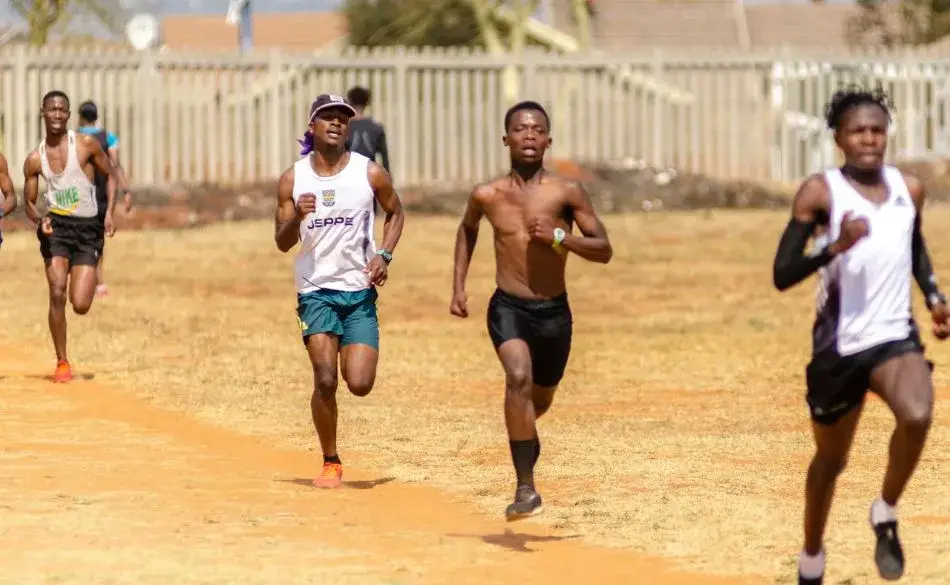
Arm swing is the most commonly overlooked component of running form, and one of the most impactful when corrected. The arms counterbalance the rotation of the legs — each arm swing counteracts the rotational force of the opposite leg’s stride. When arm swing is wrong, the core has to work harder to resist unwanted rotation, consuming energy that would otherwise go into forward movement.
The key mechanics: elbows bent at approximately 90 degrees, swinging forward and backward parallel to the body. Hands should not cross the body’s midline — if your left hand is crossing past the sternum on the forward swing, the associated shoulder rotation is creating a twisting force that the core and hip must resist. Keep hands relaxed — a light “ok” sign or imagine holding a crisp without crushing it. Clenching fists creates tension in the forearms that travels up to the shoulders and neck, and is a common driver of the shoulder-hunching that develops over long runs.
The elbows should not drop too low either — many runners carry their arms near hip level, which limits the counterbalance efficiency. The forearm should be roughly horizontal or slightly above at the midpoint of the arm swing. On a hard effort or in a race, arm drive naturally becomes more powerful and exaggerated — the arms are actively contributing to forward propulsion at higher intensities rather than just counterbalancing. This is why speed work sessions are a good place to practise arm mechanics — the heightened intensity makes the arm contribution more obvious and the feedback from running faster reinforces what efficient arm use feels like.
Breathing technique affects both the physiological efficiency of oxygen delivery and the experience of running effort. Shallow chest breathing uses a fraction of lung capacity and means a higher respiratory rate is needed to deliver the same oxygen — which makes running feel harder than it actually is. Deep belly breathing (diaphragmatic breathing) fills the lungs more completely and requires fewer breaths per minute to achieve the same oxygen delivery.
The 3:2 pattern — inhale for 3 steps, exhale for 2 — is a widely used framework that keeps breathing rhythmic and prevents the erratic ventilation that often triggers side stitches. The asymmetry (odd-numbered inhale, even-numbered exhale) means the footstrike at the beginning of each exhale alternates between left and right feet, which some research suggests reduces the likelihood of stitches developing. Our guide on stomach cramps when running covers the mechanics of side stitches in detail and the specific breathing adjustments that resolve them mid-run.
At easy pace, breathing should be comfortable — the classic talk test (able to speak full sentences) should be possible. If breathing feels laboured at what should be easy effort, there are two likely explanations: pace is too fast for current aerobic fitness, or breathing mechanics are inefficient. Our Zone 2 running pace guide covers how to calibrate easy effort so that breathing stays controlled throughout a run — controlled breathing is both a symptom and a cause of efficient running.
Running drills reinforce the neuromuscular patterns that underpin efficient mechanics. They’re not magic — a 10-minute drill routine doesn’t transform technique — but done consistently before quality sessions, they gradually shift the default movement pattern toward better mechanics. The key is using drills that target the specific element you’re working on, not doing a generic list because it’s what runners do.
High knees. Drive the knee up toward the chest with each step while maintaining upright posture. Develops hip flexor strength and teaches knee lift, which contributes to a quicker, more powerful stride cycle. Focus on posture — don’t let the torso tip backward as the knees rise. 2 × 20 metres.
Butt kicks. Jog forward while driving the heel toward the glutes on each step. Trains the hamstring-driven heel recovery that brings the foot back under the hip quickly after toe-off, reducing the time the foot spends behind the body. Keep the knees pointing down. 2 × 20 metres.
A-skips. A rhythmic skip where the knee drive and arm drive are coordinated — left arm and right knee rise together, then right arm and left knee. Develops coordination between upper and lower body and teaches the basic rhythm of efficient running mechanics. 2 × 20 metres.
Strides. 80–100 metre controlled accelerations at approximately mile effort — fast, relaxed, with quick turnover. Strides are the most transferable drill for recreational runners because they practise fast running mechanics at an effort level that’s sustainable and doesn’t generate significant fatigue. 4–6 after an easy run, 2–3 times per week. Our guide on speed work for runners covers strides in the context of structured training and how they fit into the training week as a low-cost introduction to faster running mechanics.
The biggest risk of technique work is rushing the change. Muscles, tendons, and joints that have been running one way for years have adapted to those specific mechanical demands. Changing the pattern means different muscles and structures carry different loads. Done too quickly, technique changes can produce calf strains from sudden forefoot loading, hip flexor soreness from increased knee lift, or general fatigue from the increased mental effort of conscious form work.
The practical approach: change one thing at a time. Cadence first — it produces the most benefit and is the most tractable change. Use the 5–10% rule: measure your current cadence, add 5–10 SPM, and practise at that new target for 4–6 weeks before considering further changes. Only introduce the metronome for 5–10 minutes per session within easy runs initially. As the new cadence becomes automatic (it stops requiring conscious effort), it can be used throughout easy runs, then eventually in harder sessions.
Beginners are well-positioned to build good mechanics from the start rather than correcting ingrained habits. Our beginner running guide covers the overall structure of starting running — technique is one component alongside building the aerobic base. For runners who are also building mileage, our marathon mileage guide covers why form tends to break down as volume increases too fast — the fatigue of higher mileage overwhelms the muscular capacity to maintain mechanics. Addressing both technique and mileage progression together produces better outcomes than either in isolation.
For older runners, maintaining good technique is particularly important because the neuromuscular adaptations that support quick turnover, hip extension, and explosive toe-off are among the first things to decline with age. Our guide for older athletes covers how form work and speed maintenance become increasingly important as a tool for preserving running economy and injury resilience as the years accumulate.
Run More Efficiently With a Structured Plan
SportCoaching's running coaching includes technique feedback alongside your training plan — cadence analysis, form cues, strength work to support better mechanics, and weekly adjustments based on how your training is responding.
What is the ideal running cadence?
170–180 SPM at easy and moderate effort; 180–190+ at race effort. Avoid below 160 SPM — this almost always indicates overstriding. Increase gradually by 5–10% over 4–6 weeks rather than jumping to 180 immediately.
What is overstriding and why is it a problem?
Landing with the foot significantly ahead of the hips. Each contact acts as a brake on forward momentum, and the impact force travels directly to the shin, knee, and hip. It’s the leading cause of shin splints, IT band syndrome, and runner’s knee. Fix: increase cadence 5–10% — this naturally brings the foot contact back under the hips.
Should I change my footstrike from heel to midfoot?
Focus on where your foot lands relative to your hips, not which part of the foot touches first. Landing under the hips with a slightly bent knee — regardless of whether it’s heel, midfoot, or forefoot — is what reduces injury risk. Increasing cadence naturally shifts the contact point without forcing an artificial footstrike change.
How long does it take to improve running technique?
6–12 weeks for changes to become automatic. Start with one element (cadence first), practise for 5–10 minutes per session within easy runs, and give the neuromuscular system time to embed the new pattern before adding more changes.
Do running drills actually improve technique?
Yes — specific drills (high knees, butt kicks, A-skips, strides) target the neuromuscular patterns of efficient running. Strides are the most transferable for recreational runners — 4–6 after an easy run, 2–3 times per week. Drills work best as part of a pre-quality-session warm-up rather than before easy runs.
Ready to put your training to the test? Here are some upcoming running events matched to this article.


Head Coach & Founder, SportCoaching
Graeme is the founder of SportCoaching and has coached more than 750 athletes from 20 countries, from beginners to Olympians, in cycling, running, triathlon, mountain biking, boxing, and skiing. His coaching philosophy and methods form the foundation of SportCoaching's training programs and resources.
No matter your goals, SportCoaching offers tailored training plans to suit your needs. Whether you’re preparing for a race, tackling long distances, or simply improving your fitness, our expert coaches provide structured guidance to help you reach your full potential.
Smart, progressive training from 5km to marathon with weekly guidance.
What’s included
Browse upcoming Australian running, cycling, and triathlon events in one place. Filter by sport, check dates quickly, and plan your training around something real on the calendar.
Choose your plan to get started with personalized training plans designed to help you reach your goals.


Minna Backman
When you’re new, feedback is especially important, and Graeme is highly skilled at both analyzing numbers and understanding the importance of mental strength.











