How Your Body Starts to Change in the Early Weeks
When you begin triathlon training, your body responds faster than most people expect. Even in the first month, your muscles, breathing, and energy systems start adapting to the mix of swimming, cycling, and running. These early changes help explain why there’s no single average triathlete body type, because every athlete’s starting point and training volume looks different.
You may feel your shoulders becoming more stable as swimming teaches you to move through the water with better rhythm. Your core begins firing more often, even during easy rides, because it works to keep you balanced on the bike. Running adds a different kind of load, building joint stability and leg control that support you across all three sports.
Here’s the thing: these changes don’t always show on the outside right away. But your body is already learning how to save energy, move smoothly, and handle longer sessions. This is why the idea of the best body type for triathlon performance isn’t as rigid as many athletes think. What matters most is how well your body adapts to layered training.
As these adaptations build, you might start asking yourself questions like, “Why does my breathing feel easier on hills now?” or “Why does my body feel lighter during long rides?” These are signs that your endurance engine is developing.
Some of the earliest physical shifts include:
- Improved aerobic capacity that makes long efforts feel steadier
- Stronger postural muscles that reduce fatigue late in sessions
- Better movement control as your legs and core share more of the workload
Many athletes also notice subtle improvements in daily life (standing taller, recovering faster after walking up stairs, or feeling more grounded in their stride). These changes happen regardless of size or shape, which is why your triathlete body transformation journey always looks personal.
If you’re still unsure whether your current fitness is enough to begin the sport, this guide on how fit you need to be for a triathlon can help you understand where to start.
If you want a training plan that matches your natural strengths, supports your unique physique, and helps you develop the balanced triathletes body type needed for swim–bike–run performance, the Triathlon Coaching Program at SportCoaching gives you personalised structure and expert support.
You’ll get tailored workouts, smart progression, and guidance that helps your body adapt the right way—so you feel stronger, more efficient, and more confident in every discipline.
Explore Coaching Options
Is There Really a Typical Triathlete Body Type?
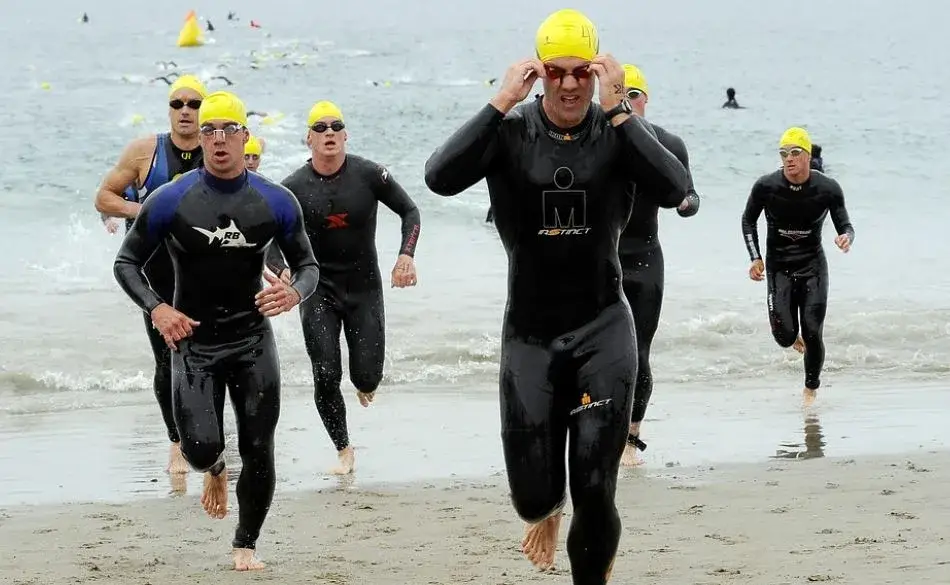
When you scroll through race photos, it’s easy to think there’s one “right” way to look as a triathlete. Tall, lean, and carved out of stone. Let’s be honest, that image can feel pretty discouraging when you’re just starting out.
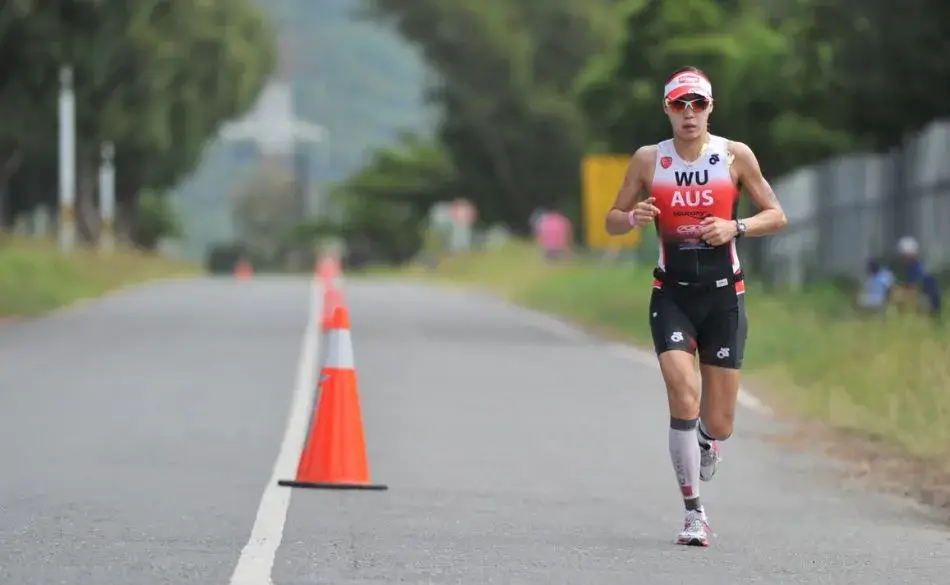
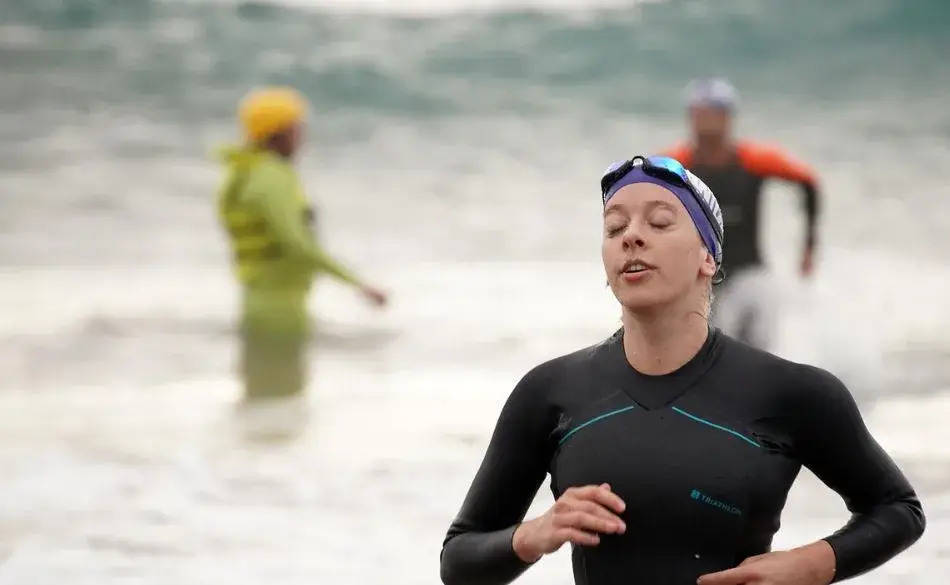
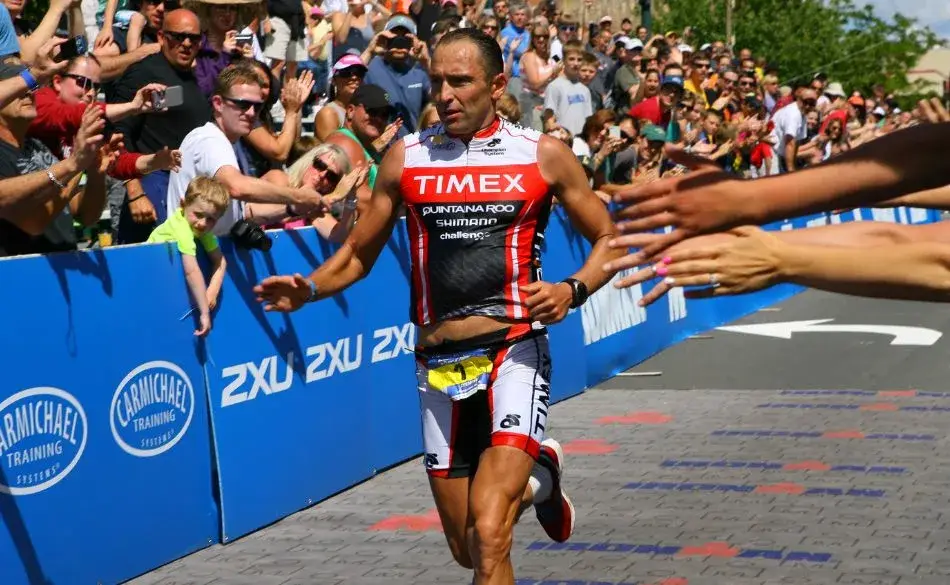
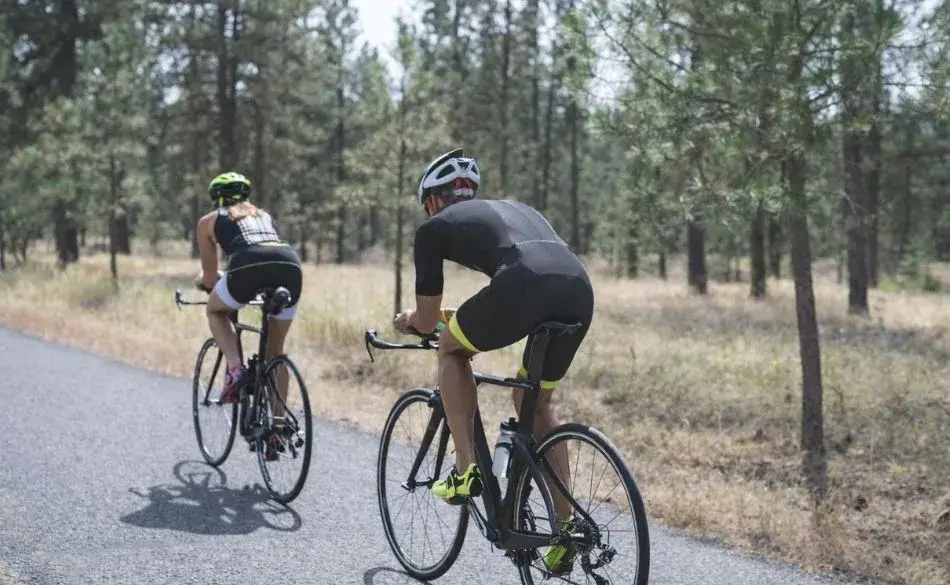
In reality, there is no single average triathlete body type that suits everyone. What you see on the start line is a mix of heights, limb lengths, shoulder widths, and hip shapes. Some athletes look more like distance runners. Others look more like cyclists with strong quads and solid upper bodies.
A big part of this comes down to training history and genetics. Someone who swam as a kid may carry more upper-body muscle. A lifelong cyclist might have thicker legs and a stronger backside. Both can race well. Both are “real” triathlete bodies.
Even triathlete body fat percentage ranges can vary more than most people think. Competitive age-groupers might sit lower, while beginners or busy parents carry more normal, healthy levels. Performance depends more on consistency and smart training than on hitting a magic number.
One of my coaching clients, Sarah, is a great example. She didn’t see herself as “built like a triathlete” and worried she was too heavy to race well. Over a season, she focused on regular training, better sleep, and simple nutrition habits. Her shape changed gradually, but the bigger shift was how strong and calm she felt during long sessions. She finished her first 70.3 smiling, still not looking like the stereotype, but performing far better than she ever expected.
If you’ve ever asked, “can you be a triathlete without a typical body type?”, the answer is yes. What matters most is how your body works, not how it compares in photos.
Key truths to remember:
- There is no single “ideal” frame for triathlon success
- Training history shapes your look more than trends on social media
- Strength, health, and confidence matter more than fitting a narrow image
If you want to explore how race weight fits into your own development, this guide on ideal triathlon weight explains how to approach it in a healthy and realistic way.


Why Different Training Loads Shape Your Body Differently
Your body isn’t shaped by triathlon in a single, predictable way. It changes based on how often you train, which discipline you focus on most, and how well you recover. This is why two athletes doing the same race distance can look completely different. Your triathlete body transformation journey depends on what your body experiences most often.
If you swim more than you run, your shoulders and upper back grow stronger. If cycling is your comfort zone, your quads and glutes take on more of the work. Runners often build slimmer hips and stronger lower legs. None of these changes are wrong. They simply reflect where your training time goes.
Even small shifts in training load can create noticeable differences. When you increase intensity on the bike, your legs adapt by storing more glycogen and improving muscle endurance. When you add longer runs, the tendons around your ankles and knees become more stable. Swimming teaches your core and shoulders to stay steady through rolling movements.
These patterns help explain why there is no single answer to the question, “What’s the best body type for triathlon?” Because training load is a major driver, the best body type for triathlon performance is the one that helps you stay durable, consistent, and healthy.
As you begin shaping your own path, it helps to understand how each discipline contributes to your overall look and performance:
- Swimming builds upper-body stability and better posture
- Cycling strengthens the legs and deep endurance muscles
- Running improves bone density, rhythm, and overall energy efficiency
All three work together to create a body that feels steady, balanced, and ready for long efforts. The more you train across these disciplines, the more your physique becomes a blend of all three demands. That blend is what makes triathletes so unique.
If you’re new to triathlon and want a step-by-step roadmap from zero fitness to finish line, check out this Couch to Triathlon Beginner’s Guide for a gentle, effective plan to get started.
How Training Focus Changes Your Physique Over Time
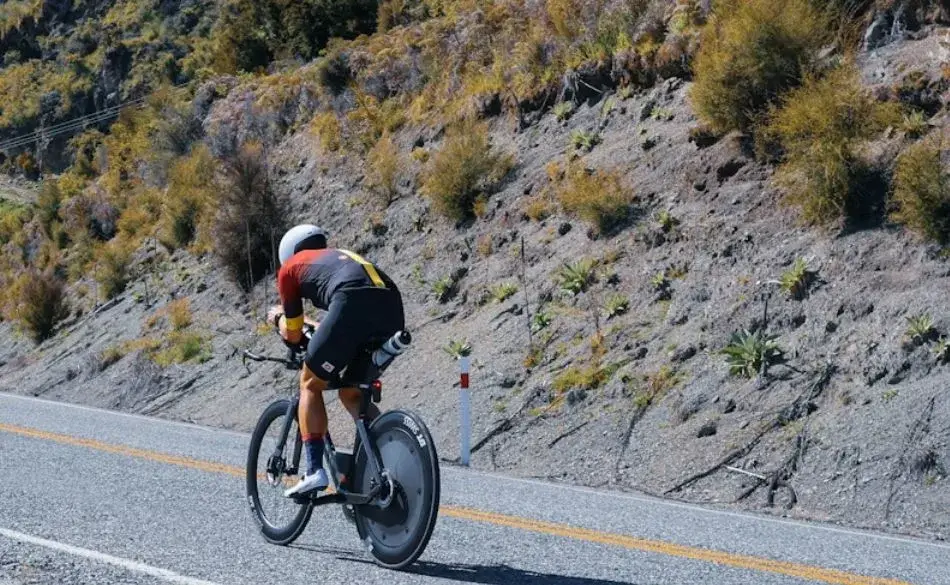
As your training becomes more consistent, your body starts to reflect the type of work you do most. This is why triathletes often notice their shape shifting slowly across the season. Some athletes become more defined in their upper body because they spend more time in the pool. Others develop stronger legs from long rides. These changes are normal, and they help explain why there isn’t one single look that fits every athlete.
You may find yourself wondering how your body will adapt as training hours build. Will you feel stronger? Will your posture change? Will your endurance feel deeper and more stable? These are all common questions, especially when you’re trying to understand how your unique build responds to the demands of triathlon. Even the common triathlete body fat percentage ranges change based on training load, intensity, and recovery habits.
To help you see how training emphasis leads to different physical outcomes, the table below breaks down how various traits can shift when you focus more heavily on swimming, cycling, or running over time. This can be helpful whether you’re early in your season, adjusting training for a race, or simply curious about how your body may evolve.
👉 Swipe to view full table
| Training Focus | Physique Changes | Performance Effects |
|---|---|---|
| Swim Heavy Training |
Increased shoulder width and lat development, stronger upper back and core rotation strength, improved posture from scapular control, higher muscular endurance in arms. |
More powerful pull phase and smoother catch, reduced fatigue in long swims, improved body alignment in the water, better stability in waves or crowded starts. |
| Bike Focused Training |
Larger quads, glutes, and hip stabilizers, increased leg muscle density and glycogen storage, leaner waist from long aerobic rides, improved spinal and core stability for long positions. |
Higher sustained power (FTP), stronger climbing ability, smoother and more efficient cadence, deeper aerobic base for stronger run off the bike. |
| Run Dominant Training |
Leaner lower body with efficient muscle fibers, increased tendon stiffness in ankles and knees, stronger calves and hip flexors, improved bone density from impact loading. |
Improved running economy and stride rhythm, better ability to handle pace changes, reduced ground contact time, stronger fatigue resistance during late-race miles. |
Training focus is only one part of how your body adapts over time. Understanding weekly training frequency can help these changes develop in a more balanced way, and this guide on how often you should train for a triathlon explains how to plan your sessions so your body develops steadily and sustainably.
If you're aiming to develop the balanced strength, lean endurance and efficient triathletes body type required for long-course racing, the Half-Ironman Triathlon Training Plans from SportCoaching give you a structured path to build fitness safely and consistently.
Each plan helps you grow stronger across swim–bike–run, manage your training load, and develop the resilient physique needed to handle race-day demands without feeling worn down.
View Half-Ironman Plans

How Your Body Learns to Work Better, Not Just Look Different
One of the biggest surprises for new athletes is that triathlon training doesn’t just change how your body looks. It changes how your body works. Your breathing becomes calmer, your stride feels smoother, and your legs hold effort for longer stretches. These shifts are often more important than any visible transformation, especially if you’re building toward long-course racing.
As your training progresses, your body becomes better at moving energy around. Your heart becomes more efficient at pumping blood. Your muscles learn to use oxygen faster. Even your nervous system adapts so your movements feel more coordinated. All of this builds the foundation for endurance.
This also helps explain why the best body type for triathlon performance isn’t a fixed idea. Efficiency matters more than appearance. Two athletes can look completely different on race day yet perform at a similar level because their bodies have adapted in ways the eye can’t see.
If you’ve ever wondered how to measure this improvement, it often shows up in small, everyday moments. Maybe you notice your breathing settles quicker after hills. Maybe your long rides feel calmer. Maybe your feet land more softly on runs. These are all signs your system is adapting.
Here are common improvements most triathletes notice as their training becomes more consistent:
- Better energy control during long sessions
- Smoother transitions between swim, bike, and run
- Lower perceived effort at moderate intensity
- More stable posture, even late in a race
- Faster recovery between workouts
This is also why you shouldn’t compare your physique to others. Instead, focus on how your body is learning to perform. Even if you don’t match the typical images online, your internal engine is becoming stronger and more efficient every week. That matters far more than looking like anyone else.
If you’d like to explore the science behind these endurance adaptations, this study on cardiorespiratory fitness changes in triathletes explains how the body becomes more efficient through structured training.

Why Your Triathlon Body Is More About Function Than Looks
As you move deeper into your training, you start to understand something important: your body is becoming functional in a way that most sports don’t create. Every session teaches your muscles, joints, and heart to work together across three very different movements. That blend is what makes the triathlon body so unique. It isn’t built for posing or for one perfect shape. It’s built for performing.
This is why you’ll see a wide range of physiques at every triathlon event. People with different heights, builds, and strengths all racing side by side. Many athletes begin with the idea that they need to match the typical image they see online. But the truth is that successful triathletes come in all forms. Even questions around the average triathlete body type often miss the point, because what matters most is how your body adapts to swim–bike–run training rather than how it looks on the surface.
Triathlon places unique demands on your body. Swimming teaches precision and control. Cycling builds steady power and muscular endurance. Running trains resilience and efficiency. When these adaptations blend, your body becomes more capable across long distances and varied conditions. You might not notice dramatic changes day to day, but you begin to feel more confident, balanced, and prepared for longer or harder sessions.
Another thing triathletes learn over time is that progress feels different for everyone. Your muscles may respond quickly, or your endurance may take time to catch up. Some athletes grow leaner, while others maintain more body mass and still perform very well. These variations are not weaknesses. They’re signs that your adaptation process is personal. Your training, lifestyle, history, and genetics all play a role.
This is why comparing yourself to others rarely helps. Your body is learning to perform in its own way, developing strength and endurance that reflect your unique journey. And that’s exactly what a functional triathlon body should be.
If you're training for a full Ironman and want a plan that helps you develop the strength, endurance and efficient triathletes body type needed for 140.6 miles, the Ironman Triathlon Training Plans from SportCoaching give you a proven roadmap built for long-distance success.
You’ll follow structured training, smart recovery cycles and progressive overload designed to help your body stay strong, resilient and balanced all the way to race day.
Explore Ironman Plans
How Your Daily Habits Quietly Change Your Triathlon Body Shape
One of the most overlooked parts of developing your triathlon body is what happens outside of training. You might think the biggest changes come from long rides or tough intervals, but the everyday choices you make between sessions often shape your body just as much. How well you sleep, what you eat, how you hydrate, and even how often you move throughout the day all influence how your muscles rebuild and adapt.
Many triathletes assume that progress only happens during workouts. But real growth takes place during recovery. When you sleep well, your body repairs the tiny fibers stressed during training. Your hormones balance more easily. Your energy feels steadier. Over time, these small advantages create noticeable differences in how strong and capable you feel. They also play a role in changes to your physique, especially during your own triathlete body transformation journey.
Nutrition works in a similar way. You don’t need a perfect diet, but consistent fueling helps your body adapt faster. Eating enough during training phases supports muscle repair, while balanced meals help maintain healthy body composition. Some athletes notice they feel lighter or more energetic when they focus on simple habits like adding more carbs on big days or drinking water earlier in the morning.
Even movement outside training matters. Walking, stretching, and gentle mobility work keep your joints loose and your posture aligned. These small actions don’t seem dramatic, but they reduce stiffness and make your next workout more effective. When repeated week after week, they also help your body feel more comfortable during long sessions.
The important thing to remember is that your triathlon body is shaped by more than workouts. It grows stronger through the rhythm of your daily life. The more supportive your habits become, the more your body adapts in a way that feels natural, sustainable, and uniquely your own.


Conclusion – Your Triathlon Body Is Meant to Be Yours
As you move through your training journey, you’ll notice your body changing in ways that feel both subtle and powerful. Some shifts happen in the mirror, but many of the most important ones happen in how you move, how you breathe, and how confident you feel during long sessions. That’s the real heart of building a triathlon body.
You don’t need to match anyone else’s shape to perform well. You don’t need the “ideal” frame to finish strong. What matters is how your body learns, adapts, and grows through consistency and small daily choices. Every swim stroke, every pedal turn, and every step in your run builds a version of you that’s more durable, more capable, and more aligned with the sport you love.
Your triathlon body is not a comparison. It’s a reflection of your effort, your habits, and your willingness to keep showing up. And that makes it completely your own.