Want help turning consistency into progress? Coaching keeps your training simple, structured, and sustainable.
Start Coaching →
how-fit-do-you-have-to-be-to-do-a-triathlon

Last updated:

How Fit Do You Have to Be to Do a Triathlon?

This is the question almost every would-be triathlete asks before signing up. The answer is more accessible than most people expect — and more nuanced than most guides admit. The fitness requirement for a super-sprint triathlon is genuinely low. The fitness requirement for an Ironman is genuinely high. The mistake most beginners make is not choosing the wrong distance for their current fitness, but rather either overestimating what they need (and never signing up) or underestimating what they need (and having a miserable first race). This guide gives you honest, specific fitness benchmarks by distance — not inspiration, benchmarks — plus a practical self-assessment you can run right now.

Chat with a SportCoaching coach

Not sure where to start with training?

Tell us your goal and schedule, and we’ll give you clear direction.

No obligation. Quick, practical advice.

Article Categories:

Explore our triathlon fitness resources for more helpful articles and resources.

Quick Answer

Sprint triathlon minimum: swim 100m, ride 20 min, run 10 min. Prepare in 12 weeks. Olympic triathlon minimum: swim 400m, ride 45 min, run 30 min. Prepare in 16 weeks. Ironman 70.3 minimum: swim 1,500m (with rests), ride 90 min, run 60 min. Previous sprint or Olympic tri recommended. Prepare in 16–20 weeks. The honest truth: almost anyone who can exercise for 30 minutes at a time can complete a sprint triathlon with 12 weeks of focused preparation. The question is which distance is right for your current fitness — not whether you’re fit enough for triathlon as a concept.

Fitness Benchmarks by Distance: The Honest Thresholds

The table below gives two thresholds for each distance: the absolute minimum (the fitness at which you can begin training and expect to finish with adequate preparation) and the comfortable start (the fitness at which training will feel manageable and race day will be a positive experience rather than survival). If you’re below the absolute minimum for a given distance, choose the shorter distance — every shorter distance is a legitimate triathlon, not a consolation prize.

👉 Swipe to view full table
DistanceAbsolute minimum to start trainingComfortable start fitnessMinimum prep time
Super-sprint
400m / 10km / 2.5km
Swim 50m, ride 15 min, walk/jog 15 minSwim 200m, ride 30 min, run 15 min8 weeks
Sprint
750m / 20km / 5km
Swim 100m, ride 20 min, run 10 minSwim 400m, ride 30 min, run 20 min12 weeks
Olympic
1.5km / 40km / 10km
Swim 400m, ride 45 min, run 30 minSwim 800m, ride 60 min, run 40 min16 weeks
Ironman 70.3
1.9km / 90km / 21km
Swim 1,500m (rests ok), ride 90 min, run 60 minSwim 2km, ride 2 hrs, run 75 min16–20 weeks
Full Ironman
3.8km / 180km / 42km
Completed 70.3 within 12 monthsCompleted 2+ 70.3s, strong in all three disciplines24–30 weeks

These are training start thresholds — not race requirements. By race day you will have trained significantly beyond these benchmarks. The point is: if you can’t yet meet the absolute minimum, start training at a lower intensity until you can, then begin your structured plan. Our mini triathlon distances guide covers the shortest race formats available, which are genuinely accessible for athletes with minimal current fitness. If you’re also still getting your head around the race format itself, our guide on triathlon event order covers what happens on race day from start to finish.

The Honest Self-Assessment: Are You Ready Right Now?

Run through these four questions. Your honest answers determine which distance is right and how much time you need:

1. Can you swim continuously for 10 minutes?
This is the most important single fitness indicator for triathlon readiness. The swim is the most anxiety-producing leg for beginners, and the one where being underprepared creates the most race-day problems (panic, exhaustion before the bike). If you cannot currently swim continuously for 10 minutes at a steady pace, start with pool sessions 3× per week for 4 weeks before beginning any structured triathlon plan. A 400m swim that takes 10–12 minutes comfortable is the minimum for a sprint triathlon start.

2. Can you ride a bike for 30 minutes without stopping?
Cycling fitness generally transfers well from general fitness, but if you haven’t ridden in years, even a short ride may feel uncomfortable due to saddle issues, posture, and unfamiliar muscular demands. The 30-minute threshold is achievable for most moderately active adults within 2–4 weeks of regular riding. If you’re unsure, take a 30-minute bike ride this week and see how it feels.

3. Can you run or jog (even slowly) for 20 minutes without stopping?
Running is typically the most physically demanding leg for beginners because it comes last — legs already fatigued from swimming and cycling. The 20-minute continuous jog threshold is the minimum useful baseline. If you can’t yet jog continuously for 20 minutes, our return to exercise guide covers how to build run/walk intervals progressively toward continuous jogging. A 30-minute walk/run is a perfectly legitimate start.

4. Can you train 5 sessions per week without feeling destroyed the next morning?
Triathlon training requires consistency across three disciplines. If adding one extra workout to your current routine leaves you significantly fatigued the following day, you will struggle to add five sessions per week. This is a recovery capacity question, not a fitness question — and it matters. Most triathlon training plans assume 5–6 sessions per week as the minimum structure. If you currently do 2–3 sessions per week, add one session per week over the next month before starting a structured plan.

What Single-Sport Athletes Need to Know

Runners, cyclists, and swimmers all bring significant advantages to triathlon — but each has a different fitness profile gap that needs addressing before race day.

If You’re a Runner

Your aerobic base and run fitness are significant advantages — you won’t struggle on the run leg. The gaps: swimming technique (most important to develop early — raw fitness doesn’t substitute for stroke efficiency) and cycling endurance (your cardiovascular fitness will transfer partially, but the specific muscular demands of cycling — quads, glutes in a cycling position — need several weeks to develop).

Timeline from runner’s fitness to sprint triathlon: 8–10 weeks if you can already swim 200m and own a bike. Your bottleneck is almost certainly swimming — prioritise pool sessions 3× per week. As a runner, the brick workout (bike followed by run) will be familiar in concept but still surprising in practice — your run off the bike will feel strange until you’ve practiced it specifically. Our guide on running off the bike covers the adaptation that regular brick sessions develop.

If You’re a Cyclist

Your cycling fitness and aerobic capacity are significant advantages — you won’t struggle on the bike leg, which accounts for the largest proportion of total race time. The gaps: swimming technique (same as for runners — prioritise early) and running-specific tissue adaptation (connective tissue in ankles, shins, and knees needs gradual loading; cycling fitness does not protect you from running overuse injury).

Timeline from cyclist’s fitness to sprint triathlon: 8–10 weeks with early emphasis on swimming and conservative run build. Cyclists typically over-rely on their bike fitness and under-build the run — stick to Zone 2 easy running initially and resist the temptation to use your aerobic engine at running pace before your tendons have adapted. Our Zone 2 running guide covers the appropriate pace for run base building from a cyclist’s starting point.

If You’re a Swimmer

Your swim fitness and technique are significant advantages — you will likely exit T1 feeling composed while others are gasping. The gaps: cycling fitness (swimmers often have underdeveloped cycling-specific leg strength, having built their aerobic system through non-weight-bearing effort) and running endurance (swimming fitness provides an excellent aerobic base but no running-specific muscular preparation).

Timeline from swimmer’s fitness to sprint triathlon: 10–14 weeks to develop sufficient cycling and running base. Prioritise getting on a bike regularly from the first day of training. Be particularly conservative with run volume build — swimmers can have excellent cardiovascular capacity but untrained connective tissue for running, which creates injury risk if mileage increases too quickly.

What You Don't Need (Dispelling Common Myths)

Almost every beginner triathlete overestimates the equipment, speed, and base fitness required for their first race. Here’s what you genuinely don’t need for a first sprint triathlon:

You do not need to be fast. Sprint triathlon cut-off times typically range from 2–2.5 hours. Most beginners finish in 1:15–1:45. You have a significant buffer. The triathlon community is one of the most supportive in sport — being at the back of the pack in a triathlon is a completely respectable experience.

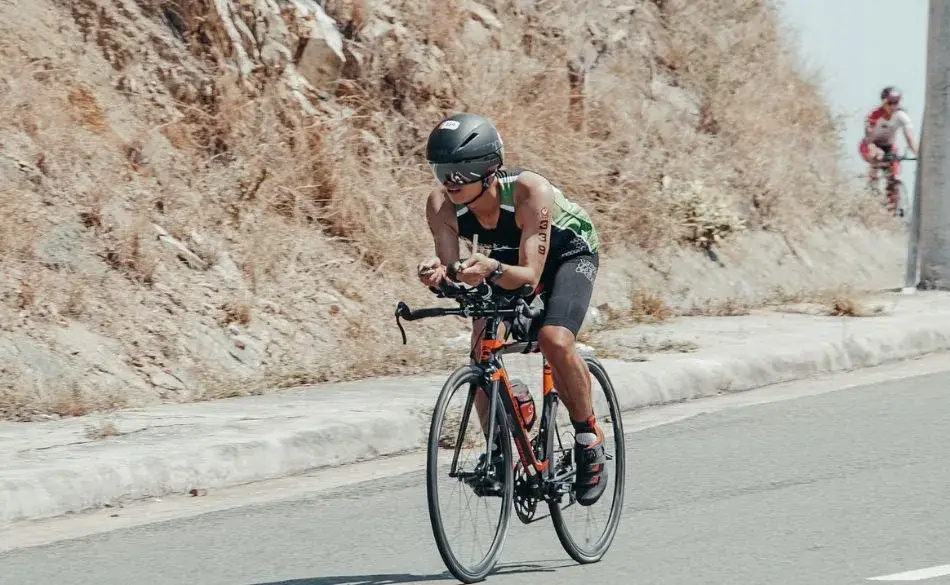
You do not need a tri bike. Any road bike or hybrid in working mechanical condition will get you through a sprint or Olympic triathlon. A tri bike optimises performance for experienced athletes — for beginners, riding the bike you’re comfortable on is more valuable than riding a TT bike you’re unfamiliar with.

You do not need to be a strong swimmer. You need to be a safe, confident swimmer who can complete the distance without panicking. Triathlete’s entry requirement for their beginner sprint plan is simply: swim 100 yards (91m) non-stop without excessive stress. That is a low bar that most adults can meet with a few weeks of pool practice.

You do not need to have done all three sports recently. Many first-time triathletes haven’t swum competitively since childhood, haven’t ridden a bike since their teens, and have only recently taken up running. The sport actively welcomes these athletes. What you need is the willingness to train all three disciplines consistently for 8–16 weeks.

The Minimum Viable Fitness Test

Before signing up for a specific distance, do this test across a week to assess your realistic starting point:

Monday: Swim 400m in a pool at a comfortable pace. Note how you feel afterward — tired but manageable, or exhausted?

Wednesday: Ride a bike for 30 minutes at easy effort, preferably outdoors. Note comfort level, saddle soreness, and energy afterward.

Friday: Run (or run/walk) for 20 minutes. Note how your legs feel during and after.

If all three sessions left you feeling tired but functional — not destroyed — you have the fitness base to start a sprint triathlon training plan immediately. If one or more sessions left you significantly depleted, spend 2–3 weeks building that specific discipline before starting a structured plan.

The goal is not to ace these sessions — it’s to confirm you can recover from 30-minute aerobic efforts across multiple days. That’s the real fitness requirement for triathlon training.

ASICS MEGABLAST Running Shoes
Running shoes
ASICS MEGABLAST Running Shoes
Synergy Triathlon Wetsuit 3/2mm
Wetsuit
Synergy Triathlon Wetsuit 3/2mm
The Triathlete's Training Bible
Top Pick
The Triathlete's Training Bible
TYR Big Mesh Triathlon Backpack
Best Value
TYR Big Mesh Triathlon Backpack
ROCKBROS Polarized Sunglasses
Sunglasses
ROCKBROS Polarized Sunglasses
RJ-Sport Race Number Belt
Beginner Choice
RJ-Sport Race Number Belt

As an Amazon Associate, SportCoaching earns from qualifying purchases.

How Long Does It Take to Get Triathlon-Ready?

👉 Swipe to view full table
Starting fitnessSprint triathlon readinessOlympic triathlon readiness
Sedentary (rarely exercises)20–24 weeks36+ weeks
Moderately active (exercises 2–3×/week)14–16 weeks24–28 weeks
Active (exercises 4–5×/week, one sport)10–12 weeks16–20 weeks
Very active (multi-sport background)6–8 weeks12–14 weeks

These timelines assume consistent training — 5–6 sessions per week across swim, bike, and run. Missing weeks significantly extends the timeline. A 12-week plan with two missed weeks is effectively a 9-week plan, which may be insufficient for a comfortable experience. Consistency across the full preparation period matters more than any individual session. Our guide on triathlon training frequency covers the minimum sessions per week needed at each distance.

The One Fitness Question That Actually Matters

Most beginners ask the wrong question. They ask “am I fit enough to do a triathlon?” when the real question is “which triathlon distance am I fit enough for right now?”

The answer to the second question is almost always: you are fit enough for something. If you can walk briskly for 30 minutes, you can start preparing for a super-sprint. If you can swim 100m, jog for 15 minutes, and ride a bike, you can start preparing for a sprint. The only athletes who genuinely aren’t fit enough for any triathlon format are those who cannot complete 30 continuous minutes of any physical activity — and that condition improves rapidly with the right build.

The mental barrier to signing up for a triathlon is almost always larger than the fitness barrier. The athletes who discover this most clearly are those who push past the anxiety of “am I ready?” and sign up for a distance that’s honestly appropriate for their current fitness, with an honest timeline attached to their preparation. Our guide on whether you need a coach for your first triathlon covers the preparation support that makes the difference between an overwhelming first experience and a confident one. And our guide to the best triathlons in Australia covers the full race calendar, including beginner-friendly events that are well-suited for a first race.

Once you’ve decided on your distance, our time-crunched triathlon training guide covers how to structure preparation efficiently around work and family commitments.

Start Your First Triathlon With Structured Support

A triathlon coach takes you from your current fitness level to race day with a programme built specifically around where you are now — not where a generic plan assumes you are. SportCoaching's triathlon coaching is AUD $143/month, no lock-in, 90-day performance guarantee.

FAQ: How Fit Do You Need to Be for a Triathlon?

How fit do you have to be to do a triathlon?
For a sprint: minimum swim 100m, ride 20 min, run 10 min. Prepare in 12 weeks. For Olympic: swim 400m, ride 45 min, run 30 min. Prepare in 16 weeks. For 70.3: swim 1,500m (rests ok), ride 90 min, run 60 min. Prepare in 16–20 weeks. Almost anyone who can exercise 30 minutes at a time can complete a sprint triathlon with 12 weeks of preparation.

Can an unfit person do a triathlon?
Yes, if they choose the right distance. A super-sprint triathlon (400m swim, 10km bike, 2.5km run) is achievable for most people with minimal fitness and 8–12 weeks of consistent training. Match the distance to your current fitness honestly and give yourself adequate preparation time.

How long does it take to get fit enough for a sprint triathlon?
12 weeks from a moderate fitness base (able to exercise 30 minutes at a time). 8 weeks if already active in one or more disciplines. 16–20 weeks from a sedentary starting point. The key: 5–6 training sessions per week across all three disciplines, consistently, for the full preparation period.

Is it hard to do a triathlon for the first time?
Physically challenging but not extreme — a sprint takes most beginners 1:15–1:45. The bigger challenge is logistical: open water swimming, transitions, pacing across three disciplines. Athletes who have practiced open water, done at least one brick workout, and rehearsed transitions consistently report much more positive first race experiences than those who arrive unprepared for the logistics.

What fitness level do you need for an Ironman 70.3?
Able to swim 1,500m (rests ok), ride 90 minutes, and run 60 minutes before starting training. One prior sprint or Olympic triathlon strongly recommended. Prepare for 16–20 weeks. The 70.3 takes 4.5–7.5 hours — the preparation time commitment is the real ask, not the raw fitness level.

Find Your Next Triathlon Race

Ready to put your training to the test? Here are some upcoming triathlon events matched to this article.

Graeme - Head Coach and Founder of SportCoaching

Graeme

Head Coach & Founder, SportCoaching

Graeme is the founder of SportCoaching and has coached more than 750 athletes from 20 countries, from beginners to Olympians, in cycling, running, triathlon, mountain biking, boxing, and skiing. His coaching philosophy and methods form the foundation of SportCoaching's training programs and resources.

750+
Athletes
20+
Countries
7
Sports
Olympic
Level

Start Your Fitness Journey with SportCoaching

No matter your goals, SportCoaching offers tailored training plans to suit your needs. Whether you’re preparing for a race, tackling long distances, or simply improving your fitness, our expert coaches provide structured guidance to help you reach your full potential.

  • Custom Training Plans: Designed to match your fitness level and goals.
  • Expert Coaching: Work with experienced coaches who understand endurance training.
  • Performance Monitoring: Track progress and adjust your plan for maximum improvement.
  • Flexible Coaching Options: Online and in-person coaching for all levels of athletes.
Learn More →

Choose Your Next Event

Browse upcoming Australian running, cycling, and triathlon events in one place. Filter by sport, check dates quickly, and plan your training around something real on the calendar.

View Event Calendar