In this article, we’ll break down the exact muscles used on a stationary bike, why it matters, and how to make the most out of your stationary bike workout. Whether you’re a beginner, training for a triathlon, or just trying to stay healthy from home. You’ll also get insights into how to shift the focus of your rides to target different areas and how to ride with better form to protect your body from injury.
What Muscles Get Worked on a Stationary Bike?
The main muscles used on a stationary bike include your quadriceps, hamstrings, glutes, calf muscles, core muscles, and even upper body stabilizers like your lower back and shoulders. But the intensity and engagement of each muscle depend on your posture, cycling resistance level, and riding form.
Let’s break it down simply: your legs push and pull, your core stabilizes, and your upper body balances everything out. That’s why even a quick 20-minute ride can leave you feeling like you’ve done a full-body session. Especially if you’re pedaling with proper form.
Another thing to remember is that muscle activation isn’t fixed. You can actually change how much a muscle contributes just by altering your seat height, handlebar reach, or even the type of ride you’re doing (climb vs sprint vs endurance). This makes indoor cycling incredibly customizable for both strength and recovery.
And unlike outdoor biking, there are fewer distractions. No traffic, no turns. Jjust you, your bike, and your muscle groups working in sync.


Lower Body Breakdown: Your Engine Room
Quads and Hamstrings: The Pedal Power Pair
Your quads (front of the thighs) are some of the hardest-working muscles on a stationary bike. Specifically, the rectus femoris and vastus lateralis contract with force during the downstroke, driving the pedals downward. The more resistance you add, the more your quads engage, which makes indoor climbs especially effective for building muscle strength in this area.
The hamstrings (on the back of your thighs) assist during the upstroke. Though they’re not as dominant as the quads, when you use clip-in pedals or toe cages, you’re able to actively pull upward, engaging your hamstrings more. This creates a fluid pedal motion that distributes force more evenly and reduces fatigue.
Over time, strengthening both your quads and hamstrings can improve your overall balance, support your knees, and enhance your power output. It also lowers your risk of injury when performing other physical activities like running, hiking, or even lifting.
Want to test your muscle engagement? Try a low cadence climb with heavy resistance for 1–2 minutes. Focus on pushing and pulling equally. You’ll feel the burn in both your quads and hamstrings in no time.
Glutes: Your Hidden Powerhouse
When it comes to cycling power, few muscles are as important as your glutes. Especially the gluteus maximus, which is the largest muscle in your body. It plays a critical role in hip extension, helping you drive the pedal through the bottom half of the stroke and push harder against resistance.
Standing climbs, seated hill efforts, and intervals with increased tension are all great ways to light up your glutes. If your bike setup is off, especially your saddle height, you might not be engaging them fully. Make sure your hips remain level and you’re not rocking side to side during harder efforts.
One of the most effective ways to target the glutes more is to focus on pushing from your hips rather than just your knees. This encourages greater engagement from your posterior chain, giving your hamstrings and glutes more of the workload, and sparing your knees from excess stress.
If you sit a lot during the day (like at a desk job), activating your glutes during your bike workouts can also help counteract hip tightness and poor posture. It’s not just about power. It’s about balance and function, too.
Calves: The Unsung Heroes
Your calf muscles, made up primarily of the gastrocnemius and soleus, are responsible for ankle movement and power transfer during the lower part of the pedal stroke. While they might not scream for attention during every ride, they’re always working behind the scenes.
The gastrocnemius fires during faster or more explosive pedaling, such as sprints or standing intervals. The soleus, on the other hand, plays a role during slower, more controlled motion like climbs or warm-ups. Together, these muscles help stabilize your legs, provide control at the bottom of the stroke, and contribute to overall smoothness and speed.
Riders who experience Achilles soreness or tight calves after longer sessions may not be aware of how crucial calf muscle flexibility and strength are. That’s why stretching before and after your ride, as well as maintaining full ankle rotation throughout the pedal stroke, is so important.
Fun tip: If you want to fire up your calves a bit more, try slightly shifting your weight toward your toes during a high-resistance climb. Just be careful not to overdo it or lose your form.
Core Engagement: More Than Just Balance
Your core muscles are the unsung stabilizers of every good cycling session. While your legs may be doing the visible work, your abs, obliques, and lower back provide crucial support to keep your upper body stable, especially when you’re increasing cadence or standing on the pedals.
Why does this matter? A strong core helps you maintain posture, reduces strain on your neck and shoulders, and ensures efficient force transfer from your legs to the bike. When your core is weak or disengaged, your hips may sway, your shoulders hunch, and your efficiency drops.
A great way to activate your core during a ride is to occasionally release your grip from the handlebars (safely) and focus on holding your torso upright using your abdominal strength. Try this during a warm-up or cooldown at low resistance to practice better stability.
One trick I’ve picked up is to “brace” your abs slightly during hard intervals. Think of it like lightly preparing for someone to poke you in the stomach. Not a full crunch, just engaged. This cue alone helps improve posture and performance over time.
And yes, developing strong core muscles off the bike, through planks, Russian twists, or bird dogs will translate into better balance and comfort on the bike, too.


Upper Body Involvement: Yes, It Matters
It’s easy to forget about the upper body during a bike session. After all, your arms aren’t pedaling. But your shoulders, biceps, triceps, and upper back muscles like the rhomboids play a crucial role in maintaining posture and distributing load.
When you’re riding in a standing position or doing high-cadence sprints, your upper body helps stabilize your frame and manage bike movement. This prevents over-reliance on your lower body and minimizes wobble, especially during intense segments.
A poor upright bike posture, such as hunching forward or locking your elbows can lead to shoulder tightness, wrist discomfort, and even neck pain over time. Regularly reminding yourself to relax your grip, soften your elbows, and open your chest helps activate the right support muscles and prevents fatigue.
Some indoor riders incorporate light dumbbell exercises on the bike (especially in rhythm rides or spinning classes). These routines build additional strength and can improve your control during harder sessions. However, for most people, simply being aware of your upper body positioning is a good start.
Do Resistance Levels Change Muscle Activation?
The short answer: yes. And the change can be dramatic.
When you increase the cycling resistance, your body has to work harder to complete each pedal stroke. This shifts more workload onto your quads, glutes, and even hamstrings. With more tension to fight against, your muscles contract more forcefully, which can lead to improvements in both strength and muscle tone.
In contrast, riding with low resistance at high cadence shifts the focus toward cardiovascular conditioning and aerobic endurance. It’s a great way to work your slow-twitch muscle fibers, which are built for stamina and long rides.
Think of high resistance like strength training on the bike. It’s not about speed, but power. And think of low resistance like jogging. It’s steady, repetitive, and builds efficiency.
Smart cyclists alternate between both styles in their workouts. If you’re using indoor training platforms, here’s a great comparison of MyWhoosh vs. Zwift to help you choose the right one for your cycling goals.

Seated vs. Standing: Which Muscles Work More?
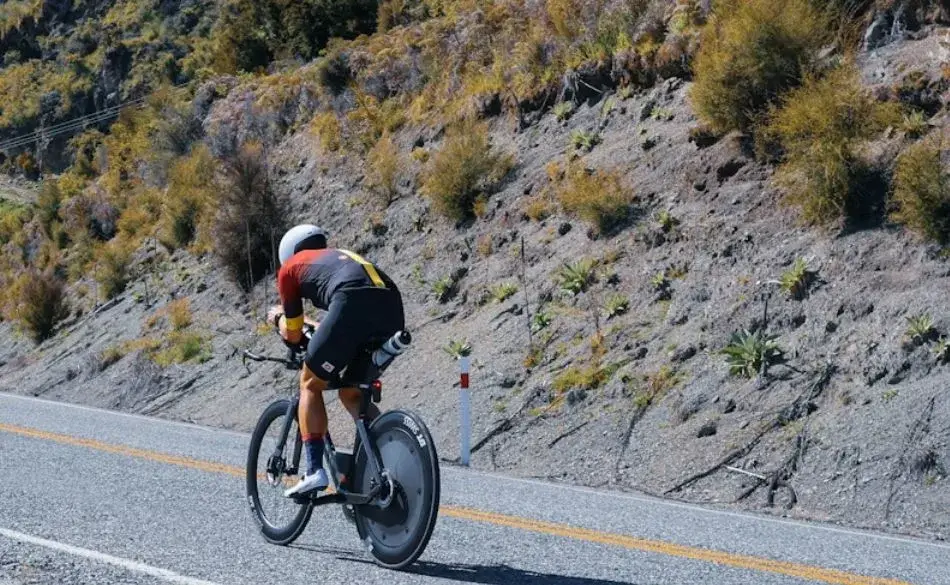
Seated and standing cycling each have their unique benefits and muscle engagement changes with your position.
Seated riding is more stable, letting you focus on pedaling technique and consistent muscle activation in the quads, calves, and core muscles. You can dial in your form, adjust resistance, and work through longer endurance rides without taxing your joints as much.
Standing riding, on the other hand, shifts your center of gravity and recruits more of your glutes, hamstrings, and upper body. It mimics climbing a steep hill or performing a squat-like motion. It also increases your heart rate more quickly and burns more calories per minute than seated cycling.
Standing also challenges your balance. If you’ve ever done a standing sprint or climb, you’ve likely noticed how much more your shoulders, arms, and core have to work just to keep you steady. That’s not just about control. It’s full-body engagement.
Mixing both styles within a ride not only keeps things interesting but also maximizes your muscular development and endurance gains.
How to Target Specific Muscles on the Bike
Want to turn your stationary bike workout into a custom sculpting session? With a few adjustments, you can emphasize specific muscle groups and better align your ride with your goals.
- To hit your glutes, slightly raise the saddle and push through your heels. This increases hip extension, engaging your posterior chain more.
- For more quad activation, drop the saddle slightly and focus on pushing through the ball of your foot.
- To engage your core muscles, reduce your reliance on the handlebars. Keep your torso still, shoulders relaxed, and abs lightly braced.
- Want more calf work? Increase resistance and focus on maintaining full ankle flexion and extension during each pedal cycle.
You can also play with intervals. Try alternating 2 minutes of glute-heavy hill climbs with 1 minute of core-focused seated sprinting. It’s like strength training on wheels.
The key is body awareness. Listen to how your body responds to these changes and adjust until you find that sweet spot of comfort, control, and challenge.
Training for Strength vs. Endurance
If you’re wondering whether stationary biking builds muscle strength or cardiovascular endurance, the answer is – it can do both. It all depends on how you use the bike.
Training for Strength
To improve muscular strength, focus on high-resistance intervals. Think short bursts of pedaling where it feels like you’re climbing a hill. These efforts mostly work your quads, glutes, and hamstrings. Keeping your cadence slower (around 50–70 RPM) and resistance high challenges your fast-twitch muscle fibers, which are responsible for explosive power and force.
For example, try 30 seconds of hard resistance followed by 1–2 minutes of easy spinning, repeated 6–8 times. If you’re looking for structured sessions, check out our detailed guide on bike erg workouts to build both power and endurance indoors.
Training for Endurance
To build aerobic capacity, reduce resistance and focus on keeping a steady cadence between 80–100 RPM for longer durations (30–60 minutes). This works your slow-twitch muscle fibers, which support stamina and sustained effort. It’s also a fantastic way to boost your cardiovascular fitness without pounding your joints like running might.
By combining both styles in a weekly schedule, you’ll strengthen your muscle groups and build endurance at the same time. Don’t be afraid to shift gears (literally and metaphorically). Even a small change in cadence or resistance can make a big difference over time.
Add a few sprints or standing climbs for a well-rounded aerobic exercise routine. For a powerful way to build speed and muscle engagement in less time, try cycling Tabata intervals. They’re short, intense, and incredibly effective.
Can Stationary Bikes Build Muscle?
Let’s clear up a common question: Can a stationary bike build muscle?
The answer is yes, but with a catch. Stationary biking helps develop muscle tone and endurance strength, especially in your quads, glutes, and calves. It won’t bulk you up like weightlifting, but it can definitely sculpt and strengthen.
When you ride with higher resistance or include uphill simulations, you create small tears in muscle fibers (just like with other strength exercises). Your body repairs and strengthens these fibers, resulting in firmer, more defined muscles.
The key here is progressive overload. Gradually increasing your resistance, duration, or interval intensity. For a deeper understanding of how stationary biking contributes to muscle development, check out this comprehensive guide on what muscles stationary bikes work and how to build more muscle.
During my recovery from a running injury, I did 3–4 cycling sessions a week for about two months. Not only did I maintain my fitness, but my legs actually felt stronger when I returned to running. I didn’t bulk up but I was faster and more efficient.
Plus, stationary biking supports joint-friendly exercise, making it ideal for those rehabbing from injuries or managing chronic pain.
Muscles Used on a Stationary Bike
| Muscle Group | Muscles Involved | When Activated | Training Tip |
|---|---|---|---|
| Quadriceps | Vastus lateralis, rectus femoris | Downstroke | Push through balls of feet to generate power |
| Hamstrings | Biceps femoris, semitendinosus | Upstroke (especially with clips or cages) | Think about pulling the pedal upward smoothly |
| Glutes | Gluteus maximus | Seated climbs, standing climbs, high resistance | Engage hips; avoid letting knees cave inward |
| Calves | Gastrocnemius, soleus | Bottom of stroke; stabilizing ankle | Keep heel steady and avoid bouncing |
| Core | Rectus abdominis, obliques, erector spinae | Throughout ride (posture + balance) | Keep chest lifted and avoid leaning too far forward |
| Upper Body | Deltoids, triceps, rhomboids, biceps | Standing, sprinting, and posture stabilization | Soften elbows and lightly brace arms for support |


FAQ: Your Most Asked Questions
What are the best muscles to focus on for cycling power?
Does biking tone your legs or make them bulky?
Biking primarily tones your legs rather than bulks them.Especially when you ride at moderate resistance and focus on muscular endurance. High-resistance hill climbs can add definition, but you won’t become bulky unless you add heavy strength training off the bike.
Is cycling good for knee strength?
Can you get a full-body workout from a stationary bike?
How long should I ride to see results?
Final Thoughts: More Than Just a Leg Workout
Riding a stationary bike might seem like a simple cardio routine but it’s so much more. Whether you’re looking to sculpt your legs, build endurance, protect your joints, or just feel stronger, understanding what muscles are used on a stationary bike can help you ride with more purpose.
And let’s not forget, this is one of the most accessible and forgiving workouts out there. You can do it at home, in a gym, or even while catching up on your favorite show. No traffic, no weather concerns, no excuses.
Start small. Pay attention to your body. Adjust your seat, tweak your resistance, and vary your sessions. The stationary bike gives back what you put into it. So be intentional.
And the next time you finish a ride with that satisfying post-workout glow? You’ll know exactly which muscle groups were along for the ride.