

Quick Answer
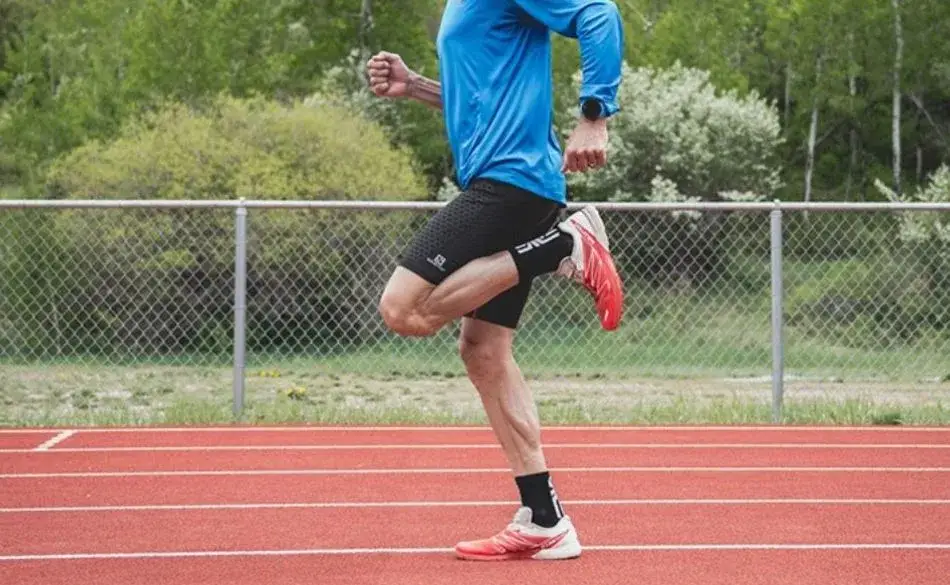
Primary muscles: hamstrings, glutes, calves. Secondary: hip flexors, core, quadriceps (dynamic stretch). Pre-run use: 2–3 sets of 20–30 metres or 30 seconds, easy-to-moderate pace. Key running benefit: increases hamstring contraction speed and reinforces heel recovery mechanics — directly relevant to cadence and stride efficiency. Pair with: high knees (the complementary drill) to cover both the heel recovery and knee drive phases of running mechanics.
How to Do Butt Kicks: Step-by-Step Form
Getting butt kicks right is less about speed and more about activating the correct muscles with the right movement pattern. Many people rush into fast, sloppy butt kicks before they’ve established the feeling of the exercise — which removes most of the benefit.
Starting position: Stand tall with feet hip-width apart, shoulders relaxed, arms bent at approximately 90 degrees at your sides. Engage your core lightly — not bracing hard, just enough to keep the torso stable.
The movement:
Step 1. Begin a slow jog in place. On each step, actively contract the hamstring to pull the heel upward toward the glute. The goal is to bring the heel as close to the glute as possible — though full contact is not necessary, particularly when starting out.
Step 2. Land on the ball of the foot (not the heel), softly and directly beneath your hips — not in front of them. The thigh should remain approximately vertical throughout — the knee does not drive forward like a high-knee drill.
Step 3. Maintain an upright torso. The most common form error is leaning forward, which shortens the range of motion and reduces the hamstring activation that makes the drill effective.
Step 4. Drive the arms in a running motion — right arm forward as the left heel kicks, left arm forward as the right heel kicks. Active arm drive adds upper body engagement and more closely replicates actual running mechanics.
Step 5. Build pace gradually from slow and deliberate to faster and rhythmic over the first 10–15 seconds. Focus on rhythm and activation quality before speed.
Duration and distance: 20–30 metres moving forward (preferred for runners — it more closely mirrors actual running mechanics), or 30 seconds in place. Walk back between reps.

Muscles Worked by Butt Kicks
| Muscle | Role in butt kicks | Why it matters for running |
|---|---|---|
| Hamstrings | Primary mover — contracts to pull heel toward glute | Controls heel recovery phase; faster contraction = higher cadence |
| Glutes | Hip extension — driving the leg back to the ground | Powers push-off; weak glutes = reduced propulsion and overuse of other muscles |
| Calves (gastrocnemius/soleus) | Plantarflexion on push-off; landing shock absorption | Provides the spring in each stride; key for running economy |
| Hip flexors (iliopsoas) | Stabilises the hip during the single-leg stance phase | Controls leg swing timing; tight hip flexors reduce stride length |
| Core (abs, obliques) | Maintains upright posture; controls rotational forces from arm drive | Efficient running requires stable core to prevent energy leakage |
| Quadriceps | Dynamically stretched as heel approaches glute | Quad flexibility directly affects stride length and comfort at pace |
| Shoulders / arms | Active arm drive when performed with proper mechanics | Arm swing drives leg speed — active arm drills reinforce this link |
The hamstring is the primary muscle trained and activated by butt kicks. This is significant for runners because the hamstring controls the heel recovery phase of the running gait — the swing of the foot up and behind the body before it comes forward for the next stride. A faster hamstring contraction means a quicker heel recovery, which enables a higher cadence. Training this movement pattern consistently improves the neuromuscular efficiency of one of running’s most important mechanical sequences. Our running cadence guide covers the target cadence ranges and why hamstring efficiency matters for hitting them.


Why Butt Kicks Matter for Runners
Butt kicks are sometimes dismissed as a trivial warm-up filler, but their connection to running mechanics is direct and well-established. Here’s why they’re one of the most running-relevant drills in a warm-up sequence:
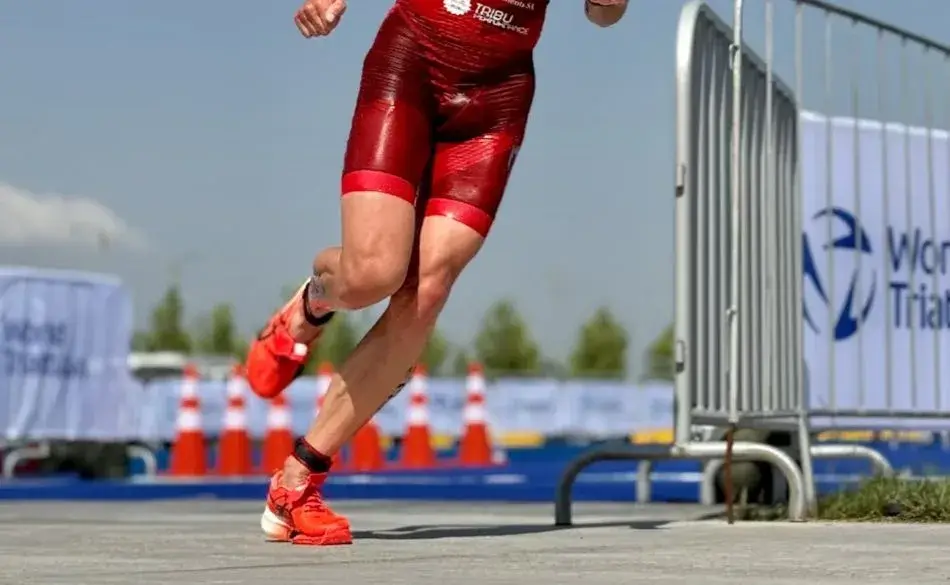
They mirror the heel recovery phase of running. In efficient running, after the foot leaves the ground during push-off, the heel sweeps upward behind the body (recovery phase) before the leg swings forward. Butt kicks isolate and exaggerate this movement, building the muscular pattern and neuromuscular speed that makes it efficient. Runners who don’t use their heel recovery effectively — whose feet trail low to the ground — have slower cadence and wasted ground contact time. Butt kicks train the specific hamstring contraction that fixes this.
They activate the hamstrings pre-run. Cold hamstrings are the most common site of running injury in the early minutes of a run. A pulled hamstring in the first kilometre of a training session is almost always preceded by a skipped warm-up. 30 seconds of butt kicks raises hamstring temperature and activates the muscle fibre recruitment patterns that protect against early-session strain. For athletes dealing with Achilles or hamstring tightness that affects their running, our Achilles tendon guide covers how warm-up quality affects tendon injury risk.
They fire the central nervous system for running. BODi strength and conditioning coach Kristian Flores describes butt kicks as activating the “stretch reflex” — the rapid, neurologically-driven muscle response that underlies efficient running mechanics. Light impact and rapid alternating leg action is precisely the stimulus that primes the CNS for the movement demands of running.
They dynamically stretch the quadriceps. As the heel approaches the glute, the quadriceps on the front of the thigh are dynamically stretched. This is the appropriate pre-run version of a quad stretch — dynamic rather than static, warm rather than cold, active rather than passive. Static quad stretches before running reduce explosive power and are not recommended; butt kicks achieve the same flexibility benefit without the performance cost.
For runners working on speed, butt kicks are also directly relevant to faster running. Our article on running faster without more mileage covers strides and drills — butt kicks are one of the form drills that improve running economy and cadence as part of a structured approach to speed development. For those targeting structured interval sessions, our interval running guide covers how drills like butt kicks prepare the neuromuscular system for the demands of faster work. Older athletes in particular benefit from consistent drill use — our guide on sprint training for older athletes covers how warm-up drills protect against injury as recovery timelines lengthen with age.


Common Mistakes and How to Fix Them
| Mistake | What it looks like | How to fix it |
|---|---|---|
| Leaning forward | Torso tilts over the feet; heel doesn't reach glute | Stand tall throughout — imagine a string pulling the crown of your head upward. The torso should remain vertical. |
| Driving the knee forward | Looks like a high-knee drill; not a heel-to-glute kick | Keep the thigh vertical — the movement is entirely below the knee. The thigh should not rise significantly. |
| Landing heel-first | Foot lands on the heel under or in front of the hips | Land on the ball of the foot, directly beneath the hip. Heel landing breaks the rhythm and imposes unnecessary impact. |
| Arms inactive or crossed | Arms swing across the body rather than forward and back | Keep elbows at 90 degrees, swinging forward and back. Right arm forward with left heel kick, left arm forward with right heel kick. |
| Going too fast too early | Sloppy, shallow kicks with no hamstring activation | Start deliberately slow. Establish the heel-to-glute contact first, then build pace. Speed without activation defeats the purpose. |
| Looking down | Head drops forward; neck tightens | Keep the gaze forward at approximately 10–15 metres ahead — the same gaze angle you'd use while running. |

Butt Kicks Variations
1. Stationary Butt Kicks
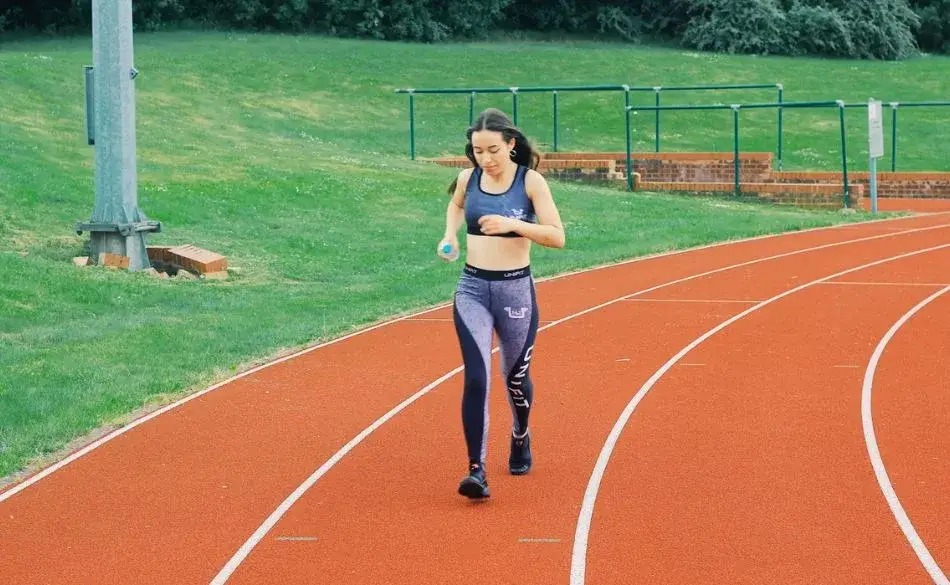
The basic version: performed in place rather than moving forward. Useful when space is limited or as the introductory version when learning the drill. Slightly less running-specific than the moving version but fully effective as a warm-up or cardio drill.
2. Moving Butt Kicks (preferred for runners)
Performed while moving forward at an easy jog, arms driving actively. The forward movement more closely mirrors actual running mechanics and adds a proprioceptive challenge. Begin slowly and let the forward momentum develop naturally. This is the version most commonly used in track and running warm-up routines.
3. High-Knee Butt Kicks (alternating)
Alternate between 8–10 high knees and 8–10 butt kicks, then repeat. This combination covers both primary running drill movements — knee drive (high knees) and heel recovery (butt kicks) — in a single warm-up sequence. Together, they activate the full running gait cycle more completely than either drill alone. Our dedicated guide on high knees for runners covers the complementary drill in detail.
4. Weighted Butt Kicks
Hold light dumbbells (1–3kg) during the arm drive phase to increase upper body engagement and muscular demand. Useful as a standalone conditioning exercise rather than a pre-run drill. Not recommended immediately before a speed session, as the arm fatigue may interfere with running mechanics.
5. Wall-Supported Butt Kicks (beginner)
Stand facing a wall with one hand lightly touching it for balance. Perform single-leg butt kicks — kick the right heel to the glute, lower, then kick the left. This removes the balance demand and allows complete focus on the heel-to-glute range of motion. Useful for beginners or athletes with balance limitations.


Sets, Reps, and Duration by Purpose
| Purpose | Volume | Pace | When to use |
|---|---|---|---|
| Pre-run warm-up drill | 2–3 sets × 20–30 m or 30 sec | Easy-moderate, deliberate | After 5 min easy walk/jog, before main run |
| Cardio interval | 4–6 sets × 30–45 sec, 15 sec rest | Vigorous | In a standalone warm-up circuit or HIIT session |
| Running drill session | 4–6 sets × 40–60 m | Moderate, focus on mechanics | After easy warm-up run, before interval or tempo work |
| Post-workout cool-down | 1–2 sets × 30 sec | Easy, relaxed | To maintain blood flow and reinforce mechanics in a fatigued state |
Butt kicks as a daily practice is fine — they impose minimal fatigue and do not require recovery time. If used as a warm-up drill (the most common application), daily use is appropriate and beneficial. Increased frequency reinforces the neuromuscular pattern more quickly.


Where Butt Kicks Fit in a Complete Running Warm-Up
A complete pre-run warm-up should progress from low-intensity general movement to running-specific activation. Butt kicks sit in the drill phase, after general warm-up movement but before the main run begins:
Phase 1 — General warm-up (3–5 min): Easy walking or very slow jog. Raises core temperature and lubricates joints without imposing running load before the body is ready.
Phase 2 — Dynamic mobility (2–3 min): Hip circles, leg swings, ankle rotations. Opens the range of motion needed for running without static stretching that would reduce explosive performance.
Phase 3 — Activation drills (3–5 min): Butt kicks + high knees, 2–3 sets of each. Targets hamstring and hip flexor activation specifically, primes the neuromuscular patterns of running, raises heart rate toward running intensity.
Phase 4 — Strides (optional, 2 min): 3–4 × 80–100m accelerations at 80% effort. Bridges the gap between drill pace and running pace. Our running faster guide covers strides in detail — they’re most beneficial when the activation drills (phase 3) have prepared the neuromuscular system properly.
For runners who want to understand how warm-up efficiency fits into a broader running consistency picture, our guide on running frequency science covers the evidence on how session structure — including warm-up quality — affects injury rates and training adaptation across a week of running.
Run Better With a Structured Programme
A running coach builds proper warm-up protocols, drill sequences, and structured sessions into your weekly programme — so every run starts with purpose and ends with less injury risk. SportCoaching's running coaching is AUD $143/month, no lock-in, 90-day performance guarantee.

FAQ: Butt Kicks Exercise
What do butt kicks do for you?
Activate and warm up the hamstrings, glutes, hip flexors, and calves; dynamically stretch the quadriceps; raise core temperature; fire the CNS for running; and reinforce heel recovery mechanics. For runners, the primary benefit is faster hamstring activation, which improves cadence and stride efficiency.
What muscles do butt kicks work?
Primary: hamstrings (pulling the heel up), glutes (hip extension), calves (push-off). Secondary: hip flexors (stabilisation), core (rotation control), quadriceps (dynamic stretch). Arms and shoulders engage with active arm drive.
How many butt kicks should I do before running?
2–3 sets of 20–30 metres (moving) or 30 seconds (in place), at easy-to-moderate pace, as part of a complete pre-run warm-up. Pair with high knees for full running gait activation.
Are butt kicks good for running?
Yes — they directly mirror and train the heel recovery phase of running, increase hamstring firing speed, and dynamically prepare the quad and hamstring for running load. One of the most running-specific warm-up drills available.
What is the difference between butt kicks and high knees?
They’re complementary drills targeting opposite phases of the running gait. Butt kicks train heel recovery (hamstrings). High knees train knee drive (hip flexors, quads). Together they cover the complete running stride — pair them in your warm-up for full running-specific activation.















