Why Hip Pain Shows Up More Often Than Most Cyclists Expect
Hip pain seems to sneak up on you. One day you feel strong on the bike. The next day you notice a tight pull at the front of your hip or a deep ache that spreads into your glutes. It can feel confusing because cycling looks smooth and low impact, so why do your hips take such a hit?
A big reason is the position you hold when you ride. Your hips stay bent for long periods, especially if you ride indoors or spend a lot of time on the hoods. This bent shape shortens your hip flexors, and that can lead to hip flexor pain riders know all too well. When these muscles tighten, they pull your pelvis forward and change the way your legs move through the pedal stroke.
Another reason is muscle imbalance. Cycling builds strong quads, but it doesn’t always train your glutes and deep hip muscles in the same way. When one area gets strong and another gets weak, your hips take on more load with every mile. You might not feel it right away, but the tension builds, and sooner or later discomfort shows up.
One of my coaching clients, Christian, struggled with this for months. He rode five days a week and felt fit, but he couldn’t shake a dull ache in his hip. Once we checked his saddle height and added a few simple hip mobility drills, the pain disappeared within two weeks. His story isn’t rare. Small changes often make the biggest difference.
Here are the three most common reasons hip pain ends up becoming a long-term problem for many riders:
- Poor hip mobility that limits smooth pedaling
- Weak glutes that force smaller hip muscles to work too hard
- A saddle height that tilts your pelvis forward or backward
When these combine, even a strong rider can struggle. The key is spotting them early and making changes before the pain sets in.


How Small Fit Issues Turn Into Big Hip Problems
Most cyclists don’t realise how small their margin for error is when it comes to bike fit. The tiniest changes in saddle height or handlebar reach can shift the load on your hips in a big way. You may feel fine at the start of a ride, but after an hour or two the strain builds. That slow tightening or deep ache you feel later is often the first sign that something is off.
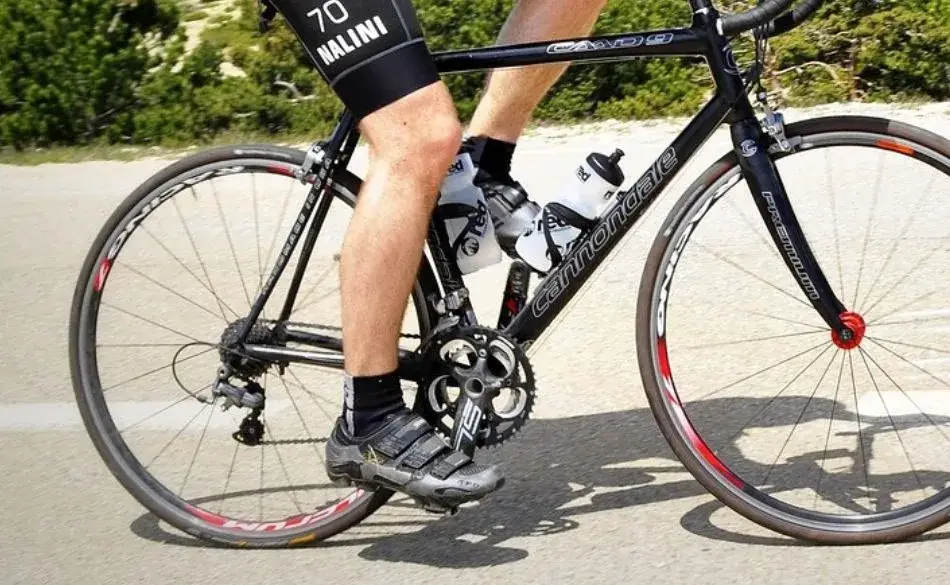
One of the biggest drivers of hip pain while cycling is a saddle that doesn’t support natural hip movement. If the saddle is too high, your hips rock side to side. If it’s too low, your hip flexors stay under constant tension. Both situations change cycling hip alignment and force your hip muscles to work in ways they aren’t designed to.
Reach and handlebar drop also play a huge role. A long reach pulls your body forward and puts more bend at the hip. A large drop to the bars increases this even more. This is why indoor riders or cyclists on aggressive aero setups often report more hip tightness than those on relaxed endurance bikes. The more your hip stays bent, the harder your hip flexors and deep rotators must work to keep the pedal stroke feeling smooth.
Small fit mistakes can create a chain reaction. Your hips compensate first, then your glutes, then your lower back. When that happens, the problem doesn’t go away on its own. It stays long enough to show up as hip pain after cycling, even hours later. Research also shows that poor bike fit can directly contribute to hip-related discomfort, as highlighted in this study on cyclists experiencing hip pain, which helps explain why early adjustments matter so much.
Here are the most common fit errors that lead to bike fit hip pain:
- Saddle height set too high or too low
- Reach that forces your upper body too far forward
- A saddle tilt that tips your pelvis out of its natural position
- Cleat angles that rotate your hips unnaturally
The good news is that these are some of the easiest problems to fix. When your bike supports your natural movement, your hips relax and the pain often fades fast. If you’re unsure about saddle height and want a trusted method, the Mastering the LeMond Saddle Height Method guide gives clear steps to get it right.
Why Your Hips Need More Strength and Mobility Than You Think
Many cyclists think their hips are strong because they ride often, but cycling doesn’t train the deep hip muscles as much as you’d expect. Your hips move in a very small range on the bike. That means some muscles get stronger while others barely switch on. Over time, this imbalance becomes one of the most common causes of hip pain cyclists struggle with.
Your hip flexors often work harder than they should. They stay in a shortened position every time you sit in the saddle, especially on long or intense rides. This is why tight hip flexors from cycling are so common. When these muscles shorten, they change your pelvic position and reduce your hip’s ability to move smoothly. That leads to extra load on the deeper stabilisers in your hip.
Strength also plays a big role. Your glutes, hip rotators, and deep core muscles act like a support system that keeps your pelvis steady. When they’re weak, everything around them has to work harder. This imbalance can show up as a hip flexor strain, or even hip pain on one side when cycling, depending on how your body compensates.
Mobility matters too. If your hips can’t move through a full range of motion, your pedal stroke becomes stiff. That stiffness may not hurt right away, but it adds stress to your hip joint with every ride. Many cyclists don’t notice the problem until the discomfort grows enough to interrupt their training.
Here are key signs that your hips need better strength or mobility to support confident riding:
- You feel pulling or tightness during long climbs
- Your pedal stroke feels uneven or choppy
- One hip tends to sit higher or twist outward
- Your hips feel stiff after long indoor cycling sessions
- You feel your pelvis rocking or shifting subtly on the saddle
The better your hips move and the stronger the supporting muscles are, the easier it becomes to keep hip stability for cycling on every ride. If you want to learn how strength fits into your cycling routine, the cycling and weight training for beginners guide offers a simple place to start.

When Should You Worry About Hip Pain When Cycling?
Let’s be honest, a little stiffness after a hard ride can feel normal. But how do you know when hip pain when cycling is a real red flag, not just training fatigue? The line can feel blurry, especially if you’re building fitness or pushing longer rides.
A good place to start is timing. If your hip only feels a bit tight right after a long session and then eases within a day, that’s often just your muscles reacting to load. But if the pain starts earlier in the ride, gets worse as you keep going, or shows up even on easy spins, your body is telling you something more important. That pattern is common in cycling overuse injuries, where small irritations build into bigger problems over time.
Location matters too. A deep pinching in the front of the hip, a sharp pull when you lift your leg, or pain that wakes you at night is not something to ignore. The same goes for pain that spreads into your groin or down the side of your leg. While not always serious, it can point to more than just hip pain from a bad bike fit. It may involve irritated tendons, joint structures, or surrounding muscles that need proper assessment.
Ask yourself a few simple questions. Does your hip hurt when you walk, climb stairs, or sit at your desk, not just on the bike? Do you feel hip pain during long rides even at an easy pace? Have you had a recent jump in training volume, hills, or hip pain from indoor cycling sessions? If the answer is yes to any of these, it’s wise to slow down and get your hip checked by a physiotherapist or sports doctor.
You don’t have to wait until you can’t ride. Catching the problem early is the best way to stay on the bike, protect your long-term health, and avoid turning a simple issue into months of missed training.


How Different Riding Situations Affect Your Hips More Than You Think
Cycling feels simple on the surface, but the way your hips react to different riding situations can change everything. Long climbs, indoor sessions, strong winds, or even the position of your hands on the bars can shift how your hips move. When these small details add up, they often explain why hip pain appears only in certain conditions.
Take climbing, for example. When you ride uphill, your hip angle closes more than it does on flat ground. That means your hip flexors work harder, and your glutes have to drive with more force. If you already struggle with hip tightness cycling, climbs can make the discomfort show up faster. Indoor riding has a similar effect. You spend more time seated, there’s less coasting, and your hips stay in the same angle for much longer. That’s why many riders report hip pain on one side when cycling indoors, even when they feel fine outside.
Windy rides create their own challenges. When you ride into a headwind, you lean forward more, increasing hip flexion. On fast tailwind sections, you often push higher gears, which demands more from your hip extensors. These shifts change hip alignment, and if your deep hip muscles aren’t ready, the strain builds with every kilometre.
Different riding styles place load on your hip in unique ways. The table below breaks down how common cycling situations affect hip pressure, muscle demand, and overall comfort. It helps explain why your hips feel great one day and tight the next, even if your training routine stays the same.
👉 Swipe to view full table
| Category | Uphill Riding | Indoor Cycling |
|---|---|---|
| Hip Angle | More closed, increasing hip flexor load and joint compression. | Fixed position for long periods, reducing movement variety. |
| Muscle Demand | Glutes and hip stabilisers work harder to maintain smooth climbing rhythm. | Hip flexors remain shortened; stabilisers fatigue faster. |
| Mobility Needs | Requires more hip extension strength and flexibility to avoid strain. | Needs regular stretching breaks to avoid stiffness buildup. |
| Overuse Risk | Greater risk of front-hip pinching or flexor irritation on long climbs. | Higher risk of seated overuse patterns and hip imbalance. |
| Best Practices | Alternate seated and standing efforts; keep cadence light and smooth. | Add periodic posture resets; mix in mobility work post-ride. |


The Fixes That Actually Work When Your Hips Keep Slowing You Down
When hip pain keeps showing up on your rides, it’s easy to think you need something complicated to fix it. But in most cases, the real solutions are simple and very effective when you stay consistent. The goal is to restore smooth movement, take pressure off your hip flexors, and teach your deep hip muscles to work the way they’re supposed to. When these pieces fall into place, hip pain often fades faster than expected.
Strength is one of the biggest missing pieces. Your glutes and deep hip stabilisers control how your pelvis sits with every pedal stroke. When they’re weak, everything becomes uneven. That’s why so many riders feel hip tightness cycling, even when they stretch often. Strength fixes the root problem by giving your pelvis the support it needs, not just temporary relief.
Mobility matters too. You don’t need extreme flexibility. What you need is enough hip extension and rotation to keep cycling hip alignment smooth. If your hip can’t move freely, your body compensates and the pressure lands in places that aren’t designed to handle it. That’s when stiffness turns into irritation, and irritation turns into pain.
Here are the fixes that work best for most riders dealing with hip discomfort:
- Strengthen your glutes with simple lifts like bridges, side steps, and single-leg work
- Add hip rotation drills to wake up deep stabilisers
- Stretch your hip flexors regularly to open your hip angle
- Review your saddle height to rule out hip pain from a bad bike fit
- Add one or two sessions a week focused on hip mobility.
These aren’t advanced strategies. They’re basic, proven steps that target the real causes behind most hip issues. When you apply them consistently, your hips start to move better, your pedal stroke gets smoother, and riding becomes fun again.


The Stretches Every Cyclist With Hip Pain Should Use
Most riders try to stretch their hips only when something already hurts, but the truth is that regular mobility work is one of the easiest ways to prevent hip pain problems from coming back. Your hips spend a lot of time in a bent position on the bike, especially during indoor sessions or long climbs. That posture shortens the front of your hips and stiffens the deep rotators, which is why so many riders deal with tight hip flexors from cycling without even realising it.
The best stretches aren’t complicated. What matters most is choosing movements that target the areas cycling doesn’t fully use (your hip flexors, glutes, rotators, and the front of your pelvis). When these areas open up, you get smoother pedal strokes, better posture, and less tension after your rides.
One of the most helpful stretches for cyclists is the half-kneeling hip flexor stretch. It gently lengthens the iliopsoas and rectus femoris, two muscles that stay short on the bike. You don’t need to push into a deep position. A light stretch held for 30–40 seconds works well, especially after long or intense rides.
Glute and hip rotator stretches also make a huge difference. A simple seated figure-four stretch can release the deep muscles that stabilise your hip joint. When these relax, you reduce the pulling sensation many riders feel after hard climbs or interval sessions. Opening your adductors with a gentle butterfly stretch adds even more room for your hips to move during pedaling.
Here are the most effective stretches to reduce hip tightness and restore hip mobility:
- Half-kneeling hip flexor stretch
- Figure-four glute stretch
- Seated hip external rotation stretch
- Butterfly hip-adductor stretch
- Standing quad stretch to open the front of the hip
These stretches don’t take long. Five to eight minutes after a ride can reset your hips, reduce stiffness, and help your body feel more balanced the next day. For riders who want more detailed guidance on effective stretching routines, the best stretches for cyclists page offers helpful examples you can start using right away.
If you want rides that feel smoother, safer, and more structured, our Cycling Training Plans give you clear weekly workouts designed to balance load, improve stability, and support healthier hips.
Each plan is built to help you progress without the overuse problems that come from guessing your training. You’ll build strength, endurance, and confidence with every week.
Explore Cycling Plans

Strength Exercises That Build Hip Stability and Prevent Pain
Cyclists often focus on leg power and forget about the deep hip muscles that control alignment and stability. When these muscles weaken, your pelvis tilts, your knees track unevenly, and the load shifts into the front of your hip. That’s when frustration starts showing up ride after ride. Strength training fixes this by building stability from the inside out.
The good news is that you don’t need heavy weights or long gym sessions. What you need are targeted movements that train your glutes, rotators, and core (the muscles that hold your pelvis steady with every pedal stroke). Stronger hips mean smoother movement, less fatigue, and far less risk of developing hip pain from a bad bike fit or poor alignment.
One of the most powerful exercises for cyclists is the glute bridge. It strengthens the glute max, the main muscle responsible for hip extension. When this area gets stronger, your body relies less on your hip flexors, which often become overworked on long rides. The same is true for side-lying leg lifts, which strengthen the glute medius. This muscle keeps your pelvis level and prevents your hip from dropping on one side. One of the leading causes of hip pain on one side when cycling.
Adding core and rotational strength is just as important. Exercises like dead bugs and bird dogs build deep core stability, while hip external rotation drills teach your hips to stay aligned under pressure.
Here are the most effective hip strength exercises for cyclists:
- Glute bridges for hip extension power
- Side-lying leg lifts for hip stability
- Single-leg glute bridges for balanced strength
- Dead bugs for deep core control
- Hip external rotation band drills for better alignment
When you build strength in these key areas, your pedal stroke becomes more efficient, your hips stay steadier over long distances, and the aches you used to feel after climbing or indoor sessions begin to fade. If you also want to improve the stability of your upper body, the best back exercises for cyclists page offers movements that support stronger posture and better hip alignment.
Riding Without Hip Pain Is Possible And Closer Than You Think
Hip pain can make you question everything. Your training plan. Your age. Even your place in the bunch. But here’s the thing about hip pain when cycling. It’s usually not a sign that you’re broken. It’s a sign that something in your setup or your routine needs a smarter approach.
You’ve seen how small details add up. A saddle that’s a few millimetres off. Hours of indoor riding with no breaks. Strong legs but undertrained hips. None of these on their own feel dramatic, but together they can create a steady build-up of stress. The same is true in reverse. A few small, consistent changes can turn that trend around.
Imagine how different your next few months could feel if your hips were no longer the limiting factor. Longer rides without that deep ache. Climbs where you’re focused on breathing and rhythm, not a pulling pain at the front of your hip. Even recovery days where you get off the bike feeling used, not used up. That’s what happens when hip mobility, strength training, and good fit decisions start working together.
So what’s the next step for you? Maybe it’s finally checking your saddle height instead of guessing. Maybe it’s adding two short strength sessions each week that target your glutes and deep hip muscles. Maybe it’s booking a proper bike fit so you’re not fighting your position every time you turn the pedals.