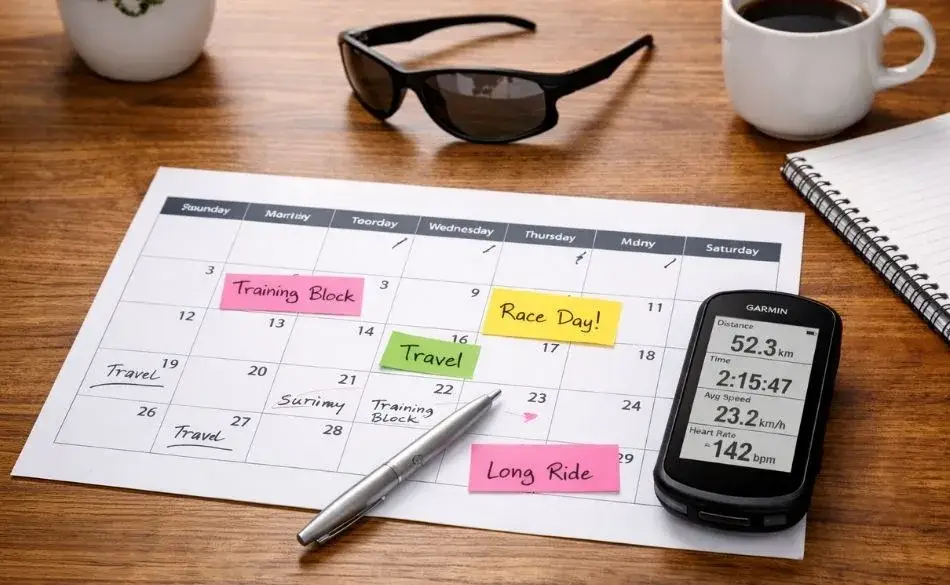
Start with a Solid FTP Baseline Test
Before you chase a +50 watt FTP gain, you need to know exactly where you are starting. Without an accurate baseline, you are training in the dark, and it is hard to see if your work is paying off.
There are three common ways to test:
- 20 minute FTP test – Ride as hard as you can for 20 minutes, then take 95% of your average power as your FTP.
- Ramp test – Power increases every minute until you cannot continue. It is shorter and less fatiguing, good if you test often.
- 60 minute time trial – The most accurate but mentally tough. Best for experienced riders who can pace well.
If you have a smart trainer or a reliable power meter, testing becomes easier and more consistent. Platforms like Zwift, TrainerRoad, and Wahoo SYSTM guide you through the steps and record the results for you.
Once you have your number, track it over time. For example, if your starting FTP is 240 watts, your target is 290. Break the big goal into smaller milestones of 5 to 10 watts. Small wins keep you motivated and make the climb feel doable.
Tip: Test under similar conditions each time. Use the same bike and trainer, follow the same warm up, and keep nutrition simple and repeatable. Even room temperature and fans can change your result, so keep those steady too.
This first step is not flashy, but it is essential. Without a clear starting point, you will not know if your FTP gains are realistic or if you are just riding harder with no real improvement. Think of this as setting your starting line. Now you know how far you need to go.
When it comes to understanding other metrics (that influence your FTP) like VO₂ max, it helps to know how your device calculates them. Garmin relies on Firstbeat technology and metrics like heart rate and speed rather than lab equipment.
Want a deeper look? Read our How Garmin Calculates VO₂ Max article. It breaks down the formulas, accuracy, and key factors that impact your score.
Increasing your FTP by 50 watts takes more than just riding harder—it requires structured, targeted training. Our Cycling Threshold Training Plan is designed to build sustained power, improve endurance, and sharpen race-day performance.
- Science-based structure: Focused intervals, progressive overload, and recovery phases to steadily push your FTP higher.
- Power-focused workouts: Designed around your current FTP for precision training and measurable gains.
- Time-efficient sessions: Perfect for athletes balancing cycling with work and family—train smarter, not just longer.
- Flexible delivery: Delivered through TrainingPeaks, ready to start within 24 hours of purchase.
💡 If you’re serious about adding real watts to your FTP, this plan will guide you step-by-step to stronger, faster rides.
View the Threshold Training Plan →

Sweet Spot Training – The Core of Your FTP Increase
If you want to increase FTP by 50 watts, sweet spot training should be at the heart of your plan. Sweet spot refers to riding at about 88% to 94% of your current FTP. It is hard enough to create real fitness gains, but not so intense that you burn out quickly.
This training builds your aerobic power, muscular endurance, and ability to handle sustained efforts. It is also time efficient, which is perfect if you cannot spend endless hours on the bike each week.
Here is an example of a weekly sweet spot structure:
- Two to three sessions per week at 88% to 94% FTP
- Intervals of 10 to 20 minutes each, with short recoveries
- One longer weekend ride that includes sweet spot segments
For example, you might start with 3 x 12 minutes at sweet spot with 5 minutes recovery, then progress to 3 x 20 minutes as your fitness improves. This progression teaches your body to sustain more power for longer, moving you closer to that +50 watt target.
One of my riders started with a 230 watt FTP. Over three months of focused sweet spot sessions combined with endurance rides, they reached 270 watts without feeling overtrained. The key was balancing the hard work with recovery days.
Tip: Do not push every session to the limit. Sweet spot training works best when you stay controlled and consistent. Hitting the right intensity week after week will do more for your power than going too hard and needing extra days off.
When done right, sweet spot training is your most reliable tool for steady, sustainable FTP gains. It builds the base you need before layering in higher intensity work.
Sweet spot sessions are easy to script indoors and keep precise. You can load workouts, hold steady power, and track progress week to week.
If you are choosing a platform for these workouts, our MyWhoosh vs Zwift complete guide compares workout builders, plans, and community features so you can train smarter.
Once you choose, repeat the same workout structure for 2 to 3 weeks before progressing interval length or total time in zone.


Mix in VO₂ Max and Anaerobic Work
While sweet spot training builds your foundation, adding VO₂ max and anaerobic intervals is what pushes your FTP gains to the next level. These sessions train your body to process oxygen more efficiently and improve your ability to handle repeated surges in effort.
VO₂ max efforts are typically done at 110% to 120% of your FTP, lasting 3 to 5 minutes, with equal rest between intervals. Anaerobic work is even shorter and harder, usually between 30 seconds and 2 minutes at near-max effort.
Here is an example VO₂ max workout:
- 5 x 5 minutes at 115% FTP
- 5 minutes recovery between intervals
- Focus on keeping cadence smooth and breathing controlled
These high-intensity sessions create powerful adaptations in a short time, but they are also demanding. Limit them to one or two per week, and avoid stacking them back-to-back with other hard rides.
One of my riders started with an FTP of 240 watts and had been stuck there for months. We introduced a mix of VO₂ max intervals and anaerobic sprints twice per week, alongside their sweet spot sessions. In just 18 weeks, their FTP jumped to 290 watts. The difference came from targeting weaknesses while still maintaining a strong aerobic base.
Tip: Avoid going too hard too often. High-intensity work is a tool, not the whole plan. Use it strategically to spark growth without digging yourself into a recovery hole.
When balanced with endurance and sweet spot training, VO₂ max and anaerobic work can accelerate your progress and help you increase FTP by 50 watts faster than with steady-state training alone.
Boosting your FTP isn’t just about raw power—it’s about holding that power steady over a set distance. Our Cycling Time Trial Training Plan is built to improve your sustained efforts, pacing strategy, and aerodynamic efficiency so you can crush your next TT.
- Structured FTP-focused training: Progressive intervals designed to push your sustainable power higher.
- Race-specific preparation: Workouts that sharpen pacing, mental focus, and efficiency for peak TT performance.
- Optimised for busy riders: Sessions that fit around work, family, and other training commitments.
- Easy to follow: Delivered through TrainingPeaks with clear instructions and power targets.
💡 If you want to ride faster against the clock and see a big FTP jump, this plan delivers the structure and focus you need.
View the Time Trial Training Plan →
The Role of Aerobic Base Building
If sweet spot and VO₂ max intervals are the sharp tools in your training, aerobic base work is the solid foundation that holds everything together. Without it, your ability to sustain power over long rides will always be limited.
Aerobic base training focuses on riding at a comfortable pace, often called Zone 2, which is around 60% to 75% of your FTP. These sessions improve your heart’s efficiency, increase capillary density in your muscles, and teach your body to burn fat as a fuel source.
For riders aiming to increase FTP by 50 watts, this base work supports the harder sessions by building resilience. It allows you to recover faster between intervals and hold higher outputs for longer without fatiguing.
Here is a sample weekly structure with base work included:
- One long ride of 2 to 4 hours in Zone 2 each week
- One or two midweek endurance rides of 60 to 90 minutes
- Include cadence variations and short surges to keep it engaging
Base work may not feel as exciting as high-intensity intervals, but it is where much of your long-term progress comes from. Skipping it often leads to plateaus and burnout when the training load ramps up.
Tip: Use endurance rides to practice nutrition, pacing, and position. These sessions are perfect for testing fueling strategies ahead of races or long events.
When combined with sweet spot and VO₂ max training, a strong aerobic base acts like a safety net. It keeps your fitness steady during breaks in training and ensures your hard work translates into real-world performance improvements.

Strength Training for More Power on the Bike
Many cyclists overlook the benefits of off-bike strength work, but it can be a game-changer when trying to increase FTP by 50 watts. Building stronger legs, hips, and core muscles allows you to put more power through the pedals and hold it for longer.
Strength training does not need to be complicated. Focus on compound movements that recruit multiple muscle groups. These build functional strength that transfers directly to cycling performance.
Here are four key exercises for cyclists:
- Squats – Develops leg strength and stability
- Deadlifts – Improves posterior chain power
- Step-ups – Builds unilateral leg strength and balance
- Planks – Strengthens your core for better posture and control
One of my riders plateaued at an FTP of 280 watts despite months of structured cycling training. We added two gym sessions per week focusing on squats, deadlifts, and core stability. Within 12 weeks, their FTP jumped to 330 watts. The added muscle strength allowed them to push harder in intervals and maintain form during long climbs.
Tip: Keep your strength sessions short and focused, especially during heavy cycling weeks. Aim for 45 to 60 minutes, and always warm up properly to reduce the risk of injury.
Strength training is not about bulking up. It is about creating a stable, powerful platform so every watt you produce goes into forward motion. When paired with targeted cycling sessions, it can be the missing link that takes your power to the next level.
Recovery – The Secret Weapon for Big FTP Gains
It is tempting to think that training harder and more often will get you to a +50 watt FTP gain faster. In reality, the real improvements happen when you recover. Recovery is when your body adapts to the stress of training and builds stronger muscles, better endurance, and greater power output.
Signs you may not be recovering enough include persistent fatigue, declining power numbers, poor sleep, and lack of motivation. Ignoring these signs can lead to overtraining and stalled progress.
Here are three recovery strategies to keep you on track:
- Prioritise 7 to 9 hours of sleep each night
- Fuel with enough carbohydrates and protein to support muscle repair
- Include easy recovery rides or complete rest days each week
For riders training with higher intensity, I recommend a recovery week every 3 to 4 weeks. During these weeks, cut your total training volume by 40% to 50% while keeping a touch of intensity. This approach allows your body to absorb the work and prepare for the next block of training.
Tip: Use tools like heart rate variability tracking to spot signs of fatigue early. Even without tech, listening to how you feel each morning can guide your recovery choices.
Think of recovery as your secret weapon. Without it, the hard work you put into sweet spot sessions, VO₂ max intervals, and strength training will never fully pay off. Build recovery into your plan, and you will reach your FTP increase by 50 watts goal faster and with less risk of burnout.
Raising your FTP by 50 watts doesn’t happen by chance—it’s the result of focused, progressive training. Our Cycling Training Plans are built to target the key systems that improve sustainable power, helping you push higher watts for longer without burning out.
- Structured FTP progression: Interval sessions designed to build threshold power step-by-step.
- Balanced load and recovery: Prevent plateaus and overtraining while still making gains.
- Power-based training: Clear wattage targets so every session has purpose.
- Flexible for your schedule: Sessions that fit into busy weeks without sacrificing progress.
💡 The right structure is the fastest way to big FTP improvements—start training smarter today.
View Cycling Training Plans →

Staying Motivated and Tracking Your Progress
Chasing a +50 watt FTP increase is a big goal, and it can take months to achieve. Staying motivated along the way is just as important as the training itself. Without a clear way to measure progress, it is easy to lose focus or get discouraged when improvements feel slow.
One of the best tools you can use is a simple progress tracking table. It helps you see trends over time, spot plateaus early, and celebrate the small wins that keep you moving forward.
Swipe to view full table
| Day | Workout Type | Details | Focus Area |
|---|---|---|---|
| Monday | Recovery Ride | 45-60 min at 55-65% FTP in flat terrain. Cadence 85-95 rpm. Add 3 x 1 min high-cadence spins at 100-110 rpm with 2 min easy between. Hydration only, light snack if needed. Keep HR low and breathing relaxed. | Active recovery, blood flow, neuromuscular freshness |
| Tuesday | Short Hill Repeats | 6-8 x 1 min uphill at 130-150% FTP, 3-4 min easy spin back down. Start seated for 30 sec, stand for the final 15-20 sec. Focus on a firm core and smooth torque. Full warm up with 3 x 30 sec openers at 120% FTP. | Power and anaerobic capacity, recruitment, pedal technique under load |
| Wednesday | Endurance Ride | 90-120 min at 60-70% FTP. Keep cadence 85-95 rpm. Include 3 x 8 min at 75-80% FTP with 4 min easy to add variety without fatigue. Practice fueling at 30-40 g carbs per hour for consistency. | Aerobic base, capillary density, fat oxidation |
| Thursday | Threshold Intervals | 3 x 12 min at 95-100% FTP, 6 min easy between. Aim for steady seated power, quiet upper body, and even breathing. If indoors, use a fan and keep room cool. Target cadence 88-92 rpm for climbing specificity. | Lactate threshold, sustained power, pacing discipline |
| Friday | Rest Day | Off the bike. 15-20 min mobility and light core. Walk 20-30 min if you like. Nutrition focus: protein 1.6-2.0 g per kg per day, plenty of fluids, early bedtime. | Muscle repair, nervous system reset, glycogen restoration |
| Saturday | Climbing Simulation | 2.5-3.5 hours total. Include 3-5 climbs of 6-10 min at 90-95% FTP or 2 longer climbs of 15-20 min at 88-92% FTP. Descend easy. Fuel 60-90 g carbs per hour, sip fluids regularly. Hold aero or climbing position, focus on smooth torque through the whole circle. | Endurance, sweet spot strength, position-specific durability |
| Sunday | Optional Spin | 45-60 min at 50-60% FTP. Include 4 x 3 min single-leg drills on trainer or safe road, 2 min easy between. Or swap for 20-30 min yoga and gentle stretching. Keep it truly easy. | Mobility, coordination, low-stress aerobic maintenance |
Updating this table every two to four weeks makes progress visible and reinforces the value of your training plan. Even small increases of 5 watts show that you are moving in the right direction.
Motivation is easier to maintain when you can look back and see how far you have come. Celebrate each milestone, no matter how small, and use them as fuel to keep pushing toward that final goal of a 50 watt FTP increase.


Conclusion: Turning Training into a 50-Watt FTP Gain
Adding 50 watts to your FTP is not about one magic workout. It is the result of a clear plan, consistent effort, and patience over weeks and months. The path combines accurate testing, structured sweet spot training, high-intensity VO₂ max and anaerobic work, a strong aerobic base, off-bike strength training, and deliberate recovery.
Track your sessions, review data regularly, and make small adjustments when progress stalls. Every session should have a purpose, whether it is building power, improving endurance, or aiding recovery. Resist the urge to overtrain—adaptation happens when the body has time to repair and strengthen.
Stay focused on the long term. Gains may come quickly at first, then slow, but steady improvements will stack up. By combining discipline with smart training choices, you will not only increase FTP by 50 watts but also become a more efficient, resilient, and confident rider.