
Want help turning consistency into progress? Coaching keeps your training simple, structured, and sustainable.
Start Coaching →
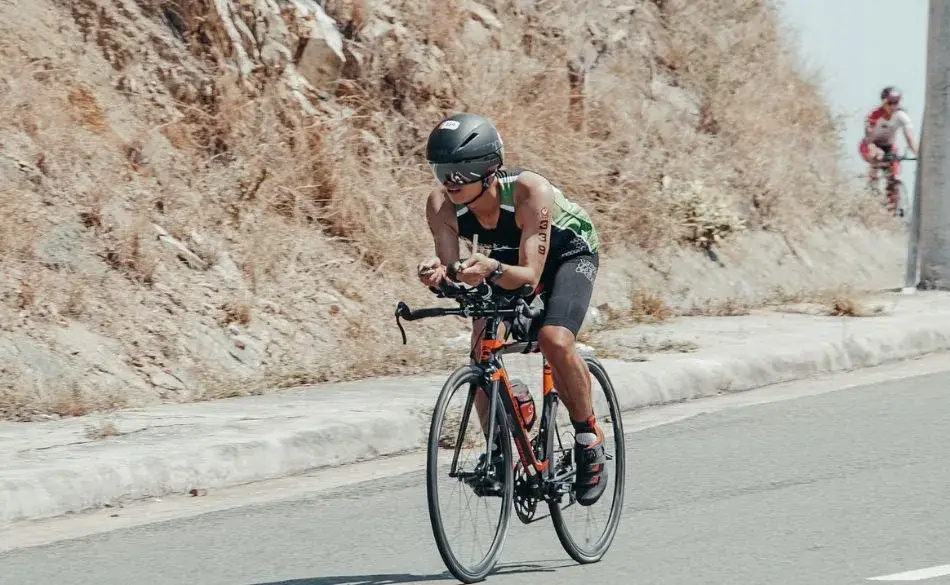
Triathlete cycling during the bike leg of an Ironman race, training to finish within the Full Ironman Cut Off Times.

Last updated:

Full Ironman Cut-Off Times: Swim, Bike, Run & 17-Hour Limit

Every full Ironman triathlon enforces strict cut-off times for each discipline. The overall limit is 17 hours, but there are intermediate deadlines for the swim and bike that you must hit along the way. Miss any one of them and your race is over — regardless of how strong you feel or how close you are to the finish.

This guide covers the standard full Ironman cut-offs, the minimum paces needed to beat them, a realistic pacing example, and races that use different limits.

Chat with a SportCoaching coach

Not sure where to start with training?

Tell us your goal and schedule, and we’ll give you clear direction.

No obligation. Quick, practical advice.

Article Categories:

Explore our triathlon training articles for more helpful articles and resources.

Quick Answer

The standard full Ironman cut-off is 17 hours from the race start. Swim: 2 hours 20 minutes. Swim + T1 + bike: 10 hours 30 minutes. Overall finish (including marathon): 17 hours. All times are measured from the official race start. Miss any cut-off and you receive a DNF.

The Official Full Ironman Cut-Off Times

These are the standard cut-offs used by most Ironman-branded full-distance events worldwide.

👉 Swipe to view full table

Discipline Distance Cut-Off Time Measured From Minimum Avg Pace
Swim 3.8 km (2.4 mi) 2 hours 20 minutes Race start ~3:40 per 100m
Swim + T1 + Bike 3.8 km + 180 km (112 mi) 10 hours 30 minutes Race start ~21–22 km/h avg on bike (after swim + T1)
Overall Finish (incl. marathon) 226 km total (140.6 mi) 17 hours Race start Depends on time remaining after bike

These times are cumulative from the race start — not from when you individually begin each leg. The bike cut-off of 10h30 includes your swim and first transition. The 17-hour overall limit includes everything. There is no separate “run-only” time limit — you simply need to cross the finish line within 17 hours of the gun.

Some races also have intermediate timing mats on the bike and run where you must pass by a certain time. These vary by event and are specified in the athlete guide.

What the Cut-Offs Mean on Race Day

The swim cut-off of 2 hours 20 minutes is generous for anyone who has trained consistently. At roughly 3:40 per 100m, even a steady mix of freestyle and breaststroke with sighting stops will get most swimmers through. Pool pace of around 3:00–3:15 per 100m translates comfortably to an open-water finish within 2 hours.

The bike is where races are lost. You have 10 hours 30 minutes from the gun for swim + T1 + bike. If you swim 1h30 and take 10 minutes in T1, that leaves 8h50 for 180 km — an average of about 20.4 km/h. That’s achievable but leaves little margin for mechanicals, wrong turns, or blowing up on hills. A slightly faster swim or quicker transition buys valuable time.

The marathon is whatever time remains. If you reach T2 at the 10-hour mark, you have 7 hours for 42.2 km — plenty for a steady run-walk. If you arrive closer to 10h30, you have 6h30, which still allows a pace of roughly 9:15/km (14:55/mile) including walk breaks. The maths works, but you need functioning legs — and that depends entirely on how well you paced the bike and managed nutrition across 180 km.

A Realistic Pacing Example

Here’s what a comfortable mid-pack Ironman finish looks like — well within cut-offs, no elite fitness required:

👉 Swipe to view full table

Leg Time Pace Cumulative Time Buffer to Cut-Off
Swim (3.8 km)1:20~2:06/100m1:201h00 to swim cut-off
T10:101:30
Bike (180 km)6:30~27.7 km/h8:002h30 to bike cut-off
T20:108:10
Run (42.2 km)5:00~7:06/km13:103h50 to 17h limit

Total: approximately 13 hours 10 minutes — nearly 4 hours inside the 17-hour limit. These paces are well within reach for a trained age-grouper on a structured plan. The key is consistency across all three legs, not heroics in any single one.

For a detailed pacing approach, see our guide on how to pace a triathlon properly. If you’re also considering the half distance, our Ironman 70.3 cut-off times guide covers the shorter race.

Races With Different Cut-Off Times

While most Ironman events use the standard 17-hour limit, a handful of races operate differently due to local permits, course logistics, or noise regulations.

👉 Swipe to view full table

Race Overall Limit Swim Cut-Off Bike Cut-Off Notes
Most Ironman events17:002:2010:30Standard worldwide
Challenge Roth15:002:159:45Noise regulations in host town
Ironman Vitoria-Gasteiz15:402:209:10Tightest branded Ironman limit
Some non-WTC full-distance races15:00–16:00VariesVariesAlways check athlete guide

If you’re racing at an event with a shorter limit, your pacing and preparation need to account for the reduced margin. The difference between 17 hours and 15 hours is significant — it removes the comfortable walk-the-marathon buffer that many first-timers rely on.

How to Make Sure You Beat the Clock

Most athletes who miss the full Ironman cut-off don’t fail because they’re too slow in any single discipline — they fail because they mismanaged the bike or ran out of fuel. Here’s what matters most:

Respect the bike. The 180 km bike is where the race is decided. Ride at a pace you can sustain for the entire distance — not a pace that feels good at km 40. If you blow up on the bike, the marathon becomes a death march and the clock becomes your enemy. Aim for negative splits: ride the second half slightly faster than the first.

Nail your nutrition. Over 10–15 hours of racing, your body needs 60–90g of carbs per hour on the bike and during the run. Start eating early, eat consistently, and practise your race-day nutrition in training. Most Ironman DNFs are fuelling failures, not fitness failures. For detailed fuelling strategy, see our guide to carbohydrate gels.

Train with the cut-offs in mind. Can you swim 3.8 km in under 1h50? Can you ride 180 km at 25+ km/h? Can you run-walk a marathon in under 6 hours? If you hit these benchmarks in training, the cut-offs become a non-issue on race day.

Have a run-walk plan from the start. Very few age-groupers run an entire Ironman marathon. A structured run-walk (e.g. run 9 minutes, walk 1 minute) from km 1 is faster and more sustainable than running until you collapse and then walking the rest. Plan your walk breaks — don’t let them happen by accident.

FAQ: Full Ironman Cut-Off Times

What is the time limit for a full Ironman?
The standard limit is 17 hours from the official race start. This includes the swim, both transitions, the bike, and the marathon. Some races have shorter limits (15–16 hours) due to local permits or noise regulations.

What is the Ironman swim cut-off time?
2 hours and 20 minutes from the race start. This requires an average pace of roughly 3:40 per 100m for the 3.8 km swim. Miss it and you cannot continue to the bike.

What is the Ironman bike cut-off time?
10 hours and 30 minutes from the race start. This is cumulative — it includes your swim and T1. If you swim 1h30 and take 10 minutes in T1, you have 8h50 for the 180 km bike.

What happens if you miss a cut-off?
Your race is over. You’ll be pulled from the course and your result recorded as a DNF. Cut-offs are enforced strictly. Some events allow DNF athletes to cross the finish line informally after the course reopens, but this varies.

Are cut-off times the same for every Ironman?
Most use the standard 17-hour limit, but exceptions exist. Challenge Roth uses 15 hours. Ironman Vitoria has a 15h40 limit. Always check your race’s official athlete guide for the exact cut-offs.

Cross the Line Before Midnight

The full Ironman 17-hour limit is generous enough that you don’t need to be fast — but you do need to be consistent, well-fuelled, and disciplined on the bike. A steady swim, a controlled 180 km ride, and a structured run-walk will get most well-trained athletes across the line with hours to spare.

Know the numbers. Train to the benchmarks. Respect the bike. And when you hear “You are an Ironman” at the finish line, the cut-offs will be the last thing on your mind.

Training for Your First (or Fastest) Ironman?

Our triathlon coaching programmes build a structured swim-bike-run plan around your schedule, with pacing targets, nutrition guidance, and race-specific preparation so you finish strong — not watching the clock.

Start Triathlon Coaching → Browse Ironman Plans →

Find Your Next Triathlon Race

Ready to put your training to the test? Here are some upcoming triathlon events matched to this article.

Graeme - Head Coach and Founder of SportCoaching

Graeme

Head Coach & Founder, SportCoaching

Graeme is the founder of SportCoaching and has coached more than 750 athletes from 20 countries, from beginners to Olympians, in cycling, running, triathlon, mountain biking, boxing, and skiing. His coaching philosophy and methods form the foundation of SportCoaching's training programs and resources.

750+
Athletes
20+
Countries
7
Sports
Olympic
Level

Start Your Fitness Journey with SportCoaching

No matter your goals, SportCoaching offers tailored training plans to suit your needs. Whether you’re preparing for a race, tackling long distances, or simply improving your fitness, our expert coaches provide structured guidance to help you reach your full potential.

  • Custom Training Plans: Designed to match your fitness level and goals.
  • Expert Coaching: Work with experienced coaches who understand endurance training.
  • Performance Monitoring: Track progress and adjust your plan for maximum improvement.
  • Flexible Coaching Options: Online and in-person coaching for all levels of athletes.
Learn More →

Choose Your Next Event

Browse upcoming Australian running, cycling, and triathlon events in one place. Filter by sport, check dates quickly, and plan your training around something real on the calendar.

View Event Calendar