






Find Your Next Cycling Race
Ready to put your training to the test? Here are some upcoming cycling events matched to this article.
 Coach Graeme

Last updated:
Shoulder pain is one of the most common complaints in cycling, and one of the most misunderstood. Most cyclists treat it as a fatigue issue — something to push through or manage with more stretching. In reality, the majority of cycling shoulder pain comes from a structural problem: the cockpit is too long, too low, or too wide, forcing the small muscles of the upper shoulder and neck to bear weight that the larger chest and back muscles should be handling. Other cyclists arrive at the bike with a posture already compromised by desk work — rounded upper back, protracted shoulder blades — and the cycling position compounds this into pain within the first hour of a long ride. This guide covers the five main causes, the specific bike fit and technique fixes for each, the upper back exercises that address the muscular side of the problem, and when to see a professional.
Not sure where to start with training?
Tell us your goal and schedule, and we’ll give you clear direction.
No obligation. Quick, practical advice.
Explore our cycling fitness resources for more helpful articles and resources.
| Cause | What it feels like | How to identify it | Primary fix |
|---|---|---|---|
| Overreaching | Aching across upper shoulder; neck tightness; pain worsening as ride progresses | Arms are locked out (no elbow bend); hands rest short of the hoods; shoulders roll forward to reach bars | Shorten stem; raise handlebar height; move saddle rearward slightly |
| Too much hand pressure | Weight bearing on hands and wrists; burning across shoulders from supporting bodyweight | You feel "held up" by the bars rather than lightly resting on them; hands go white or numb | Lower saddle nose slightly; move saddle rearward; strengthen core to reduce arm loading |
| Upper trapezius tension | Tension and burning across the top of the shoulders and base of the neck; worse on hard efforts | Shoulders crept up toward ears; jaw clenching; tight grip on bars | Consciously relax and drop shoulders; widen grip; bend elbows; change position every 15 min |
| Desk posture transferred to bike | Upper back pain between shoulder blades; difficulty maintaining flat back position; pain from first 30 min | Rounded mid-back; difficulty extending the thoracic spine; pain worse in aero or drops position | Thoracic mobility work; raise bar height; swimming, yoga, or pilates to restore extension |
| Rotator cuff tendinopathy | Front or outer shoulder pain; ache with overhead arm movements off the bike; worse out of the saddle | Pain specific to shoulder joint (not upper trap or neck); aggravated by reaching overhead or loading arm away from body | Physiotherapy assessment; rotator cuff progressive loading programme; reduce out-of-saddle efforts temporarily |
Cycling Weekly physiotherapist Nichola Roberts identifies overreaching as the most common cause of shoulder pain in cyclists. When the cockpit is too long — stem too long, bars too low, or saddle too far forward — the rider cannot reach the hoods with a neutral arm position. To bridge the gap, the rider rolls the shoulders forward and locks the elbows straight. This positions the small upper shoulder muscles (upper trapezius, anterior deltoid) as the primary weight-bearing structures instead of the larger pectoralis major and latissimus dorsi that should be absorbing the load in a correctly positioned cyclist. The result is a small muscle group working beyond its endurance capacity on every long ride.
There are four specific fit adjustments that address overreach:
Shorten the stem. The first intervention for most cyclists with shoulder pain. Going from a 110mm stem to a 90mm stem brings the bars 20mm closer and removes significant reach demand from the shoulder and upper back. Crank Cycle Coaching notes that avoid reducing stem length below 70mm as handling becomes twitchy — if more shortening is needed beyond 70mm, the saddle may need to move back first to restore balance.
Raise the bar height. Raising handlebars by adding spacers under the stem, or using a positive-angle stem, reduces both reach and the drop from saddle to bars. Sport Factory’s fit guidance — informed by Specialized Body Geometry’s Scott Holz — notes that sometimes the apparently counterintuitive fix (lowering bars slightly to bring them away from the rider) can also reduce shoulder load by shifting weight distribution. The principle: bars should be positioned so the upper arms and torso form approximately a 90-degree angle, with the elbows lightly bent.
Move the saddle rearward. A saddle positioned too far forward shifts bodyweight forward, increasing the load on the hands and arms. Moving the saddle back redistributes weight through the hips and reduces the pressure on the handlebars. Try 5mm increments and assess the effect before further adjustment. Crank Cycle Coaching’s guidance: check saddle position before changing the stem, as many apparent stem-length problems are actually saddle-fore-aft problems.
Handlebar width. Bars wider than shoulder width force the elbows out and the shoulders up — the pectoralis loses its mechanical advantage and the upper shoulder muscles compensate. TheBikeTheBody clinical analysis identifies excessive bar width as a direct cause of shoulder impingement in cyclists. Road bars should ideally match shoulder width; if in doubt, measure between the bony points of your shoulders and match that width.
Riding with straight, locked elbows transmits every road vibration and bump directly to the shoulder joint without the natural shock absorption of a slightly bent arm. The elbows should always have a slight bend — 15–30 degrees is the target. If you find yourself locking out on descents or when pushing harder, you are likely over-gripping the bars. Ergon Bike’s biomechanical analysis describes the optimal arm position: upper arm and torso at approximately 90 degrees, elbow pointing outward by 80–90 degrees to engage the pectoralis major as the primary load-bearing muscle.
On hard efforts — climbs, headwinds, sprints — most cyclists unconsciously elevate the shoulders toward the ears. This contracts the upper trapezius isometrically throughout the effort, producing the classic burning tension across the top of the shoulders and base of the neck. The fix is awareness: at the start of each ride and at 10–15 minute intervals, consciously drop the shoulders away from the ears and breathe out. The same tension often appears in the jaw and forearms — if you notice jaw clenching or a white-knuckle grip, the shoulders are probably also elevated.
Holding the head in exactly the same angle for an entire long ride — chin up, neck extended — fatigues the neck extensors and refers pain into the upper back and shoulders. Every 10–15 minutes, gently side-tilt the head a few degrees in each direction, nod slowly, and roll the neck. These micro-movements prevent the sustained static loading that produces cumulative pain. This is particularly important on descents in the drops position, where the neck angle is most extreme.
Each hand position on the bars loads the shoulder, elbow, and wrist at slightly different angles. Staying in one position for hours concentrates load at the same contact points. Move between the hoods, tops, and drops regularly — every 10–15 minutes on road bikes. On flat terrain and climbs, the tops position reduces shoulder load significantly and allows momentary relief from the hood position’s demand on the rotator cuff.
Cycling Weekly physiotherapist Roberts identifies a vicious cycle common among desk-based cyclists: sitting with a posterior rotated pelvis causes the mid-back to round and the shoulders to roll forward. This position stiffens the thoracic spine into flexion. When the same cyclist gets on a road bike, the already-rounded upper back cannot extend adequately to achieve a flat back position — so they curve further through the upper spine to reach the bars, adding neck extension on top to look forward. This “double flex” produces both upper back and shoulder pain that no amount of fit adjustment fully resolves, because the underlying thoracic mobility isn’t there.
Roberts’ prescription: extension and rotation work as alternative exercise — swimming, yoga, and pilates. These movements require the thoracic spine to extend and rotate in ways that cycling and desk work never demand. Even 15–20 minutes of daily thoracic mobility work (extension over a foam roller, doorway chest stretches, thoracic rotations) produces meaningful improvement in ride comfort within 3–4 weeks. Our core and stability guide for cyclists covers the prone Y-T-W and upper back strengthening work that directly addresses scapular position — the exercises most relevant to preventing the shoulder-blade protraction that leads to rotator cuff tendinopathy. For cyclists who also do strength training and want to understand how upper body work fits into a cycling week, our cycling and strength training timing guide covers when to schedule upper body sessions relative to rides.
When shoulder pain is specifically located at the front or outside of the shoulder joint — rather than the upper trap and neck — and is aggravated by overhead movements off the bike, rotator cuff tendinopathy is the probable diagnosis. TheBikeTheBody’s clinical analysis identifies this as the most common cause of true shoulder joint pain in cyclists (as opposed to the more common upper back and trap pain).
The mechanism: the cycling position creates chronic scapular protraction — the shoulder blades slide forward around the ribcage. This impairs flexibility at the back of the shoulder and increases pressure on the rotator cuff tendons (the stability tendons of the shoulder joint). Over thousands of pedal strokes — and particularly on out-of-saddle efforts where the arms bear significant load — this produces cumulative tendon irritation that progresses to tendinopathy if not addressed.
Treatment requires physiotherapy guidance for a progressive rotator cuff loading programme. Self-treating by simply resting is insufficient — tendon adaptation requires graded loading, not just rest. The clinical guidance from TheBikeTheBody: reduce out-of-saddle efforts during treatment; if you also swim, reduce or stop swimming temporarily (which places large rotator cuff load in positions that aggravate the condition); avoid putting the affected arm in last when dressing (reaching behind the back in external rotation is a common aggravating movement).
The upper back exercises most relevant for preventing and resolving cycling shoulder pain target the muscles that resist scapular protraction: the rhomboids, lower trapezius, and serratus anterior. These are consistently weak in cyclists relative to the chest and anterior shoulder muscles, which are repeatedly contracted in the cycling position.
Prone Y-T-W (scapular strengthening): Lie face down, arms extended in Y position (45° above head), then T (straight out to sides), then W (elbows bent 90°, raised). For each, lift the arms slightly off the floor, squeezing the shoulder blades together. 2 × 10 reps per position. This exercise directly addresses the scapular stability deficit that underlies most cycling shoulder pain. It can be done in 5 minutes after any ride.
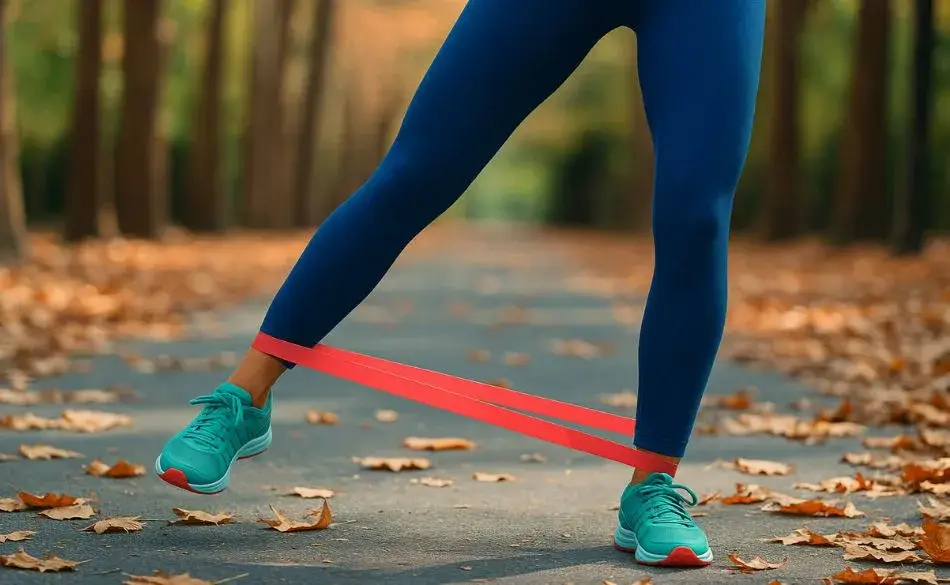
Band pull-apart: Hold a light resistance band at arm’s length in front of the chest. Pull the hands apart horizontally, squeezing the shoulder blades together at the end range. 3 × 15 reps. Targets the rhomboids and lower trapezius specifically. Cycling Weekly’s neck pain physiotherapy guidance recommends this alongside the superman as the most direct upper back exercise for cyclists.
Face pull (cable or band): Set a band or cable at face height. Pull toward the face, separating the hands and rotating the shoulders externally (elbows flare up and back). 3 × 12–15 reps. Directly targets the external rotators of the shoulder (infraspinatus and teres minor) that are chronically lengthened by the cycling position. One of the most effective exercises for preventing and rehabilitating rotator cuff tendinopathy.
Superman (prone back extension): Lie face down, arms extended overhead. Simultaneously lift arms, chest, and legs off the floor. Hold 2–3 seconds. 3 × 10–12. Strengthens the erector spinae and lower trapezius that support the upper back throughout riding. Cycling Weekly’s physiotherapy guidance specifically includes this as a core component of neck and shoulder pain prevention for cyclists.
Doorway chest stretch: Place forearms vertically on a doorway, step forward. Hold 30 seconds, 2 × per side. Lengthens the pectoralis minor, which is chronically shortened by the cycling position and directly contributes to scapular protraction when tight. 5 minutes of this daily, combined with the prone exercises above, addresses both sides of the muscular imbalance.
Two focused sessions of 15–20 minutes per week on these exercises is sufficient — the benefit compounds over 4–8 weeks of consistency. Our core and stability guide for cyclists integrates these upper back exercises within a broader off-bike strengthening programme for cyclists. For cyclists building a full training week that includes off-bike work, our cycling training week structure guide covers how to fit strength sessions around riding without compromising recovery. Even as shoulder pain resolves, maintaining the upper back strengthening routine prevents recurrence — it should become a permanent part of a structured cycling training approach rather than a temporary fix.
Most cycling shoulder pain resolves with the bike fit and technique adjustments described above. A professional bike fit is the most efficient investment for persistent shoulder pain — it identifies the structural causes that are difficult to diagnose solo. Sport Factory’s analysis suggests that even a basic professional fit easily pays for itself by avoiding physiotherapy and massage costs from unresolved pain. Our cycling cadence guide covers how pedalling mechanics and bike fit interact — a properly fitted cockpit improves both comfort and pedalling efficiency simultaneously. For masters cyclists where shoulder and upper back issues become more pronounced with age, our FTP and ageing guide covers how upper body strength work should be integrated year-round.
For rotator cuff tendinopathy or pain with arm movement off the bike, a sports physiotherapist is the appropriate professional — they can provide a specific progressive loading programme and assess whether the shoulder issue has a component at the cervical spine (neck) that affects treatment. For cyclists who also triathlon or swim, addressing the shoulder before resuming swimming is important as the pool loads the rotator cuff in ranges of motion that aggravate the condition significantly. Our saddle sores guide covers a parallel principle — the value of getting on top of a developing problem early before it requires longer recovery — which applies equally here.
Ride Stronger and More Comfortably With Structured Coaching
A SportCoaching cycling coach addresses your full setup — training structure, strength work, and technique cues — to help you ride harder without the pain that limits so many cyclists. AUD $143/month, no lock-in, 90-day performance guarantee.
Why do my shoulders hurt when cycling?
The most common causes: overreach (cockpit too long forces shoulders forward and arms to lock out), too much weight on the hands, holding upper trap tension without realising it, desk-work thoracic stiffness transferred to the bike, and rotator cuff tendinopathy from sustained scapular protraction. Most shoulder pain involves a combination of a structural fit issue and a muscular weakness.
How do I stop shoulder pain when cycling?
Immediate fixes: shorten the stem or raise bars; consciously drop shoulders from the ears; keep elbows slightly bent; change hand position every 10–15 minutes. For persistent pain, a professional bike fit addresses the structural cause more reliably than any single self-adjustment.
Can bike fit cause shoulder pain?
Yes — excessive reach is the leading structural cause. A cockpit that is too long or too low forces the rider to overreach, rolling the shoulders forward and locking the elbows to bridge the gap. This positions small shoulder muscles as load-bearers instead of the larger chest and back muscles they should be supporting.
What muscles cause shoulder pain in cyclists?
Upper trapezius (fatigue from sustained elevation), rotator cuff tendons (irritated by scapular protraction from the cycling position), and rhomboids/lower trapezius (weak from lack of scapular retraction training). The imbalance between these undertrained posterior shoulder muscles and the over-dominant anterior muscles is the primary muscular cause.
Should I stop cycling if my shoulder hurts?
For mild fatigue-type aching: no, but adjust position and reduce duration. For sharp pain, pain persisting 24 hours after riding, pain with overhead arm movements, or any numbness or tingling: stop and seek professional assessment before riding again.
Ready to put your training to the test? Here are some upcoming cycling events matched to this article.
Head Coach & Founder, SportCoaching
Graeme is the founder of SportCoaching and has coached more than 750 athletes from 20 countries, from beginners to Olympians, in cycling, running, triathlon, mountain biking, boxing, and skiing. His coaching philosophy and methods form the foundation of SportCoaching's training programs and resources.
No matter your goals, SportCoaching offers tailored training plans to suit your needs. Whether you’re preparing for a race, tackling long distances, or simply improving your fitness, our expert coaches provide structured guidance to help you reach your full potential.
Structured cycling coaching to build power, endurance, and speed.
What’s included
Choose your plan to get started with personalized training plans designed to help you reach your goals.


Minna Backman
When you’re new, feedback is especially important, and Graeme is highly skilled at both analyzing numbers and understanding the importance of mental strength.