




Find Your Next Cycling Race
Ready to put your training to the test? Here are some upcoming cycling events matched to this article.
 Coach Graeme
Last updated:
Cadence — the rate at which you turn the pedals — is one of the most trainable aspects of cycling, and one of the most commonly misunderstood. The conventional wisdom is that higher is better: spin at 90+ rpm like the pros and you'll be faster. The research says something more nuanced. There is no single ideal cadence. The optimal rpm shifts with intensity, terrain, fatigue level, and individual physiology. What matters for performance is not hitting a specific number, but developing a wide range of cadences you can use efficiently — and the neuromuscular coordination to switch between them smoothly as conditions demand. This guide covers what the research actually shows, five practical drills, cadence guidance by scenario, and structured workouts to develop cadence range over a training block.
Not sure where to start with training?
Tell us your goal and schedule, and we’ll give you clear direction.
No obligation. Quick, practical advice.
Explore our cycling training advice for more helpful articles and resources.
The relationship between cadence and performance is counterintuitive at first. Research consistently shows that at low to moderate power outputs, lower cadences are more metabolically efficient — they require less oxygen for the same power output. A cyclist producing 200 watts at 60 rpm consumes less oxygen than the same cyclist producing 200 watts at 95 rpm. By this measure, grinding slowly is more efficient than spinning fast.
So why do trained cyclists spin at 85–95 rpm rather than the metabolically optimal 60 rpm? Because there’s more to sustained cycling performance than metabolic efficiency. At lower cadences, each pedal stroke requires significantly more muscle force. That force recruits fast-twitch muscle fibres — the fibres that fatigue quickly. Over the course of a long ride or race, this accelerated muscular fatigue becomes a significant performance limiter that outweighs the metabolic efficiency advantage. Higher cadences shift the workload away from the muscles and toward the cardiovascular system, which fatigues more slowly over extended efforts.
The practical conclusion from CTS and TrainerRoad research summaries: the optimal cadence shifts with intensity. At low power (Zone 2 endurance riding), a slightly lower self-selected cadence — 75–90 rpm — is often both comfortable and efficient. At high power (VO2 max intervals, sustained threshold, climbing), higher cadences of 90–110 rpm reduce per-stroke muscle force and delay the muscular fatigue that causes power to fade. For sprinting (maximum power for 6–20 seconds), cadences of 100–130+ rpm are appropriate because the energy system is anaerobic and muscle force delivery speed is the primary determinant of power.
The implication for training: rather than chasing one target rpm, cyclists benefit from developing cadence range and agility — the ability to produce good power at 70 rpm on a steep climb, 90 rpm on flat sustained efforts, and 110+ rpm during a sprint or acceleration. This is what cadence training actually develops.
| Situation | Recommended cadence | Rationale |
|---|---|---|
| Easy / Zone 2 endurance ride | 80–90 rpm | Comfortable self-selected range. Slight cardiovascular load without muscle strain. |
| Tempo / sweet spot | 85–95 rpm | Sustained high output. Higher cadence reduces per-stroke force over long efforts. |
| Threshold / FTP efforts | 88–95 rpm | Maximises sustained power while managing muscular fatigue over 20–60 min efforts. |
| VO2 max intervals (3–5 min) | 90–105 rpm | High power delivery. Higher cadence prevents rapid muscular failure during hard short efforts. |
| Climbing (moderate gradient 5–8%) | 75–90 rpm | Gravity limits speed; slightly lower cadence appropriate. Avoid grinding below 70. |
| Steep climbing (>10%) | 65–80 rpm | Gear limitation may force lower rpm; priority is maintaining smooth circular stroke. |
| Sprint (6–20 sec, all-out) | 100–130+ rpm | Maximal power delivery. Peak power output requires rapid cadence in appropriate gear. |
| Descending (active pedalling) | 85–100 rpm | Efficient recovery while maintaining momentum. Avoid excessive spin in minimal resistance. |
| Indoor trainer / ERG mode | 85–95 rpm (general) | ERG holds power; focus on smooth pedal stroke at a consistent rpm. |
Many cyclists settle into a natural cadence that feels comfortable and never deviate from it — 85 rpm on flats, 70 rpm on climbs, 85 rpm again on descents. This narrow cadence range produces a specific vulnerability: any situation that forces the cadence outside the comfortable window — a sudden steep pitch, a group acceleration, a headwind that demands a gear change — produces a disproportionate spike in perceived effort. The cyclist who can only ride efficiently at 85 rpm is brittle. The cyclist who rides efficiently across 70–110 rpm is adaptable.
Cadence training also develops neuromuscular coordination — the precision of the brain-to-muscle firing patterns that control the pedal stroke. Research on pedalling mechanics consistently identifies less experienced cyclists using less smooth, more segmented power application around the pedal circle, with a pronounced dead spot at the top and bottom of the stroke. Cadence drills, particularly high-rpm work at low resistance, force attention to these dead spots and improve the timing and coordination of muscle activation. The result is a smoother, more circular power application that wastes less energy on decelerating and re-accelerating the pedal through the weak zones.
Cadence is also closely related to injury risk. Low-cadence grinding — particularly below 70 rpm for extended periods — generates high knee joint forces on each pedal stroke. The knee absorbs the peak load of each stroke, and over thousands of repetitions, this stress accumulates into the knee pain that plagues many cyclists who habitually use big gears. Our KOPS bike fitting guide covers how knee-over-pedal-spindle positioning interacts with cadence and knee force — the two factors work together to determine total knee loading per kilometre.
Purpose: Develop maximum comfortable cadence and improve neuromuscular coordination at high rpm.
How: In a moderate gear, begin at a comfortable cadence (80–85 rpm) and gradually increase rpm every 15 seconds — without increasing power output. Continue building until you reach your maximum smooth cadence (the rpm at which you begin to bounce in the saddle). Hold the maximum smooth speed for 10–15 seconds, then gradually ease back down. Rest 2–3 minutes between efforts.
Volume: 4–6 spin-ups per session. Works well in a warm-up or on a recovery ride.
Key cue: Bouncing in the saddle (the hips rocking side to side or lifting with each pedal stroke) is the signal that you’ve exceeded your current smooth cadence limit. Back off 5 rpm and hold that. Over weeks, this limit moves upward as neuromuscular coordination improves.
Purpose: Build cardiovascular and neuromuscular endurance at higher rpm; develop the “feel” of efficient high-cadence riding.
How: During a Zone 2 endurance ride, select a gear that allows you to maintain 95–100 rpm at Zone 2 power (which will feel easier to your muscles than your normal cadence). Hold this for 5–10 minutes, then return to your normal self-selected cadence for 3–5 minutes. Repeat 3–4 times.
Volume: Start with 3 × 5 minutes. Build to 3–4 × 10 minutes over 4–6 weeks.
Key cue: The first few sessions will feel slightly awkward and your heart rate will be 5–8 bpm higher than normal for the same power. This is expected — the cardiovascular system is compensating for the reduced muscle force per stroke. As coordination improves over weeks, the heart rate elevation decreases. This is the adaptation signal.
Purpose: Develop cadence agility — the ability to shift smoothly between low and high rpm, which is the specific demand of hills, bunch rides, and course variability.
How: Alternate between 60 rpm (in a large gear at moderate power — Zone 2–3) and 100 rpm (in a small gear at the same power) in blocks of 30–60 seconds each. The resistance should stay consistent — only the gear and cadence change. Repeat the alternation for 8–12 minutes, then rest for 3 minutes.
Volume: 2–3 sets of 10 minutes. Best done on a smart trainer where power can be monitored independently of gear selection.
Key cue: The transition from 60 to 100 rpm should be smooth and quick — a deliberate gear change followed by immediate cadence uptake. Many cyclists accelerate slowly through the transition rather than snapping to the new cadence. The sharpness of the transition is the skill being trained.
Purpose: Build muscular strength and torque at low rpm — directly relevant to climbing, accelerating from slow speed, and the specific demands of steep terrain.
How: On a moderate climb or in a large gear on a trainer, hold 50–60 rpm at Zone 3–4 power for 3–5 minutes. The pedal stroke should be deliberate and forceful — think about pressing through the entire downstroke and pulling through the bottom. Recover with easy spinning for equal time.
Volume: 4–6 × 4 minutes. These are fatiguing — limit to once per week and ensure they fall after, not before, a hard interval session.
Key cue: The temptation is to stand up when the effort gets hard. The drill’s value is in maintaining the seated position and developing the strength to push a large gear without relying on body weight to supplement pedal force. Seated, deliberate, slow — that’s the target.
Purpose: Develop conscious cadence control during sustained effort — training the ability to hit and hold a target rpm under moderate fatigue rather than just in fresh isolation drills.
How: During a tempo or sweet spot interval (Zone 3–4), set a specific cadence target (90 rpm for most riders) and maintain it within ±3 rpm throughout the entire interval. Use your bike computer’s cadence display as the feedback mechanism. Any time cadence drifts outside the window, consciously correct it before addressing power.
Volume: Incorporated into any tempo session — 20–40 minutes of sustained riding at target rpm.
Key cue: Most cyclists will find their cadence drifts lower as fatigue builds toward the end of the interval. This is the specific neuromuscular fatigue that cadence training targets. Holding the rpm window under fatigue is the training stimulus — it’s harder than holding it fresh, and that difficulty is the adaptation mechanism.
| Phase | Duration | Cadence | Intensity |
|---|---|---|---|
| Warm-up | 15 min | Build 75→90 rpm | Zone 1–2 |
| Spin-ups × 4 | 4 × 1 min + 2 min easy | Build to max smooth rpm | Zone 2, low power |
| High-cadence intervals × 3 | 3 × 5 min + 3 min easy | 95–100 rpm | Zone 2 |
| Cadence contrast × 2 | 2 × 8 min + 3 min easy | Alternate 60 / 100 rpm | Zone 2–3 |
| Cool-down | 10 min | Self-selected, easy | Zone 1 |
| Phase | Duration | Cadence | Intensity |
|---|---|---|---|
| Warm-up | 15 min | Build 75→90 rpm | Zone 1–2 |
| Low cadence strength × 4 | 4 × 4 min + 4 min easy | 55–65 rpm | Zone 3–4 (seated) |
| Tempo with cadence target × 1 | 20 min continuous | Hold 88–92 rpm ± 3 | Zone 3 (sweet spot) |
| Cool-down | 10 min | Easy, self-selected | Zone 1 |
Use Workout A in weeks 1–4 (neuromuscular development focus), Workout B in weeks 5–8 (strength and sustained cadence control). Add one or both into your existing weekly structure as substitutes for an easy Zone 2 session — they don’t need to be extra training volume. Our HIIT cycling workouts guide covers how cadence training integrates with interval training for a complete performance development programme.
To train cadence deliberately, you need to measure it. Options in order of accuracy and cost:
Power meter: Most power meters record cadence automatically with high accuracy. The most convenient option if you already have one. Cadence data integrates directly with training software (Garmin, Wahoo, TrainingPeaks) for analysis.
Dedicated cadence sensor: A magnet-and-sensor unit on the crank arm or pedal, pairing with any bike computer or GPS via Bluetooth/ANT+. Cost-effective and reliable. Accuracy is equivalent to power meter cadence for training purposes.
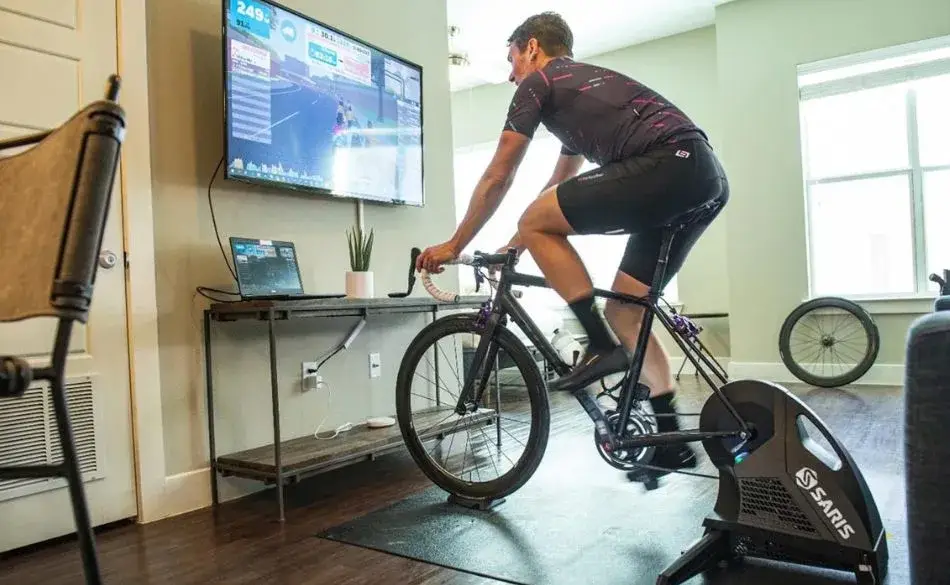
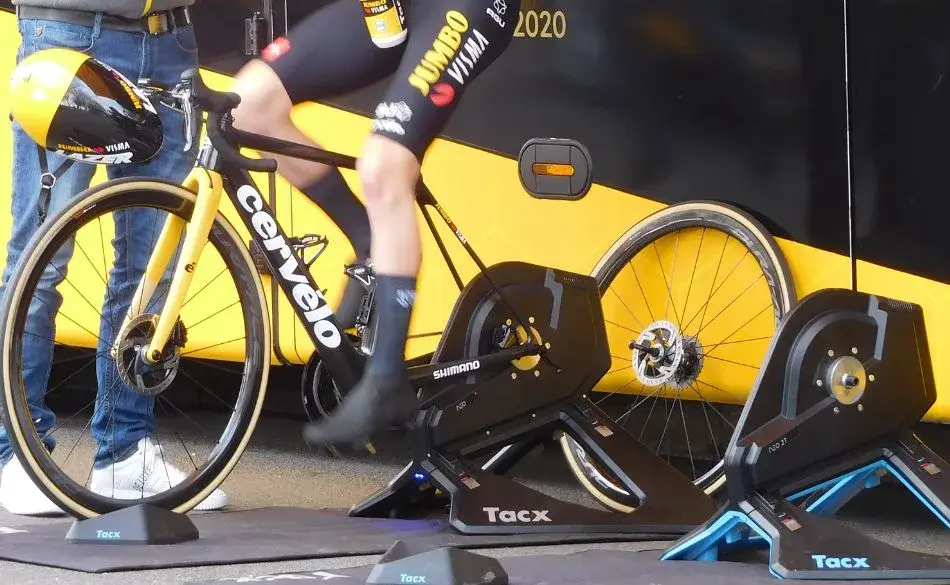
Smart trainer ERG mode: Indoor smart trainers display cadence in real time and hold power steady regardless of gear selection, allowing pure focus on rpm without managing power simultaneously. Excellent for drill work. Our indoor cycling platform guide covers how different platforms display and use cadence data in structured sessions.
Without technology: Count pedal strokes for 30 seconds on one leg and multiply by 4. This gives approximate rpm and is sufficient for rough calibration during outdoor rides.
What to track: average cadence per session, cadence during specific effort zones (does it drop at threshold?), and maximum comfortable cadence from spin-up drills. Over a training block, you should see maximum comfortable cadence from spin-ups increase 5–15 rpm, and the cadence drop under fatigue in tempo sessions reduce in magnitude. Our Garmin metrics guide covers how cycling computers capture and display cadence alongside power and heart rate data.
One factor that significantly affects achievable cadence is bike fit. Saddle height is the most critical variable: a saddle that is too low forces a shortened pedal stroke that makes high cadences uncomfortable and reduces power transmission efficiency. A saddle too high creates hip rocking at the top of the stroke. The correct saddle height allows a smooth, circular pedal stroke across the full range of rpm.
Cleat position also affects cadence comfort — cleats positioned too far forward (toward the toe) increase the leverage distance and can make rapid cadence feel physically awkward at 100+ rpm. A cleat position slightly further back toward the midfoot is often more comfortable for high-cadence riding. If spin-up drills consistently produce discomfort at the front of the foot before the smooth cadence limit is reached, cleat position is worth reviewing with a bike fitter. Our KOPS guide covers the knee-over-pedal position that forms the basis of most road bike fit protocols and directly influences the cadence range available without joint stress.
Cadence improvement is gradual. Most cyclists see meaningful change — a 10–15 rpm increase in maximum comfortable spin-up cadence, and noticeably more consistent rpm maintenance during tempo efforts — over 4–8 weeks of twice-weekly cadence-focused training. Context on how this cadence development relates to power benchmarks is in our FTP by age guide, which shows how trained cyclists at different levels typically combine cadence and power output. The initial adaptation is neuromuscular (better coordination), which happens relatively quickly in the first 2–4 weeks. Subsequent improvement in the ability to maintain high cadence under fatigue is more metabolic and takes longer.
Consistency matters more than volume here. Two focused 45–60 minute cadence sessions per week, maintained for 6–8 weeks, produce more durable improvement than sporadic high-volume cadence blocks. The goal is building a new neuromuscular habit — and that requires repetition at moderate frequency rather than occasional intense effort.
If you’re also working on FTP development alongside cadence training, the two complement each other well: improved cadence range makes threshold and VO2 max intervals more effective because you can sustain power more efficiently, and higher aerobic fitness allows higher cadence to be sustained at the same perceived effort. The aerobic base that supports cadence work is covered in our Zone 2 and VO2 max guide. Our FTP improvement guide and our companion article on finding your best cycling cadence cover both sides of this relationship.
Want Cadence Training Built Into Your Cycling Plan?
Cadence drills work best when programmed deliberately within a structured training week — not added on top of an already full schedule. A structured cycling plan includes cadence-specific sessions at the right time alongside interval work and recovery.
What is the ideal cadence for cycling?
There is no single ideal cadence. Most trained cyclists sustain 85–95 rpm for endurance and threshold efforts, 95–110 rpm for high-power intervals, and 70–85 rpm for climbing. The goal is developing a wide, usable cadence range rather than optimising for one rpm. See our companion guide on finding the best cadence for cycling for a more detailed breakdown by rider type and discipline.
Is higher cadence always better?
No. At low power outputs, lower cadences are more metabolically efficient. At high power, higher cadences reduce muscular fatigue. The research supports using cadence as a context-dependent tool: lower when energy conservation matters, higher when sustained power output or acceleration is needed.
How do I increase my cycling cadence?
Spin-up drills, high-cadence endurance intervals (95–100 rpm at Zone 2), and cadence contrast sessions (alternating 60 and 100 rpm) are the most effective methods. Two sessions per week over 4–8 weeks produces meaningful improvement in both maximum comfortable cadence and rpm consistency under fatigue.
What cadence should I use climbing?
Aim for 70–85 rpm on moderate climbs, shifting to maintain this rather than grinding below 70. Steep climbs may force lower rpm due to gear limitations — focus on smooth circular pedal stroke rather than a specific rpm number when terrain dictates.
Does cadence training help with knee pain?
Yes. Chronically low cadence (below 70 rpm on extended efforts) generates high knee joint forces per stroke and is a contributing factor in many cyclists’ anterior knee pain. Increasing cadence reduces per-stroke force at the knee joint. Combined with correct bike fit, cadence improvement is one of the most effective interventions for cycling-related knee discomfort.
Ready to put your training to the test? Here are some upcoming cycling events matched to this article.
Head Coach & Founder, SportCoaching
Graeme is the founder of SportCoaching and has coached more than 750 athletes from 20 countries, from beginners to Olympians, in cycling, running, triathlon, mountain biking, boxing, and skiing. His coaching philosophy and methods form the foundation of SportCoaching's training programs and resources.
No matter your goals, SportCoaching offers tailored training plans to suit your needs. Whether you’re preparing for a race, tackling long distances, or simply improving your fitness, our expert coaches provide structured guidance to help you reach your full potential.
Structured cycling coaching to build power, endurance, and speed.
What’s included
Browse upcoming Australian running, cycling, and triathlon events in one place. Filter by sport, check dates quickly, and plan your training around something real on the calendar.
Choose your plan to get started with personalized training plans designed to help you reach your goals.


Minna Backman
When you’re new, feedback is especially important, and Graeme is highly skilled at both analyzing numbers and understanding the importance of mental strength.