







Find Your Next Triathlon Race
Ready to put your training to the test? Here are some upcoming triathlon events matched to this article.
 Coach Graeme
Last updated:
If you've never run off the bike before, the experience on race day will surprise you. Your legs won't feel like running legs. They'll feel heavy, slow, and temporarily uncooperative — as though they belong to someone who just stepped off a rollercoaster and hasn't quite found their feet. This is normal. It happens to virtually every triathlete at every level during the opening kilometre of the run leg. It's called the "brick effect," and the good news is it's both trainable and temporary. With the right preparation — specifically, brick workouts added to your training in the weeks before race day — the transition from cycling legs to running legs becomes noticeably faster, more controlled, and far less alarming on race day.
This guide covers exactly what causes the brick feeling, how to train for it, specific sessions for beginners, T2 transition strategy, and how to pace the run so you don't blow up in the first kilometre.
Not sure where to start with training?
Tell us your goal and schedule, and we’ll give you clear direction.
No obligation. Quick, practical advice.
Explore our triathlon fitness resources for more helpful articles and resources.
The bike-to-run transition is physiologically complex. Understanding what’s happening in your body during those difficult first minutes helps remove the anxiety and lets you manage the sensation rather than fight it.
Neuromuscular disruption. Cycling uses your muscles in a confined, repetitive motion — the hip never fully extends, the range of joint movement is limited, and the muscles contract concentrically (shortening as they contract) without significant eccentric loading. Running requires the opposite: full hip extension, a wide range of joint movement, and heavy eccentric loading of the quads on each footstrike. When you dismount and begin running, your neuromuscular system needs time to switch recruitment patterns from the cycling-specific firing sequence to the running one. Research by Millet and Vleck (British Journal of Sports Medicine, 2000) documented this as “reduced biomechanical run coordination” in the first 2–10 minutes of the triathlon run — essentially, the nervous system is rebooting from one movement pattern to another.
Blood flow redistribution. Cycling in the aero position restricts blood flow to the feet and lower legs compared to running. When you stand upright and begin running, blood must rapidly redistribute to the now-dominant muscle groups and tissue. This redistribution, combined with the different cardiovascular demands of upright impact exercise versus supported cycling, produces the temporary numbness and heaviness that most beginners find alarming the first time they experience it.
Cardiac drift. Your heart rate typically increases in the first minutes of the run despite equivalent or lower perceived effort compared to the bike. This is partly due to the upright posture (the heart must pump blood against gravity more directly) and partly due to the impact loading of running. Many beginners interpret the heart rate spike as evidence they’re going too hard and back off unnecessarily. A moderate heart rate elevation in the first 1–2 km of the run is physiologically normal and expected.
The practical implication of all this: the first 1–2 km of the triathlon run are almost always the most uncomfortable, and they don’t accurately reflect how the remaining run will feel. Athletes who have done brick training in preparation experience this window as shorter, less severe, and more manageable. Athletes who haven’t done brick training experience it as a shock.
A brick workout is any training session that combines two triathlon disciplines back-to-back with no meaningful rest between them. The most common and most important for triathletes is the bike-to-run brick — a bike ride followed immediately by a run. The name comes from how your legs feel at the transition: heavy, like bricks.
Brick workouts work because of a principle called specificity — the body adapts to the specific stress placed on it. The unique physiological challenge of the bike-to-run transition can only be trained by doing the bike-to-run transition. Running alone, no matter how frequently, doesn’t prepare you for what the run feels like after cycling. You have to practice it.
With regular brick training, three specific adaptations occur. Blood flow redistribution becomes faster — the body learns to anticipate the switch and begins preparing cardiovascular resources before you even dismount. Neuromuscular coordination at the transition improves — the switch from cycling to running movement patterns happens in fewer strides. And psychological adaptation develops — you learn that the heavy feeling is temporary, which prevents the panic and pace collapse that first-time triathletes often experience when they don’t recognise the sensation.
USA Triathlon cites research confirming that brick training improves run biomechanics and coordination during the first 2–10 minutes of the run, improving running economy in exactly the period where it matters most. For beginners aiming at their first sprint or Olympic triathlon, this adaptation is the most important race-specific preparation available. Our guide on preparing for your first triathlon covers how bricks fit within the full training structure.
When: 6–8 weeks before race day, first time doing a brick
| Component | Duration | Effort | Notes |
|---|---|---|---|
| Warm-up spin | 10 min | Easy | Settle heart rate, warm muscles |
| Bike | 20–30 min | Moderate (Zone 2–3) | Comfortable pace, don't race it |
| T2 transition | As fast as comfortable | — | Rack bike, swap shoes, start running immediately |
| Run | 10 min | Easy jog | Go slow — goal is to experience the feeling, not pace |
Purpose: First exposure to the brick sensation. Expect heavy legs. Your pace will be slower than your normal easy run pace — this is completely normal. Don't try to override it with effort. Just run for 10 minutes and observe what your body does. You'll likely notice the legs begin to feel more normal around minutes 3–5.
| Component | Duration | Effort | Notes |
|---|---|---|---|
| Bike | 40–50 min | Moderate-hard (Zone 3–4) | Include some stronger efforts in the second half |
| T2 | Practice transition | — | Time yourself — under 60 seconds for sprint distance |
| Run | 15–20 min | Easy to moderate | First 5 min easy, then build to moderate pace |
Purpose: Extend both legs and begin practising running at moderate effort off fatigued cycling legs. The harder bike effort before the run increases the brick sensation — this is intentional. The goal is adaptation, and adaptation requires exposure to the actual stress.
| Component | Duration | Effort | Notes |
|---|---|---|---|
| Bike | Race distance (or close to it) | Race effort | Sprint: 20 km; Olympic: 30–40 km |
| T2 | Practiced, fast | — | Full race-day transition routine |
| Run | 20–25 min | Race pace first 5 min, then build | Practice run pacing, not just survival |
Purpose: The closest to race-day simulation in training. This session tells you how you'll feel at T2 on race day and gives you data to calibrate run pacing. Pay attention to how long the brick feeling lasts, at what point your running feels normal, and what your natural pace settles at after the first 2 km.
| Component | Duration | Effort | Notes |
|---|---|---|---|
| Bike | 15–20 min | Easy with 3 × 30-second pickups | Not a hard session — activation only |
| Run | 5–8 min | Easy, with 2 × 30-second strides | Check legs feel responsive |
Purpose: A light activation brick 3–4 days before race day. Confirms legs are responsive, reminds the neuromuscular system of the transition pattern, and provides confidence without adding fatigue. Do not do a full-intensity brick in the week of your race.
For a beginner triathlete in the final 6–8 weeks before a sprint or Olympic race, one brick session per week is the correct frequency. More than one brick per week during this period adds training stress that the body may not recover from adequately while maintaining swim and run sessions.
The brick session should replace one of your regular bike sessions — not be added on top of the existing training load. A typical week for a beginner triathlete in the race preparation phase might look like:
| Day | Session | Duration |
|---|---|---|
| Monday | Rest or easy swim | Off or 30–40 min |
| Tuesday | Run (easy, standalone) | 30–40 min |
| Wednesday | Swim | 30–45 min |
| Thursday | Easy bike (Zone 2) | 45–60 min |
| Friday | Rest | — |
| Saturday | Brick: Bike + Run | 60–80 min total |
| Sunday | Easy run or swim | 20–30 min |
As race day approaches, the Saturday brick gets longer on the bike component and the run segment transitions from pure easy jogging to including race-pace effort. Our guide on preparing for a first triathlon covers how this structure fits within the broader training plan context.
Transition 2 (T2) — the bike-to-run transition — is a skill that can be practised and improved, and beginners who practise it in training gain meaningful time over those who figure it out on race day. A smooth T2 also minimises the time spent stationary, which matters because stopping after cycling makes the brick legs worse, not better — keeping moving keeps blood circulating.
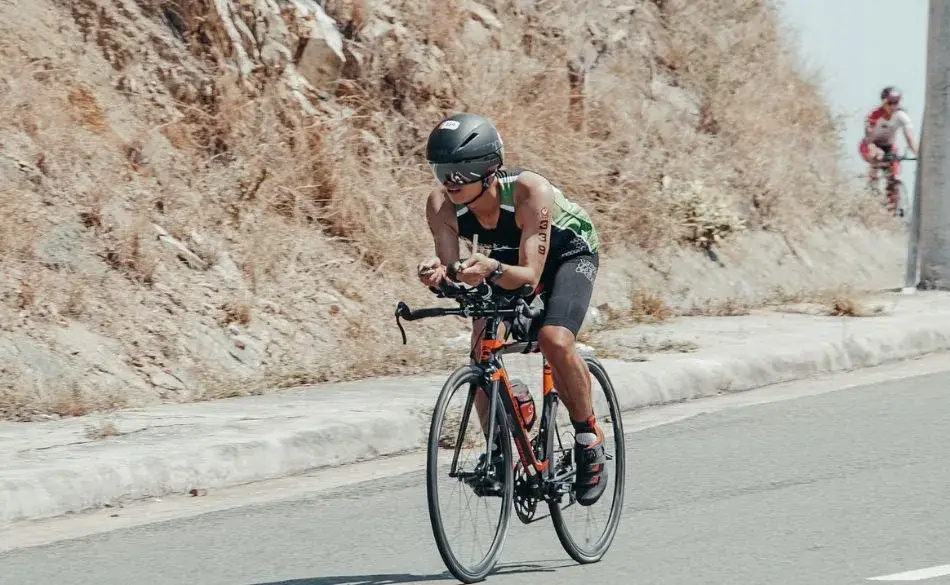
Bike finish technique. In the final 400–800 metres of the bike leg, shift to a smaller gear and increase cadence above your normal riding rpm. This “spins out” some of the muscular tension accumulated from sustained cycling and begins the neuromuscular transition to running before you’ve dismounted. USA Triathlon specifically recommends spinning at higher cadence in the final section of the bike to ease the T2 transition. Our cycling cadence guide covers what this feels like and how to develop the habit in training. Bike fit also plays a role — a saddle positioned correctly for triathlon allows the hip angle needed for effective running off the bike. Our triathlon bike fit guide covers how saddle height and position affect your ability to run efficiently after the bike leg.
Dismounting. If your event allows a running dismount (standard road triathlon), practice unclipping one foot and swinging your leg over the back of the bike while still moving, then running alongside the bike to the rack. This saves 10–20 seconds over a full stop and keeps legs moving. For your first race, only attempt this if you’ve practised it several times in training — a stationary dismount is always safer for beginners.
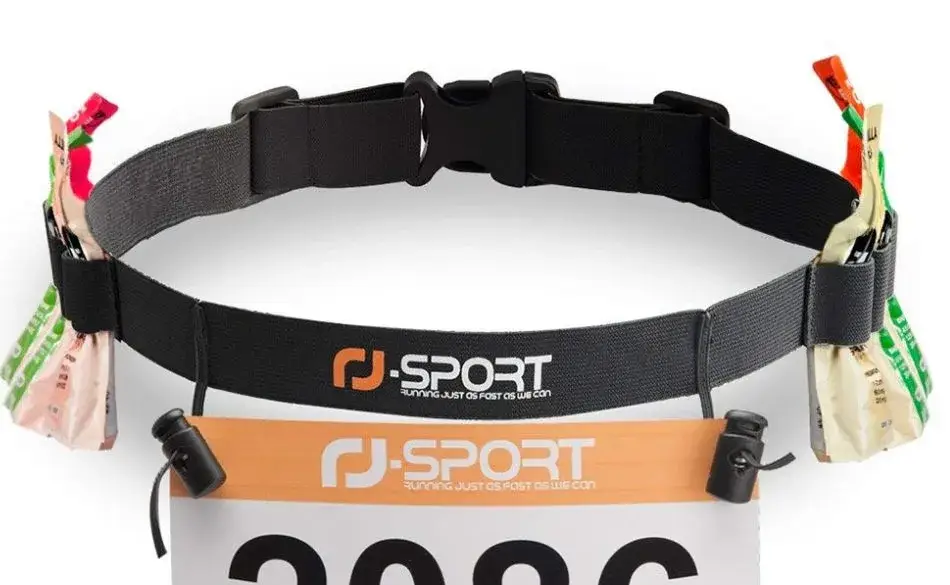
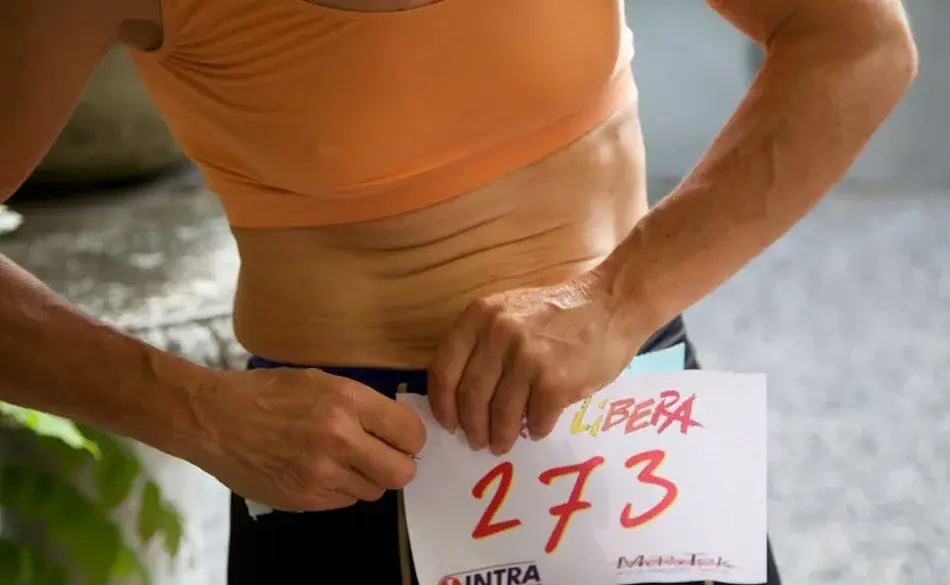
In the transition area. Rack the bike, remove your helmet (helmet must come off before you leave the bike rack in most events — this is a rule, not just etiquette), switch shoes, clip on your race number belt, and go. Don’t sit down. Don’t stand still any longer than necessary. Practice this sequence at home until it’s automatic.
Shoes. Elastic laces on your running shoes (replacing standard laces) allow you to slip shoes on without tying them, saving 15–30 seconds in T2. This is the single cheapest upgrade a beginner triathlete can make to their transition speed.
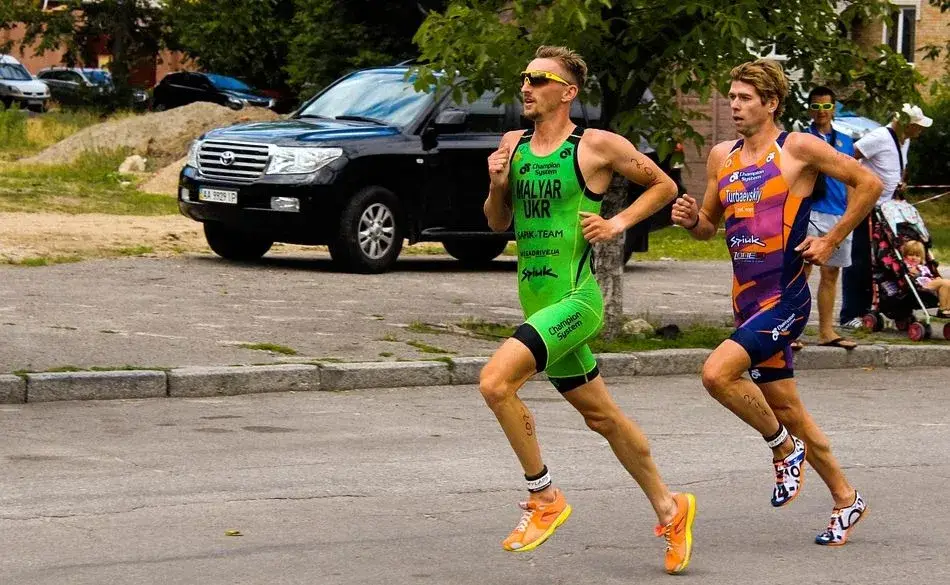
First steps out of transition. Shorten your stride immediately. Don’t try to run at your normal running form — let your body find its gait gradually rather than forcing it. A shorter, quicker stride is safer and often faster in the first 500 metres than an overstriding long stride that fights the brick feeling.
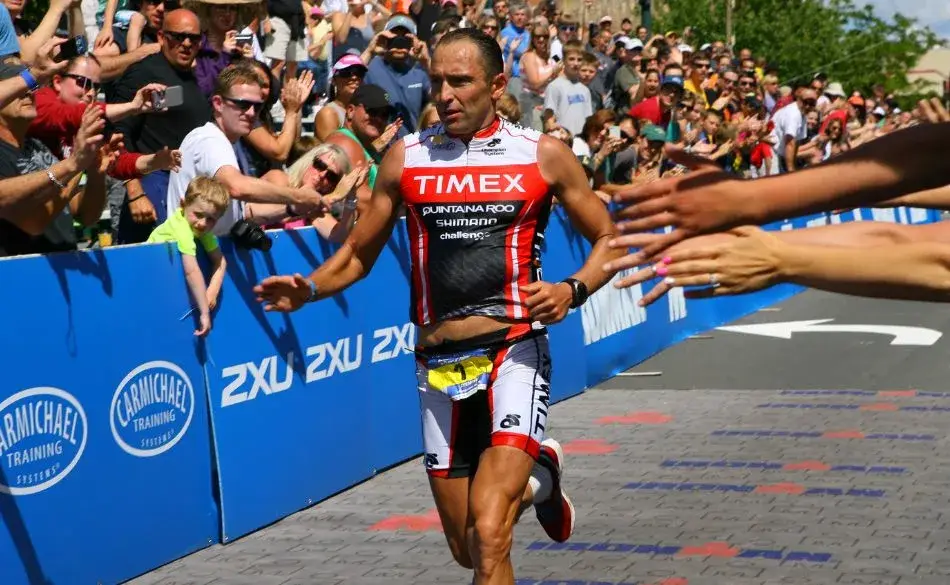
The most common beginner triathlon mistake on the run leg is going too fast in the first kilometre. It happens for two reasons: the adrenaline of transition, and the fact that the brick-heavy feeling often disappears abruptly around km 1–2, which makes the athlete feel suddenly fresh and powerful — and then they overcorrect and surge. The surge depletes remaining glycogen faster than intended and the back half of the run degrades badly.
The correct approach is pre-planned conservatism. Before race day, decide your target run pace — either based on recent easy run pace or based on how you felt in your race-simulation brick session — and commit to running 30–60 seconds per kilometre slower than this target for the first 2 km. If you feel good at the 2 km mark and your pace feels sustainable, gradually increase. If you’re already struggling at the 2 km mark, you went out too hard on the bike.
For context: Jason Lentzke of Toro Performance has documented that for a properly paced 70.3, the run split should be no more than 6% slower than an open half marathon time. For a full Ironman, no more than 12% slower. If you’re significantly slower than these benchmarks, the limiting factor is almost always the bike pace — you rode too hard and are paying for it on the run. This reinforces the counterintuitive principle that the best way to run faster in a triathlon is often to ride slightly easier on the bike. Our zone 2 running pace guide covers what the correct early run effort should feel like.
A useful cue for pacing the first km: the effort should feel almost embarrassingly easy. You should be able to speak comfortably. If you can’t hold a short conversation in the first 500 metres of the run, you went out too hard. Slow down until you can — the pace you want to sustain through the back half of the run is built from this early ease, not from the first-kilometre surge.
Running well off the bike starts on the bike. The single most important variable in triathlon run performance is bike pacing. An athlete who rides 5% too hard relative to their capability will run 10–15% slower than expected and feel terrible doing it. An athlete who rides at their correct aerobic ceiling will run close to open run pace and feel controlled throughout.
The guideline for most age-group triathletes: the bike leg should feel sustainable and controlled — you should be able to hold a short sentence of conversation at your race pace, particularly during the first quarter of the bike. If you’re riding at the limit of what’s maintainable for the first 10 minutes, you’re setting up a difficult run. Perceived exertion on the bike should be a 6–7 out of 10, not 8–9. For cyclists using power, staying at 70–85% of FTP for sprint and Olympic bike legs preserves run quality. Our FTP guide covers how to establish this baseline and use it for race pacing.
Nutrition on the bike also directly affects run quality. For sprint triathlons (30–60 minute bike), no mid-ride nutrition is typically needed. For Olympic distance (60–90 minutes), a gel or 150–200 calories on the bike prevents glycogen depletion that would compromise the run. Practice any race-day nutrition in brick training — never try something new on race day. Our guide on triathlon distances covers the specific fuel requirements at each distance.
If you’ve done 3–4 brick sessions before your first race, here’s the timeline you can expect at T2:
First 300–500 metres: Legs feel heavy and unresponsive. This is the neuromuscular and blood flow disruption. It is temporary. Don’t panic. Shorten your stride and keep moving forward. Don’t push harder to fight it — that makes it worse.
Minutes 1–3: The brick feeling begins to ease. Coordination starts returning. Your stride lengthens slightly as the neuromuscular switch completes. Heart rate is elevated but stable.
Minutes 3–5: For most athletes who have done brick training, running starts to feel reasonably normal. If you paced the bike correctly, you’ll feel like you have enough left to build pace.
After km 2: Assess honestly. If you feel controlled and your early pace was conservative, you can gradually increase effort. If you’re already breathing hard and your legs feel heavy still at km 2, maintain current pace and don’t chase faster athletes — your race strategy now is damage limitation, not pursuit.
The athletes who manage this transition best are almost always the ones who did their brick sessions, paced the bike conservatively, and started the run slowly. Athletes who arrive at their first race having never run off the bike consistently describe the experience as shocking and disorienting. Brick training removes the shock — and the disorientation cannot be removed any other way.
For more on the broader triathlon training context — including whether you need a coach, how to structure your preparation, and what to expect at each race distance — our guides on triathlon race format, 70.3 swim preparation, and triathlon swim workouts cover the full picture.
Want Brick Sessions Built Into Your Triathlon Training?
A structured triathlon plan prescribes exactly when to do brick sessions, how long they should be, and how they build toward race day — so you arrive at T2 confident rather than surprised.
Why do legs feel heavy when running off the bike?
The heavy sensation is caused by neuromuscular disruption — your body must rapidly reorganise blood flow and muscle recruitment patterns from cycling mode to running mode. Research documents this as reduced biomechanical run coordination in the first 2–10 minutes of the triathlon run. It clears with time and improves significantly with brick training.
What is a brick workout?
A bike ride followed immediately by a run, with no rest between. The most race-specific training a triathlete can do. Named for how legs feel at the transition — heavy, like bricks.
How long should a beginner’s brick run be?
10–20 minutes for early brick sessions. The goal is to experience and adapt to the transition feeling, not to complete full run distance. Race-simulation bricks closer to race day can extend the run to 20–30 minutes.
How do you pace the run in a triathlon?
Start 30–60 seconds per km slower than your target run pace for the first 2 km, then build if energy allows. The first km should feel embarrassingly easy. If it doesn’t, you rode too hard on the bike. For a 70.3, expect your run split to be approximately 6% slower than your open half marathon time with correct bike pacing.
How often should beginners do brick workouts?
One per week in the 6–8 weeks before race day. Replace one regular bike session with the brick — don’t add it on top of existing training volume. Complete at least 3–4 bricks before your first race.
Ready to put your training to the test? Here are some upcoming triathlon events matched to this article.


Head Coach & Founder, SportCoaching
Graeme is the founder of SportCoaching and has coached more than 750 athletes from 20 countries, from beginners to Olympians, in cycling, running, triathlon, mountain biking, boxing, and skiing. His coaching philosophy and methods form the foundation of SportCoaching's training programs and resources.
No matter your goals, SportCoaching offers tailored training plans to suit your needs. Whether you’re preparing for a race, tackling long distances, or simply improving your fitness, our expert coaches provide structured guidance to help you reach your full potential.
Personalised coaching to improve your swim, bike, and run performance.
What’s included
Browse upcoming Australian running, cycling, and triathlon events in one place. Filter by sport, check dates quickly, and plan your training around something real on the calendar.
Choose your plan to get started with personalized training plans designed to help you reach your goals.


Minna Backman
When you’re new, feedback is especially important, and Graeme is highly skilled at both analyzing numbers and understanding the importance of mental strength.