
Want help turning consistency into progress? Coaching keeps your training simple, structured, and sustainable.
Start Coaching →
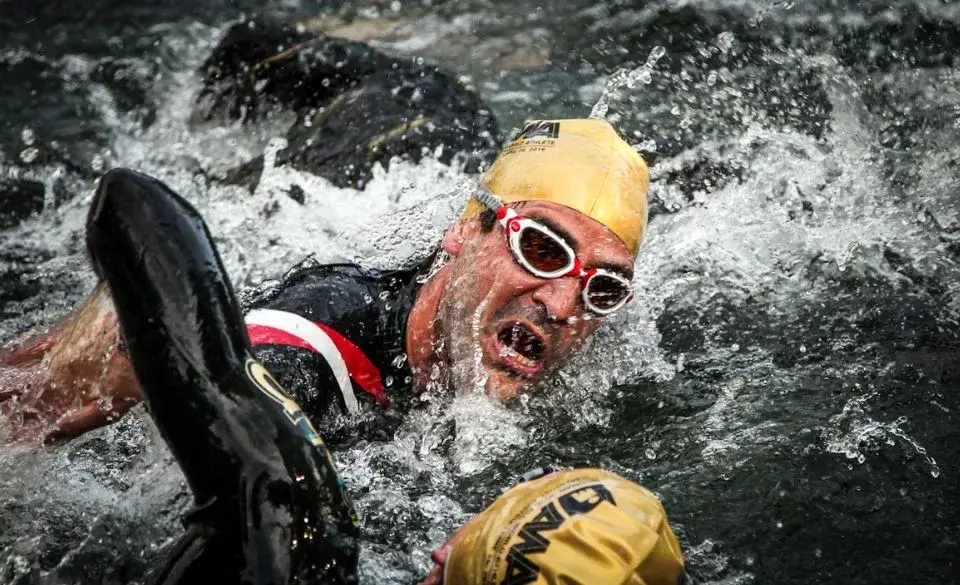
Close-up of a swimmer performing freestyle with strong arm extension and focus on elbow position, illustrating proper technique to prevent Swimmers Elbow

Last updated:

Swimmer’s Elbow: Causes, Treatment, Exercises and How to Stay in the Water

Elbow pain is one of the most overlooked injuries in swimming and triathlon — partly because it tends to creep up gradually, and partly because swimmers often assume it will sort itself out with rest. It usually doesn't, at least not without addressing the cause. This guide covers everything you need to manage swimmer's elbow properly: what it is, why each stroke creates different risk, how to treat it in the acute phase, the specific exercises that drive recovery, and how to modify your training to keep swimming while you heal.

Chat with a SportCoaching coach

Not sure where to start with training?

Tell us your goal and schedule, and we’ll give you clear direction.

No obligation. Quick, practical advice.

Article Categories:

Explore our triathlon training advice for more helpful articles and resources.

Quick Answer

Swimmer’s elbow is medial epicondylitis — inflammation and tendon degeneration at the inner elbow caused by repetitive wrist flexion and forearm pronation. Key symptoms: inner elbow pain, tenderness, and weak grip. Treatment: reduce swim volume, eliminate paddles, perform eccentric wrist flexion exercises 3x/week, and address posterior shoulder weakness. Most cases resolve in 4–8 weeks with proper management.

What Is Swimmer's Elbow?

Swimmer’s elbow is the common name for medial epicondylitis (or, more accurately, medial epicondylopathy — a tendon degeneration process rather than pure inflammation). It affects the tendons that attach the wrist flexor and forearm pronator muscles to the medial epicondyle: the bony bump on the inside of the elbow.

The injury occurs when the tendons are loaded repetitively beyond their capacity to recover. Swimming strokes — particularly those requiring a strong “elbow-up” pulling phase — place repeated stress on these structures through wrist flexion and forearm pronation. Over time, microscopic tendon fibres break down faster than they can repair, leading to structural changes, pain, and weakness.

It’s worth clarifying the terminology confusion: some sources describe swimmer’s elbow as lateral epicondylitis (the outside of the elbow), while others describe it as medial. The medial side — inside the elbow — is more commonly affected in swimmers, because of the way the pull phase of most strokes loads the wrist flexors. Lateral epicondylitis (the outside) can also occur, particularly in backstroke specialists, but it is less common.

Causes by Stroke Type

Each swimming stroke creates a different elbow stress pattern. Understanding which strokes are highest-risk for your specific pain location helps you modify training intelligently rather than stopping all swimming.

👉 Swipe to view full table

StrokeElbow Stress PatternPrimary Risk
BreaststrokeHigh medial stress. The outsweep and insweep require strong wrist flexion and forearm pronation through a wide arc on every stroke.🔴 Highest risk — most common cause of medial epicondylitis in swimmers
ButterflyHigh medial stress. The keyhole pull pattern demands forceful wrist flexion during the catch and pull-through phases.🔴 High risk — particularly with aggressive early vertical forearm technique
FreestyleModerate medial stress. The catch and pull phase loads the medial tendon, but less forcefully than breaststroke. Crossing the midline on entry increases stress.🟡 Moderate risk — high yardage is the primary trigger
BackstrokeLower medial, moderate lateral stress. The recovery arc and finish can irritate the lateral epicondyle (outside of elbow) more than the medial.🟡 Moderate risk — different pattern, may affect lateral side
PaddlesAll strokes: dramatically amplifies forces through the elbow by increasing surface area resistance. Even good technique becomes high-load.🔴 High risk — paddles are one of the most common acute triggers

For triathletes, the risk is compounded. Heavy swim training is often combined with cycling and running, leaving limited time for recovery and flexibility work. Fatigue accumulates across disciplines, technique degrades, and the elbow absorbs the resulting inefficiency. Many triathletes swim with elbow pain assuming it will clear up — without realising that continuing at high volume with suboptimal mechanics is precisely what prevents recovery.

Causes Beyond Stroke Mechanics

While stroke technique gets most of the blame, swimmer’s elbow is usually a multi-factor injury. The most common contributing causes are:

Sudden volume increase. The most consistent trigger. Adding 20–30% more metres per week — common when building for a race or returning from a break — overloads tendons before they can adapt. Tendons adapt more slowly than muscles, so fitness improvements can outpace tendon capacity.

Returning too quickly after a lay-off. After even 2–3 weeks away from the pool, tendons lose conditioning faster than cardiovascular fitness. Jumping back to pre-break volumes in the first week is a reliable way to develop elbow pain.

Overuse of hand paddles. Paddles increase resistance per stroke by 3–5 times compared to bare hand swimming. A set of 400m with paddles creates the equivalent tendon load of significantly more metres without them. Athletes who use paddles heavily for speed and strength development are overrepresenting this stress.

Posterior shoulder weakness. Weak rear deltoids, rhomboids, and rotator cuff muscles cause the shoulder to drop and internally rotate during the catch phase. This poor position shifts stress from the intended prime movers (lats, pecs) to the forearm tendons. Addressing posterior shoulder weakness — through exercises like face pulls and band pull-aparts — is one of the most effective prevention strategies available.

Tight forearm flexors. Chronic tightness in the wrist flexors reduces tendon glide and increases force concentration at the medial epicondyle. Insufficient stretching between sessions allows this tightness to compound over weeks of training.

Symptoms: What Swimmer's Elbow Feels Like

Swimmer’s elbow typically develops gradually rather than from a single incident. Recognising it early — before it becomes a chronic problem — significantly reduces recovery time.

👉 Swipe to view full table

SymptomDescriptionStage
Inner elbow ache after swimmingDull discomfort on the medial epicondyle that appears 30–60 minutes after training and settles overnightEarly
Pain during paddles or pull setsNoticeable during high-resistance swim work but not during easy freestyleEarly–Moderate
Tenderness to direct pressurePressing on the medial epicondyle with a finger reproduces the painAny stage
Grip weaknessDifficulty gripping objects firmly — turning a door handle, carrying a bag, opening jarsModerate
Pain with wrist flexion against resistancePain when bending the wrist toward the forearm with the palm facing up against light resistanceModerate
Pain at rest or overnightAche present without activity, particularly in the morningEstablished
Pain radiating down the forearmDiscomfort tracking along the medial forearm toward the wristEstablished–Chronic

When to see a doctor: if pain is severe, if grip weakness is significant, if symptoms don’t improve after 3–4 weeks of reduced load and rehabilitation, or if there is numbness or tingling in the ring or little finger (which can indicate ulnar nerve involvement at the elbow — a separate but related condition that requires medical assessment).

Treatment: What Actually Works

Phase 1: Acute Management (Week 1–2)

The goal in the first two weeks is to reduce pain and begin the load management process — not to eliminate all activity.

Reduce swim volume by 30–50%. Complete rest is rarely the best approach for tendon injuries and delays recovery by removing the mechanical stimulus tendons need to remodel. Reduce metres, not eliminate them.

Remove paddles immediately. Paddles are the single highest-risk equipment item for swimmer’s elbow. Remove them from all sets until fully pain-free.

Avoid breaststroke and butterfly. These are the highest-stress strokes for the medial elbow. Replace them with freestyle and backstroke at reduced intensity.

Ice after sessions. Apply ice to the medial epicondyle for 10–15 minutes after swimming to manage local inflammation. Anti-inflammatory medication (ibuprofen) can be useful in the acute phase — consult your GP if you have any contraindications.

Counterforce brace. A forearm strap worn 2–3 cm below the elbow reduces the transmission of tensile forces to the medial epicondyle during activity. It won’t fix the underlying problem but can significantly reduce pain during the recovery phase, making training modifications more tolerable.

Phase 2: Rehabilitation Exercises (Week 2–8)

This is where most athletes fail. Rest alone doesn’t resolve swimmer’s elbow — the tendon needs progressive loading to remodel damaged fibres and rebuild capacity. The following exercises, performed consistently 3 times per week, are the clinical standard for medial epicondylitis rehabilitation.

1. Eccentric Wrist Flexion Curls
Sit with your forearm supported on a table, palm facing up, wrist hanging off the edge. Hold a light dumbbell (0.5–1kg). Use your opposite hand to help curl the wrist up, then lower slowly over 3 seconds without assistance. The slow eccentric (lowering) phase is the key stimulus. 3 sets of 15 reps. Progress weight only when you can complete all 3 sets pain-free. Research consistently shows eccentric loading accelerates tendon remodelling compared to concentric-only exercise.

2. Isometric Wrist Flexion Holds
Forearm on a table, palm up. Apply downward pressure with your opposite hand while resisting with the injured wrist — no movement. Hold for 30–45 seconds. 3 sets, 2 minutes rest between sets. Isometric exercises provide immediate pain reduction and are useful in the early phase when loaded movement is too painful. Use these in the first 1–2 weeks before progressing to eccentric curls.

3. Forearm Pronation / Supination
Hold a light dumbbell (or a hammer) by its handle with your elbow at 90 degrees. Slowly rotate the forearm palm-down (pronation), then palm-up (supination). 3 sets of 15 reps each direction. This directly targets the pronator teres and supinator — muscles that work alongside the wrist flexors in the pull phase of every stroke.

4. Wrist Flexion Stretch
Extend your arm in front of you, palm facing up. Use the opposite hand to gently pull the fingers back toward you, stretching the inside of the forearm. Hold 20–30 seconds. Repeat 3–5 times. Perform this throughout the day — morning, before training, and after training. Maintaining forearm flexibility reduces tension at the tendon insertion and prevents the progressive tightening that aggravates symptoms.

5. Grip Strength Endurance
Squeeze a soft ball or use a hand gripper. 2–3 sets of 30–60 seconds of continuous gentle squeezing. Grip weakness is both a symptom and a contributing factor in swimmer’s elbow — restoring it reduces compensatory loading patterns in the wrist and elbow during swimming.

Posterior Shoulder Work: The Missing Piece

Most swimmer’s elbow rehabilitation programmes focus exclusively on the forearm. This addresses the site of pain but misses a critical contributing factor: posterior shoulder weakness. The rear deltoids, rhomboids, and rotator cuff muscles are responsible for maintaining shoulder position during the catch phase of every stroke. When these muscles are weak — which is extremely common in swimmers and triathletes who do minimal upper-body gym work — the shoulder rolls forward and downward, shifting mechanical stress from the large muscles of the back to the forearm tendons.

Adding face pulls (3 sets of 15 reps, 2–3 times per week) to your rehabilitation programme directly addresses this deficit. The exercise targets the rear deltoids, rhomboids, and external rotators — exactly the muscles that protect the elbow from compensatory loading. Pairing forearm rehab exercises with posterior shoulder work produces significantly better long-term outcomes than forearm work alone, and is the approach used in structured strength programmes for triathletes.

How to Stay in the Water During Recovery

Complete rest from swimming is almost never necessary with swimmer’s elbow, and frequently counterproductive. The goal is to find a training load that stays below the pain threshold while the tendon heals. Here’s how to modify your sessions:

👉 Swipe to view full table

ModificationWhy
Remove paddles and pull buoy from all setsEliminates the highest-load tool. Pull buoy alone reduces body rotation and increases arm pull force — remove it during rehabilitation.
Replace breaststroke and butterfly with freestyle and backstrokeSignificantly reduces medial elbow stress while maintaining cardiovascular training stimulus.
Reduce total metres by 30–40%Keeps the tendon below its threshold. Maintain frequency (same number of sessions) but shorten each one.
Focus on technique drillsCatch-up drill, fingertip drag, single-arm freestyle — these develop stroke efficiency at low loads and directly reduce the mechanical stress that caused the injury.
Use a kick board for lower-body setsMaintains cardiovascular conditioning and lower-body training without loading the elbow at all.
Use a wetsuit in open waterWetsuit buoyancy reduces the work required from the arms, lowering elbow loading per kilometre.

Pain should not exceed 3–4 out of 10 during modified training, and should settle back to baseline within 24 hours of each session. If pain consistently spikes above this or lingers the following morning, reduce volume further. For structured swim training during recovery, a focus on technique-based work found in triathlete swim workouts and 1-hour swim sessions provides a framework for maintaining fitness without aggravating the elbow.

Prevention: Keep It From Coming Back

Swimmer’s elbow has a high recurrence rate when athletes return to full training without addressing the underlying causes. The following prevention strategies make a meaningful difference:

Increase volume gradually. No more than 10% per week. This applies equally when returning from injury — start at 50–60% of pre-injury volume and build over 3–4 weeks, not 3–4 days.

Limit paddles use. Use paddles for no more than 20% of total weekly metres. They are a strength tool, not a default training mode. When you return to paddles after swimmer’s elbow, start with undersized paddles that reduce rather than increase resistance.

Maintain forearm flexibility. Daily wrist flexion stretching — 2–3 minutes, every day — keeps the tendon-muscle junction supple and reduces the progressive tightening that predisposes the elbow to flare-up.

Keep posterior shoulder strength work consistent. Two short sessions per week of face pulls, band pull-aparts, and rear delt exercises maintains the shoulder position that protects the elbow. This is permanent maintenance work, not just a rehabilitation phase.

Get a technique review. A session with a qualified swim coach or triathlon coach specifically looking at hand entry, the catch phase, and pull-through mechanics can identify the inefficiencies that generate disproportionate elbow stress. Small technique corrections — eliminating midline crossover, adjusting catch angle — can dramatically reduce elbow loading at the same training volume. If you’re training for a triathlon and managing an injury, a triathlon coach can integrate swim technique work directly into your training plan.

Watch for early warning signs. The best time to manage swimmer’s elbow is when it first appears — a dull ache after training that settles within an hour. At that point, a one-week volume reduction and the addition of forearm strengthening is usually sufficient. Waiting until the pain is present at rest or interfering with daily activities means months of rehabilitation instead of weeks.

Build the Elbow Strength That Lets You Train Through Heavy Blocks

Swimmer’s elbow is a training load problem as much as it is an injury. The tendons have been asked to do more than they currently can. The solution — progressive forearm loading, posterior shoulder strengthening, technique improvement, and smarter volume management — builds the capacity that lets you handle heavy swim training without breakdown. Treat it early, train through it intelligently, and you’ll come out of it with a more resilient elbow than you had going in.

Training through an injury and not sure how to adjust your programme?

Our triathlon coaches build plans around your current capacity — including injury management, swim technique work, and structured return-to-training progressions so you don't lose fitness while you recover.

Explore Triathlon Coaching → Browse Triathlon Plans →

FAQ: Swimmer's Elbow

What is swimmer's elbow?
Medial epicondylitis — inflammation and tendon degeneration at the inner elbow, caused by repetitive wrist flexion and forearm pronation during swimming strokes. Most common in breaststroke and butterfly swimmers, and in triathletes using heavy paddle sets.

What are the symptoms?
Inner elbow pain and tenderness, weak grip, pain when gripping or turning the forearm, and pain that worsens after high-volume swim sessions or paddles work. In established cases, pain at rest or in the morning.

How long does it take to heal?
4–8 weeks with proper management for mild cases. 3–6 months for established or chronic cases. Early intervention with load reduction and specific exercises is the most effective approach.

Can I keep swimming?
Yes, with modifications. Remove paddles, eliminate breaststroke and butterfly, reduce total metres by 30–40%, and keep training pain below 4/10. Technique drills and kick sets allow continued training without loading the injured tendon.

What exercises help swimmer's elbow?
Eccentric wrist flexion curls, isometric wrist flexion holds, forearm pronation/supination, wrist flexion stretching, and grip endurance work — all 3 times per week. Add posterior shoulder exercises (face pulls, band pull-aparts) to address the contributing shoulder weakness.

Find Your Next Triathlon Race

Ready to put your training to the test? Here are some upcoming triathlon events matched to this article.

Graeme - Head Coach and Founder of SportCoaching

Graeme

Head Coach & Founder, SportCoaching

Graeme is the founder of SportCoaching and has coached more than 750 athletes from 20 countries, from beginners to Olympians, in cycling, running, triathlon, mountain biking, boxing, and skiing. His coaching philosophy and methods form the foundation of SportCoaching's training programs and resources.

750+
Athletes
20+
Countries
7
Sports
Olympic
Level

Start Your Fitness Journey with SportCoaching

No matter your goals, SportCoaching offers tailored training plans to suit your needs. Whether you’re preparing for a race, tackling long distances, or simply improving your fitness, our expert coaches provide structured guidance to help you reach your full potential.

  • Custom Training Plans: Designed to match your fitness level and goals.
  • Expert Coaching: Work with experienced coaches who understand endurance training.
  • Performance Monitoring: Track progress and adjust your plan for maximum improvement.
  • Flexible Coaching Options: Online and in-person coaching for all levels of athletes.
Learn More →

Choose Your Next Event

Browse upcoming Australian running, cycling, and triathlon events in one place. Filter by sport, check dates quickly, and plan your training around something real on the calendar.

View Event Calendar