Find Your Next Triathlon Race
Ready to put your training to the test? Here are some upcoming triathlon events matched to this article.
 Coach Graeme
Last updated:
Not sure where to start with training?
Tell us your goal and schedule, and we’ll give you clear direction.
No obligation. Quick, practical advice.
Explore our triathlon training articles for more helpful articles and resources.
Swimmer’s elbow is an overuse injury that develops when the tendons around your elbow joint are repeatedly stressed. In swimming, every pull through the water engages your forearm and elbow in a way that seems harmless in the moment. But multiply that motion by thousands of strokes each week, and the tendons begin to fray under the pressure.
For triathletes, the challenge is even greater. You’re not just swimming. You’re also cycling, gripping your handlebars for hours, and running with an arm swing that can aggravate existing tension. Each discipline adds a layer of strain, which is why elbow pain is more common in triathlon training than in single-sport swimming.
Most cases start with technique errors. Dropping your elbow during the pull phase, crossing over the centerline, or letting your wrist bend too much increases the workload on your forearm muscles. Combine that with sudden jumps in training volume (like doubling your swim distance in a week) and your body simply can’t keep up with the demand.
Think of your elbow as a door hinge. If you open and close it smoothly, it lasts for years. But if you slam it shut thousands of times a day, the hinge begins to creak and loosen. That’s what happens inside your arm when training load outweighs recovery.
Early warning signs include:
Swimmer’s elbow often isn’t just about the elbow. It can point to weak shoulders, poor thoracic mobility, or fatigue from inadequate recovery. Addressing these areas (along with refining swim form)is what separates quick fixes from lasting solutions.
Managing swimmer’s elbow doesn’t mean putting your triathlon goals on hold. The key is following a balanced plan that builds strength, protects your joints, and helps you train consistently across swim, bike, and run. Our Sprint Distance Triathlon Training Plan is designed to do just that—helping you progress without overloading your elbows and shoulders.
💡 Protect your elbows, stay consistent, and line up at your next race confident and pain-free.
Explore Sprint Distance PlanSwimmer’s elbow rarely appears out of nowhere. For most triathletes, the injury builds gradually. The problem is that those early signals are easy to ignore, especially when you’re focused on hitting weekly swim mileage or stacking triathlon brick workouts. Recognizing the signs early is the difference between a minor setback and a full-blown layoff.
The first warning sign is lingering soreness after pool sessions. At first, it may feel like general fatigue. But if the ache localizes around the inner or outer elbow and doesn’t fade after a day or two, it’s a red flag. Another clue is a loss of grip strength suddenly, holding bottles during long rides or carrying groceries feels harder than usual. That weakness signals the tendons are overloaded.
Pain that worsens during specific motions is another giveaway. For example, if you feel a sharp twinge every time your arm catches water in freestyle, or discomfort when pushing off the wall, the tendon is already irritated. Ignoring it and pushing through training only deepens the inflammation.
One of my athletes training for a half Ironman brushed off mild elbow pain as “just tight muscles.” Within three weeks, he could barely hold aero position on the bike. Catching it earlier would have saved him from two months of reduced training. That’s why I tell all my athletes: if the pain changes how you move, it’s serious enough to address.
Practical checks you can do at home include:
These aren’t diagnostic tools, but they give you an early snapshot of tendon health. When in doubt, dial back your swim load and consult a physiotherapist before the issue escalates. In triathlon training, prevention is always faster than rehab.
Recovering from swimmer’s elbow doesn’t mean giving up on your bigger goals. If you’re ready to step up from shorter races and take on a 70.3, our Beginner Half Ironman Training Plan balances swim, bike, and run training with recovery strategies that protect your elbows and shoulders while building endurance.
💡 Build the strength to handle long-course racing while staying injury-free and confident.
Explore the 70.3 Training PlanThe smartest way to manage swimmer’s elbow isn’t to stop training altogether, but to adjust how you train. Small changes in your swim, bike, and run sessions can ease tendon stress while still keeping your overall program moving forward. This balance is crucial for triathletes who can’t afford to lose weeks of fitness before a race.
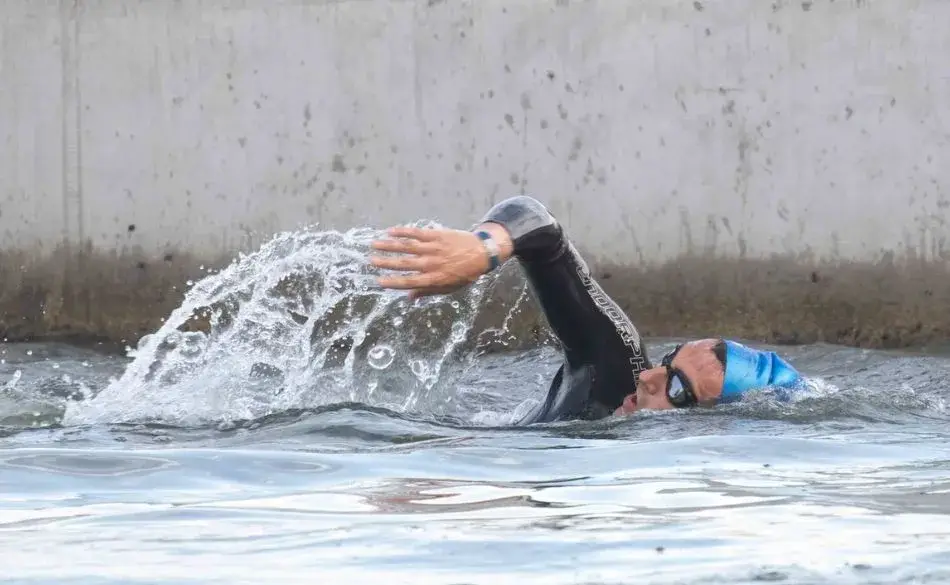
In the pool, the first adjustment is technique. Focus on maintaining a high elbow catch rather than letting it drop. Keep your wrist neutral and avoid overreaching at entry, which places excess load on the forearm. If you’re following the a triathlon training plan for beginners, consider shortening swim sets temporarily while reinforcing better form. Quality beats quantity when tendons are irritated.
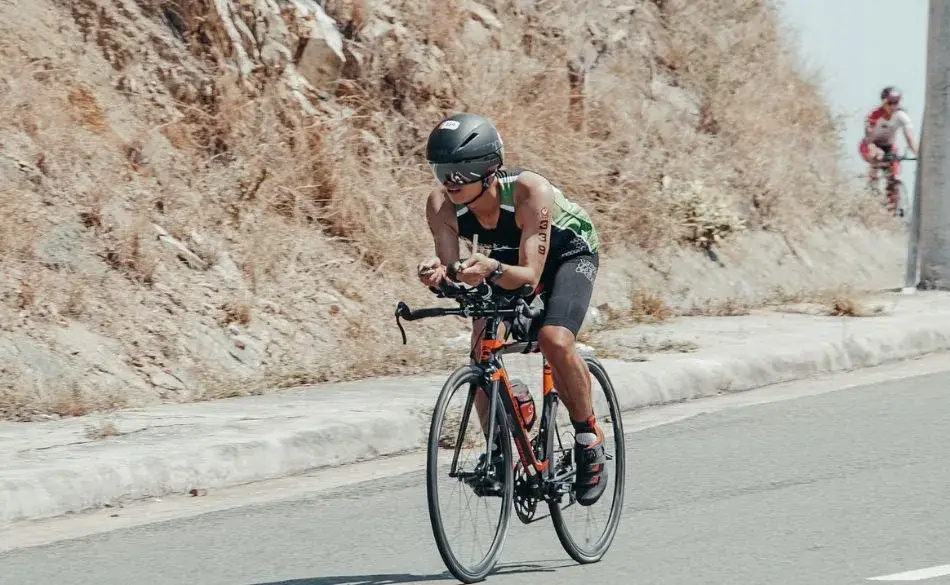
Cycling also plays a role. Long rides in aero position can strain the elbow through constant gripping. Loosen your hold on the bars, adjust your cockpit setup if necessary, and schedule short breaks to shake out your arms. Many athletes overlook this, but even a slight handlebar adjustment can reduce elbow tension over long distances.
On the run, focus on relaxed arm swings. Clenching fists or locking the elbows adds stress without improving performance. A relaxed posture keeps blood flowing and reduces tightness across sessions.
Here are some simple training tweaks you can try immediately:
When recovering from elbow strain, focusing on quality in the pool is more effective than just chasing distance. Tracking your pace can help you stay efficient and avoid overloading your arms. For accurate pacing without guesswork, try the Swimming Pace Calculator. It helps you train smart and reduce unnecessary stress on your tendons.
These changes may feel small, but collectively they reduce strain and help you keep training. As one athlete I coached discovered, dropping swim paddles for just two weeks gave his elbows the breathing space needed to heal, without derailing his preparation for race day.
When swimmer’s elbow flares up, recovery has to become just as much a part of your training as swim intervals or long rides. Many triathletes make the mistake of pushing through the pain, hoping it will fade. In reality, rest combined with active recovery is what brings tendons back to full strength.
Step one is simple: reduce the load. That doesn’t mean quitting altogether, but it does mean cutting back on repetitive stress. Shorten swim sessions, avoid paddles, and scale intensity for at least a week. Cycling and running can stay, but only if arm pain doesn’t increase. This cross-discipline flexibility is one of the hidden strengths of triathlon training. You can shift focus without completely losing fitness.
Ice and compression help reduce inflammation in the short term, while heat therapy and light mobility work aid recovery once the acute pain eases. Strengthening the supporting muscles is equally vital. Exercises like forearm pronation and supination with light weights, banded external rotations for the shoulder, and grip squeezes build resilience where it’s needed most.
One of my coached athletes preparing for his first Olympic triathlon had pain so severe he couldn’t hold water bottles mid-ride. By dialing back swim intensity, adding forearm stretches, and integrating gentle strength work, he returned to normal training within four weeks. The key was not just rest, but targeted recovery strategies that addressed the root cause.
Here are recovery practices that consistently work for triathlon training athletes:
As swelling and technique come back under control, it’s helpful to remind yourself just how much you’re preparing for. The Half Ironman swim is 1.9 km (1.2 miles), not just a number, but a unique challenge in open water that demands pacing, confidence, and calm. Check out this guide to understanding the Half Ironman swim distance and how to train for it effectively.
Recovery isn’t glamorous, but it’s what keeps you moving toward the start line. When you treat healing as training, your elbows (and your race performance) both benefit.
Tackling swimmer’s elbow now means you’ll be stronger and more resilient when the miles add up. If your sights are set on your first full Ironman, our Beginner Ironman Training Plan builds endurance and pacing while prioritizing recovery and joint health, so you can reach the start line confident and pain-free.
💡 Build toward your first Ironman with confidence - stronger, smarter, and ready for the challenge.
Explore Beginner Ironman PlanThe best solution to swimmer’s elbow is making sure it doesn’t return. Prevention means training smarter, not just harder. For triathletes, that requires a blend of good swim technique, balanced strength work, and smart scheduling across all three sports.
Technique is always the starting point. Keeping a high elbow during the catch, entering the water at shoulder width, and avoiding crossover strokes reduce stress dramatically. If you’re unsure about your form, consider filming your stroke or asking a coach for feedback. Small corrections can save months of frustration later.
Strength training also plays a key role. Focus on building shoulder and forearm endurance so your elbows aren’t overloaded by every swim session. Incorporating resistance band work, light dumbbell curls, and rotator cuff exercises builds resilience. Pairing these with mobility drills for the upper back and chest helps keep the stroke fluid and powerful.
But prevention isn’t just about exercises, it’s also about planning. Stacking long swim, bike, and run sessions back-to-back without recovery invites injury. A well-structured triathlon training plan alternates intensities and includes at least one lighter week every four weeks to let tendons adapt. Brick workouts are great for race prep, but spacing them intelligently reduces unnecessary strain on the elbows.
Here are practical steps you can build into your program:
Many triathletes discover that open water technique becomes even more important as the swim distance increases. Preparing for the 1.9 km in a 70.3 isn’t just about endurance, it’s about efficiency and form. If you’re working toward that goal, this guide on mastering the 70.3 swim distance will give you practical strategies to build confidence in the water.
Think of prevention as insurance. By paying attention now, you avoid costly downtime later. That consistency is what builds not only stronger elbows, but also stronger overall race performances.
One of the most overlooked tools for preventing and managing swimmer’s elbow is a smart strength and conditioning routine. For triathletes, it’s tempting to pour every ounce of energy into swim, bike, and run sessions. But when the supporting muscles around the elbow and shoulder are weak, the tendons take on more stress than they can handle.
The key isn’t heavy lifting but targeted, consistent work. Building endurance in your forearms, shoulders, and back gives your elbows the stability they need to handle long sessions in the pool. Strength sessions also create balance between muscle groups, which reduces the chance of one area overcompensating and causing injury.
Simple but effective exercises include banded external rotations, reverse wrist curls, and shoulder presses with light dumbbells. These movements don’t just help you recover, they improve overall stroke efficiency and power. Many of the open water swim tips for triathletes I give to athletes involve not just technique in the water but also conditioning outside of it.
Here’s a basic weekly strength routine that supports elbow health:
I had one athlete preparing for his first long-course triathlon who struggled with elbow pain for months. Once we added just 20 minutes of conditioning twice a week, his pain faded, his swim efficiency improved, and he finally broke through the plateau holding back his performance. Sometimes, small steps make the biggest difference.
Recovering from swimmer’s elbow doesn’t mean your triathlon journey stops here. If you’re ready to move beyond sprint races and aim for your first 70.3, our Half Ironman Triathlon Training Plans provide the structure to grow endurance while protecting your joints with smart swim, bike, and run balance.
💡 Protect your elbows, build confidence, and arrive at the start line of your 70.3 ready to perform strong in all three disciplines.
Browse Half Ironman PlansUnderstanding the full picture of swimmer’s elbow helps triathletes take proactive steps. By breaking down the symptoms, root causes, and best prevention strategies, you can see how small adjustments lead to big improvements in training longevity. This structured approach is something I use with athletes who are building toward their first half or full Ironman races.
The table below provides a clear comparison:
👉 Swipe to view full table
| Symptom | Likely Cause | When It Appears | Prevention Strategy |
|---|---|---|---|
| Dull ache in elbow | Repetitive pulling in swim strokes | After long swim sessions | Refine technique, keep a high elbow catch |
| Sharp pain on pull | Dropping elbow or crossing midline | During freestyle catch and pull | Video analysis and swim drills |
| Grip weakness | Forearm tendon overload from cycling | On long rides gripping bars | Loosen grip, adjust cockpit, forearm strength work |
| Persistent soreness | Rapid jump in swim volume | After intense training weeks | Follow structured triathlon training plans |
| Tenderness to touch | Inflamed tendon tissue | Daily activities and post-training | Recovery weeks, mobility drills, targeted rest |
As the table shows, many symptoms can be traced back to technique or load management. The solution isn’t always cutting mileage but refining how you train. By combining smart stroke mechanics with supportive strength work, triathletes can dramatically reduce the risk of recurring elbow pain.
Sometimes, despite smart adjustments and recovery strategies, swimmer’s elbow lingers longer than expected. For triathletes, this can be tricky. You’re usually motivated, disciplined, and used to pushing through discomfort. But there’s a difference between training fatigue and injury. Knowing when to seek outside help can save your season.
If elbow pain persists for more than two to three weeks despite rest and modified training, it’s time to consult a physiotherapist or sports doctor. Professional assessment can pinpoint whether the problem is purely tendon-related or connected to bigger issues, like shoulder instability or spinal mobility. This clarity helps you focus your rehab instead of guessing.
Red flag symptoms include sharp, stabbing pain during daily tasks, swelling around the joint, or a significant drop in grip strength. If you can’t comfortably hold your handlebars or carry groceries, pushing through will only make matters worse. These are signs the injury needs more than home remedies.
One of my athletes training for an Ironman ignored these red flags. By the time he came to me, his elbow tendons were so aggravated he needed eight weeks off swimming. A quick visit to a physio months earlier would have cut that recovery time in half. The lesson? Don’t wait until the pain dictates your schedule—act early.
Seeking professional help doesn’t mean you’ve failed. It means you’re taking control of your performance. The right treatment plan (whether it includes manual therapy, dry needling, or tailored strength exercises) can accelerate recovery and give you confidence to return stronger. And that’s worth far more than another week of stubborn training.
Dealing with swimmer’s elbow can feel discouraging, especially when your triathlon season is packed with goals. But remember, injuries don’t have to define your journey. They can shape how you approach training smarter. Every triathlete I’ve coached who faced setbacks came back stronger, not because they ignored the pain, but because they adapted with patience and consistency.
Think about your own training. Are you listening to your body, or pushing through discomfort hoping it will fade? These questions matter more than any single session. When you give your elbows time to recover and follow structured triathlon training plans, you’re not losing fitness—you’re investing in long-term performance.
Here’s the thing: prevention and recovery aren’t glamorous, but they’re where real progress happens. Adjusting your swim form, strengthening your shoulders, or dialing down volume for a week doesn’t mean you’re falling behind. It means you’re setting yourself up to race pain-free and with confidence. The reward is not only a healthier elbow but also a stronger overall performance across swim, bike, and run.
If you’ve ever questioned whether you can still chase your triathlon dreams while managing setbacks, the answer is yes. The athletes I coach who embraced recovery and prevention didn’t just return, they often achieved new personal bests because they respected the process. You can do the same.
Ready to put your training to the test? Here are some upcoming triathlon events matched to this article.


Head Coach & Founder, SportCoaching
Graeme is the founder of SportCoaching and has coached more than 750 athletes from 20 countries, from beginners to Olympians, in cycling, running, triathlon, mountain biking, boxing, and skiing. His coaching philosophy and methods form the foundation of SportCoaching's training programs and resources.
No matter your goals, SportCoaching offers tailored training plans to suit your needs. Whether you’re preparing for a race, tackling long distances, or simply improving your fitness, our expert coaches provide structured guidance to help you reach your full potential.
Personalised coaching to improve your swim, bike, and run performance.
What’s included
Browse upcoming Australian running, cycling, and triathlon events in one place. Filter by sport, check dates quickly, and plan your training around something real on the calendar.
Choose your plan to get started with personalized training plans designed to help you reach your goals.


Minna Backman
When you’re new, feedback is especially important, and Graeme is highly skilled at both analyzing numbers and understanding the importance of mental strength.