



Find Your Next Cycling Race
Ready to put your training to the test? Here are some upcoming cycling events matched to this article.
 Coach Graeme
Last updated:
Indoor cycling has gone from a last resort on rainy days to a genuine performance tool used by beginners and professional cyclists alike. With smart trainers and platforms like Zwift, you can train with precision, join group rides with thousands of cyclists worldwide, and see measurable fitness gains without leaving your house.
This guide covers everything you need to get started with indoor cycling and Zwift — from choosing the right equipment, to structuring effective workouts, to using indoor training as part of a year-round cycling plan.
Not sure where to start with training?
Tell us your goal and schedule, and we’ll give you clear direction.
No obligation. Quick, practical advice.
Explore our cycling training advice for more helpful articles and resources.
The biggest advantage of indoor training is precision. Outdoors, your effort varies constantly — traffic lights, coasting downhill, wind, junctions. On a smart trainer, every second of your session is purposeful. When a workout prescribes four sets of eight minutes at 95 percent of your FTP, you hold exactly that power for exactly that duration. No interruptions, no coasting, no wasted time.
This precision translates to faster fitness gains per hour of training. A focused 60-minute indoor session can deliver the same training stimulus as a 90-minute outdoor ride, simply because there is no downtime. For time-crunched cyclists balancing training with work and family, this is a significant advantage.
Indoor training also removes weather as a barrier. Australian summers can make long outdoor rides uncomfortable or dangerous in extreme heat. Winter brings shorter days. Indoor cycling means your training never stops regardless of conditions. For a deeper dive into building power and endurance at home, read our performance indoor training guide.
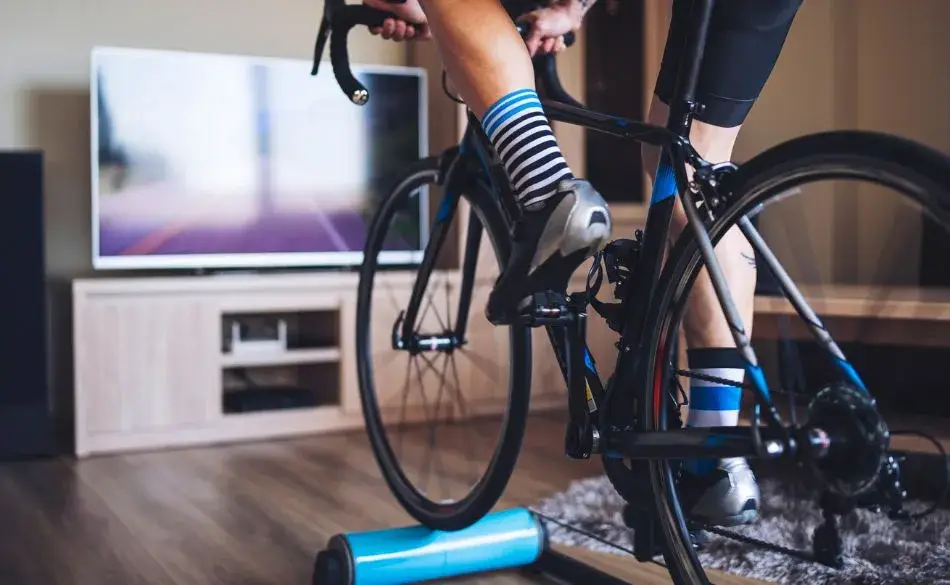
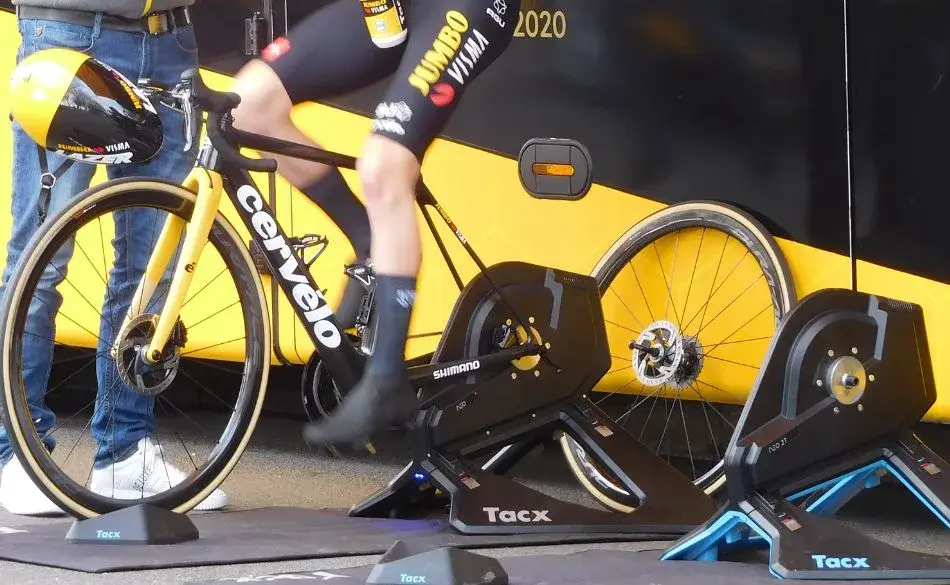
A smart trainer. This is the single most important purchase. Smart trainers measure your power output accurately and automatically adjust resistance to match workout targets. Prices range from around $400 AUD for entry-level models to $1,800 or more for premium direct-drive trainers. A direct-drive trainer (where you remove your rear wheel) provides the most accurate power reading and quietest ride.
A bike. Most cyclists use their road bike on the trainer. If you ride frequently indoors, a dedicated indoor bike or a second wheelset saves the wear on your outdoor wheels.
A screen. Laptop, tablet, smart TV, or phone — any device that runs Zwift or your chosen platform. A larger screen makes the experience more immersive.
A fan. This is non-negotiable. Without wind cooling, you overheat fast on the trainer. A strong floor fan pointed at your upper body makes indoor sessions far more tolerable.
A mat and towel. Protects your floor from sweat and your bike from corrosion. Indoor riding produces significantly more sweat than outdoor riding because of the lack of airflow.
Zwift is the most popular indoor cycling platform, with millions of users, virtual worlds to ride through, group rides, races, and structured training plans. Its gamified approach — levels, badges, virtual gear upgrades — keeps riders motivated session after session.
Rouvy takes a different approach, using real-world video footage of actual roads. If you want to preview a race course or ride famous climbs from your garage, Rouvy delivers the most realistic experience. Read our detailed Rouvy vs Zwift comparison for a full breakdown.
MyWhoosh is a newer platform with high-quality graphics and a lower price point, including a free tier. For riders on a budget who still want structured training and virtual riding, it is worth considering. Our MyWhoosh vs Zwift guide compares the two in detail.
All three platforms connect to smart trainers, support structured workouts, and sync with TrainingPeaks. The best platform is the one that keeps you riding consistently.
The key to indoor training is structure. Riding at a random effort for an hour is better than nothing, but structured workouts targeting specific energy systems produce dramatically better results.
Sweet spot intervals (88–93% FTP). The best bang-for-your-buck workout in cycling. Three to four sets of 10 to 15 minutes at sweet spot builds your aerobic engine and raises your FTP with manageable fatigue. This is the bread and butter of indoor training.
Threshold intervals (95–105% FTP). Harder efforts that push your lactate threshold higher. Two to three sets of 8 to 12 minutes with equal recovery. These sessions teach your body to sustain harder efforts for longer.
VO2 max intervals (106–120% FTP). Short, intense efforts of three to five minutes that raise your aerobic ceiling. Four to six repetitions with three to four minutes recovery. These are hard but incredibly effective for building top-end fitness.
Endurance rides (55–75% FTP). Longer, easier sessions of 60 to 120 minutes that build your aerobic base. These can feel boring on the trainer, which is where Zwift’s virtual worlds and group rides help — they give you something to look at and people to ride with.
For ten specific sessions you can do on Zwift today, read our guide to the best Zwift workouts. If you only have 30 minutes, our 30-minute indoor trainer workouts deliver effective sessions in minimal time. And if you are new to interval training on the bike, our cycling interval training for beginners guide explains how to structure your first sessions.
Your FTP (Functional Threshold Power) is the maximum power you can sustain for approximately one hour. It is the foundation of all power-based training because your workout targets are set as percentages of your FTP.
The most common FTP test on Zwift is the ramp test — a progressive effort that increases every minute until you cannot continue. It takes about 20 minutes and provides a reliable FTP estimate. Alternatively, a 20-minute all-out effort multiplied by 0.95 gives your FTP.
Test your FTP every six to eight weeks to ensure your training zones stay accurate. As your fitness improves, your FTP rises, and your workout targets need to increase to keep driving progress. For a deeper understanding of what FTP means and how to improve it, read our guides on what FTP really means and how much you can increase your FTP.
The most effective training approach for most cyclists is a mix of indoor and outdoor riding. Indoor sessions are ideal for structured intervals where precision matters. Outdoor rides are better for long endurance efforts, group rides, descending skills, and the mental refresh that comes from being outside.
A practical weekly structure might look like two to three structured indoor sessions during the week (when time is limited and precision matters) and one longer outdoor ride on the weekend (when you have more time and want to enjoy the road). This gives you the best of both worlds — structured fitness gains indoors and real-world riding skills outdoors.
Our cycling training plan guide covers how to build a complete training week that integrates indoor and outdoor riding.
Coach’s tip: ERG mode on your smart trainer automatically adjusts resistance to match the workout target. Use it for intervals where hitting exact power matters. Turn it off for free rides and endurance sessions where you want to control your own effort.
Going too hard, too often. The precision of indoor training makes it tempting to smash every session. But training adaptations happen during recovery. If every session is a threshold or VO2 max effort, you accumulate fatigue without absorbing the training. Keep 70 to 80 percent of your indoor volume at easy or moderate intensity.
Not using a fan. Overheating on the trainer raises your heart rate, reduces power output, and makes sessions feel harder than they are. A strong fan is as important as the trainer itself.
Ignoring bike fit indoors. Your indoor position should mirror your outdoor position. If your saddle height or reach is different on the trainer, you develop movement patterns that do not transfer to outdoor riding and increase injury risk.
Skipping the warm-up. Jumping straight into hard efforts without 10 to 15 minutes of easy spinning increases injury risk and reduces the quality of your intervals. Every session should start easy.
Indoor cycling is particularly valuable for triathletes. The bike leg is the longest discipline in both Ironman 70.3 and full Ironman, and consistent power output is critical. Smart trainer sessions allow triathletes to practise holding race power for extended periods without the interruptions of outdoor riding.
Brick sessions — cycling followed immediately by a run — are easy to execute from the trainer. Finish your indoor ride, step off the bike, and run out the door. This simulates the bike-to-run transition that defines Ironman racing. For more on long-course preparation, read our Ironman and 70.3 training guide.
Our cycling coaching integrates directly with Zwift, Rouvy, or whichever platform you ride. Every indoor session has a clear purpose, fits your schedule, and builds towards your target event — whether that is a road race, gran fondo, or Ironman.
Start Cycling CoachingIs Zwift worth the cost?
Zwift costs approximately $25 AUD per month. If you use it two to three times per week, that works out to roughly $2 to $3 per session — significantly cheaper than a gym membership or spin class. The structured workouts, group rides, and racing features make it worth the investment for most cyclists who train indoors regularly.
Can I get fit just riding indoors?
Yes. Many competitive cyclists do a significant portion of their training indoors, particularly during winter or in poor weather. Structured indoor training with power targets builds fitness as effectively as outdoor riding. The key is consistency and following a structured plan rather than riding at random.
Do I need a smart trainer or can I use a basic trainer?
A basic (or “dumb”) trainer works but limits what you can do. You will not get automatic resistance changes, ERG mode for workouts, or accurate power measurement. A smart trainer transforms the indoor experience and is strongly recommended if budget allows.
How often should I ride indoors?
Two to four sessions per week is effective for most cyclists. More than that can become mentally draining. Blend indoor sessions with outdoor rides for the best balance of fitness, skills, and enjoyment.
Will indoor cycling make me faster outdoors?
Yes. Power is power. If your FTP increases from indoor training, you ride faster outdoors. The structured nature of indoor workouts often produces faster fitness gains per hour than unstructured outdoor riding. Many cyclists report their biggest performance improvements after a winter of consistent indoor training.
Ready to put your training to the test? Here are some upcoming cycling events matched to this article.
Head Coach & Founder, SportCoaching
Graeme is the founder of SportCoaching and has coached more than 750 athletes from 20 countries, from beginners to Olympians, in cycling, running, triathlon, mountain biking, boxing, and skiing. His coaching philosophy and methods form the foundation of SportCoaching's training programs and resources.
No matter your goals, SportCoaching offers tailored training plans to suit your needs. Whether you’re preparing for a race, tackling long distances, or simply improving your fitness, our expert coaches provide structured guidance to help you reach your full potential.
Structured cycling coaching to build power, endurance, and speed.
What’s included
Browse upcoming Australian running, cycling, and triathlon events in one place. Filter by sport, check dates quickly, and plan your training around something real on the calendar.
Choose your plan to get started with personalized training plans designed to help you reach your goals.


Minna Backman
When you’re new, feedback is especially important, and Graeme is highly skilled at both analyzing numbers and understanding the importance of mental strength.