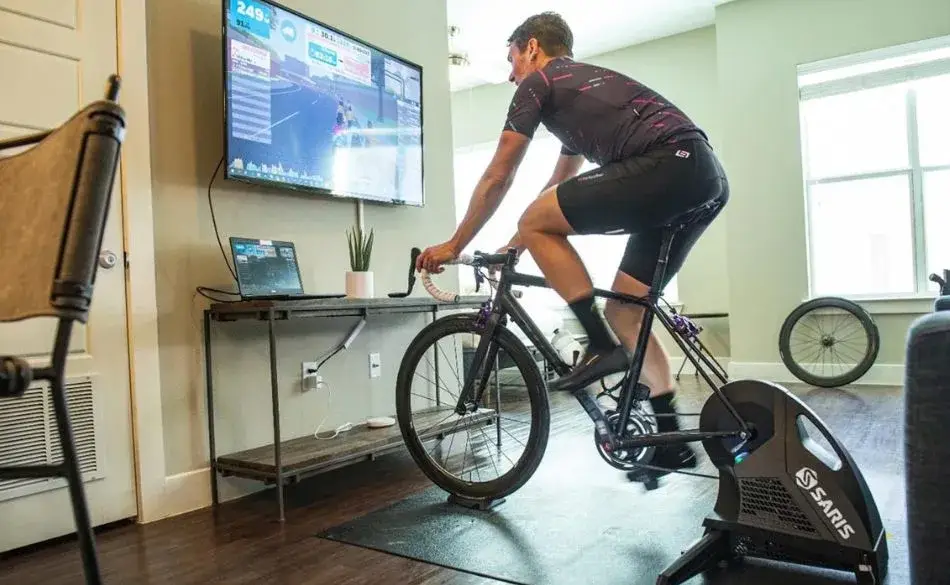
Best Smart Trainer Workouts for Cycling Performance
If you’re serious about improving, a smart trainer isn’t just a gadget, it’s your personal performance lab. The beauty of training indoors is precision. You can hold exact wattages, repeat tough intervals, and track progress session by session.
One of the most effective workouts for time-crunched riders is the sweet spot indoor cycling workout. This means riding just below your threshold (hard, but sustainable). Over time, it builds incredible aerobic strength without leaving you completely drained.
Here’s a simple structure I often give athletes:
- Warm-up: 15 minutes easy spinning.
- Main set: 3 x 10 minutes at 88–94% FTP with 5 minutes recovery.
- Cool-down: 10 minutes easy.
That may sound simple, but when done consistently, the impact is huge. One of my athletes training for a triathlon bike leg used these sessions twice a week, and his ability to hold steady power in races transformed. He told me afterwards that the bike portion “felt controlled, not chaotic” for the first time.
Another powerful session involves interval training indoor cycling threshold workouts. Instead of long steady riding, these sharpen your ability to sustain race pace. A classic version looks like this:
- Warm-up: 20 minutes building to endurance pace.
- Main set: 4 x 8 minutes at 100–105% FTP with 4 minutes rest.
- Cool-down: 10–15 minutes easy.
The key? Focus on hitting the target numbers, not just surviving the set. Indoors, you don’t waste energy fighting wind or traffic.
Remember, quality beats quantity. Two or three well-structured indoor sessions a week can do more for your fitness than aimless long rides outside. If you’ve only got an hour, smart trainer workouts are the fastest way to see real progress.


How to Use Power Zones in Indoor Cycling Training
Training without direction is like riding with no map. You might get somewhere, but probably not where you want to be. That’s why using power zones in indoor cycling training is a game-changer. Instead of guessing effort, you’re working with precise intensity levels that align with specific physiological adaptations.
Most cyclists use a system based on FTP. Here’s a quick breakdown of the main zones:
- Zone 1 (Active Recovery): Easy spinning to flush the legs.
- Zone 2 (Endurance): Comfortable, steady pace to build aerobic fitness.
- Zone 3 (Tempo): Moderately hard, a step below race pace.
- Zone 4 (Threshold): Right at or near FTP – tough but sustainable.
- Zone 5 (VO2 Max): Short, high-intensity intervals for power and speed.
- Zone 6 (Anaerobic): Sprints or max efforts for explosive bursts.
One of the cyclists I coach, preparing for a hilly road race, struggled with pacing. He’d go out too hard and fade. Indoors, we built a program using interval training in Zone 4 and Zone 5. Within six weeks, his ability to climb at a steady effort improved dramatically. On race day, he didn’t blow up, he controlled his effort and finished stronger than ever.
The magic of indoor training is that you can lock into these zones without external distractions. Outdoors, hills, wind, and traffic can make it tricky to hold steady power. Indoors, you can sit in sweet spot indoor cycling workouts or push through VO2 max sessions with full focus.
Think of zones as the gears of your training engine. You wouldn’t drive everywhere in fifth gear, you’d shift depending on the road. Same with cycling. The more time you spend training in the right zones, the faster and more efficient you’ll become.
Not every rider has time for long intervals. Sometimes, even 30 minutes on the trainer can deliver a meaningful workout if you structure it right. That’s why we put together a guide on 30 Minute Indoor Trainer Workouts packed with efficient sessions you can squeeze into a busy day.
Indoor training offers control—and your calorie burn can skyrocket with smart structure. Our Cycling Weight-Loss Plan combines structured indoor workouts with nutrition guidance to help you burn fat efficiently—without losing strength or performance.
- Fat-burning workouts: Balanced intervals that raise calorie burn while preserving muscle.
- Indoor-optimized: Trainer-based sessions that fit cleanly into limited schedules.
- Holistic approach: Training and fueling strategies aligned for weight management.
- Performance-safe: Keeps your power and fitness intact while dropping fat.
Tone up, drop weight, and ride stronger—without sacrificing performance.
View Weight-Loss Plan →
Structured Sweet Spot Indoor Cycling Workouts
When time is short, nothing delivers bang for your buck quite like structured sweet spot indoor cycling workouts. These sessions target that middle ground between endurance and threshold. Hard enough to push your fitness, but not so hard that you can’t recover and repeat them several times a week.
Think of sweet spot training as building the foundation of your performance house. Without it, your threshold and VO2 max efforts won’t stand strong. Indoors, the controlled environment means you can ride right in that 88–94% FTP range without interruption.
Here’s an example workout I often prescribe:
- Warm-up: 15 minutes easy, with 3 x 1-minute spin-ups.
- Main set: 2 x 20 minutes at 88–92% FTP with 5 minutes recovery.
- Cool-down: 10 minutes relaxed spinning.
It may not look flashy, but the steady grind builds muscular endurance and teaches you to stay comfortable in discomfort. Over weeks, this kind of training helps improve your cycling performance metrics (things like normalized power and training stress balance) making you more resilient for long rides and races.
One rider I coached was training for an early-season road race while balancing work and family life. He could only fit in 5–6 hours a week, almost all indoors. By committing to sweet spot training twice weekly and layering in one longer weekend ride, he was able to finish with the lead pack in his category. The discipline of holding those steady intervals indoors made all the difference.
The best part? Sweet spot sessions don’t require hours in the saddle. Even 60–75 minutes can deliver a huge aerobic return. Done right, they’ll push your FTP upward, helping you ride faster outdoors without needing to dramatically increase training volume.
Time trial success starts with steady power and pacing smarts. Our Cycling Time Trial Training Plan is crafted to boost your ability to hold high watts consistently—perfectly suited to indoor structured training.
- TT-specific workouts: Designed to develop sustained threshold and over-under power.
- Indoor-ready structure: Steady pacing sessions that translate seamlessly from trainer to road.
- Progressive blocks: Training builds steadily in duration and intensity each week.
- Performance tracking: Helps you benchmark pacing and power for real-world efforts.
Nail your pacing and power by turning your indoor sessions into time trial readiness.
View Time Trial Plan →

Indoor Cycling Workouts to Improve VO2 Max
If you want to push the ceiling of your performance, VO2 max sessions are where the magic happens. These workouts train your body to use oxygen more efficiently, which means more power for longer. Indoors, you can dial in these efforts with far more control than outside.
A simple but brutal VO2 max session looks like this:
- Warm-up: 15 minutes, gradually building intensity.
- Main set: 5 x 3 minutes at 110–120% FTP with 3 minutes recovery.
- Cool-down: 10 minutes easy spinning.
The effort feels like a controlled fire (you’re breathing hard, legs burning, and there’s nowhere to hide). But that discomfort is where growth happens. These workouts boost both aerobic capacity and mental toughness.
I had one athlete training for criteriums who struggled with repeated high-power surges. Outdoors, he’d get dropped when the pace surged. We shifted to indoor cycling VO2 max workouts for road cyclists, using sets like 30 seconds hard / 30 seconds easy for 15 minutes straight. Within a month, he went from dreading those surges to attacking during races.
Why does it work so well indoors? Consistency. You’re not interrupted by wind shifts or downhill sections. Every rep hits the target intensity, and recovery is perfectly timed. That kind of precision is tough to achieve outdoors.
Some of the most effective variations include:
- 4–6 x 4 minutes at VO2 max power with equal rest.
- “Tabata style” 20 seconds max effort / 10 seconds recovery for 8 minutes.
- Over-unders, alternating between threshold and VO2 max every 2 minutes.
These sessions are short but draining. The key is not to overdo them. One or two VO2 max workouts per week is enough for most riders. Combined with endurance and sweet spot training, they’ll raise your ceiling and make race pace feel smoother.
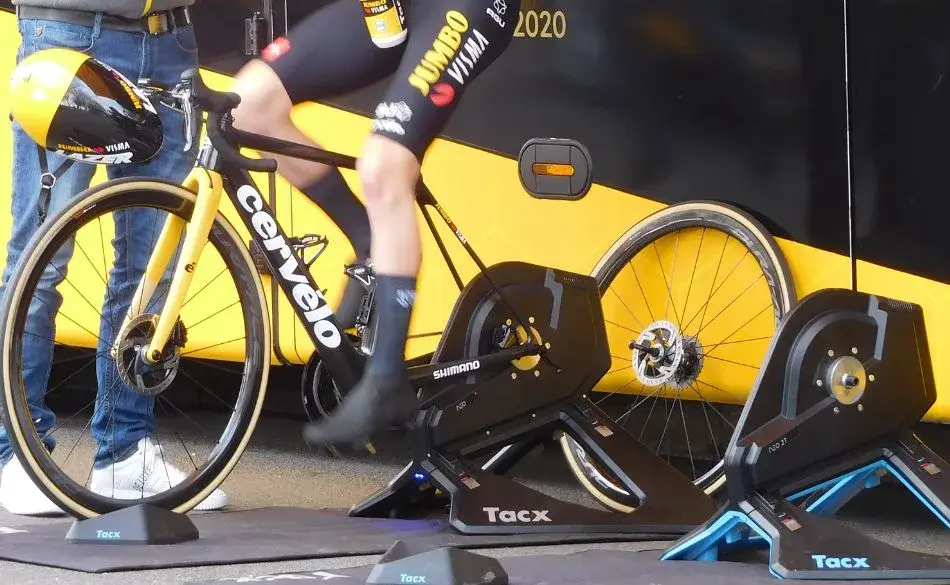

Building Endurance Indoors Without Losing Your Mind
Endurance rides are the backbone of cycling fitness. But let’s be honest, doing them indoors can feel like watching paint dry. Still, they’re essential if you want lasting strength for long events or back-to-back training days. The key is learning how to make them both effective and bearable.
A solid indoor cycling endurance workout doesn’t need to be epic. Start with 90 minutes at Zone 2 power. It should feel steady but conversational, the type of pace you could hold for hours outdoors. To keep your mind engaged, use platforms like Zwift or Rouvy to simulate routes, or break the ride into mental checkpoints every 15 minutes.
If you’re weighing options between virtual platforms, our MyWhoosh vs Zwift—Complete Guide walks you through the pros, cons, and unique features of each, so you can choose what fits your training style and space best.
I coached one rider training for a 100-mile sportive who couldn’t get long rides done outdoors due to family commitments. Instead, he built endurance on the trainer with 2-hour sessions twice a week. We used strategies like varying cadence every 10 minutes and adding short surges to mimic rolling hills. When his event came, he rode strong from start to finish and he said the long indoor rides made pacing on the road feel effortless.
Here are a few tricks to make endurance sessions indoors more sustainable:
- Entertainment matters: Line up a podcast, playlist, or even a movie.
- Break it down: Mentally divide the session into 15–20 minute blocks.
- Hydration and fueling: Just like outdoors, drink every 15 minutes and eat small amounts of carbs hourly.
- Environment control: Good fans and airflow can make or break long rides.
Endurance rides may not deliver the same “punch” as VO2 max efforts, but they build the foundation everything else rests on. If you can train your body and mind to stay steady indoors, you’ll be much stronger outdoors when the road gets long.
If climbing is one of your main goals, we’ve put together a detailed guide on how to get better at cycling uphill with practical strategies you can pair with indoor training.
Indoor climbing strength starts with targeted structure. Our Cycling Climbing Training Plan is designed to help you build the power and endurance to crush steep gradients—using focused intervals you can nail on the trainer.
- Climb-specific workouts: Intervals and efforts tailored to build sustained uphill power.
- Indoor-optimized: Ideal for smart trainers and turbo sessions, with no gear shifting needed.
- Progressive build-up: Structured blocks that gradually increase volume and climbing intensity.
- Road-ready benefits: Indoor gains translate to stronger, steadier climbing outdoors.
Turn your indoor training into mountain-ready strength with a plan built for climbing performance.
View Climbing Plan →
Maximizing Performance Metrics Indoors
One of the biggest advantages of training indoors is the ability to track and improve your cycling performance metrics without outside noise. Every watt, heart rate beat, and cadence count is recorded with precision. That makes it easier to spot trends, weaknesses, and improvements over time.
The key metrics most riders should focus on indoors are:
- FTP (Functional Threshold Power): Your best measure of sustainable power.
- Normalized Power (NP): Gives a better sense of effort during variable workouts.
- Training Stress Score (TSS): Helps track how hard a session impacts your body.
- Cadence: Useful for identifying efficiency and working on pedal smoothness.
The controlled indoor environment makes these numbers more reliable than outdoors. On the road, wind and terrain can inflate or deflate your readings. Indoors, if your FTP goes up by 10 watts, you know it’s real progress.
From a coaching perspective, one of the most common mistakes cyclists make indoors is ignoring these numbers and simply “spinning the pedals.” Without tracking NP or TSS, it’s easy to overtrain or undertrain. Metrics provide clarity, helping you train in the right zone and recover properly.
Tip: Don’t just ride for numbers – use them to shape smarter decisions. If your TSS is stacking too high day after day, you’re heading for burnout. If cadence drops dramatically late in a workout, it’s a sign you need strength work.
Another overlooked metric is consistency. Many cyclists obsess over peak power but forget that repeatability is just as important. Indoors, you can rehearse holding 90% FTP for 30 minutes, rest, and do it again. That teaches both your body and brain how to stay strong under fatigue.
When you use metrics wisely, they become more than just data, they’re a roadmap to stronger, faster riding, both indoors and out.
If you’re juggling work, family, and training time, our guide to cycling coaching for time-crunched professionals walks you through planning effective sessions without burning out or losing progress.
Creating the Perfect Indoor Cycling Setup
Your space shapes your session. A smart setup removes friction, keeps you cool, and helps you hit your targets every time.
Start with a stable base. A solid trainer mat reduces noise and protects the floor. If you live upstairs, it also keeps the neighbors happy. Pair it with a sturdy fan and you’ll feel fresher deep into hard efforts.
Think airflow, not just cooling. Place one fan at bar height and one low, angled at your legs. These pain cave ventilation tips for indoor cycling help control sweat and heart rate drift, so your power stays steady.
Lighting matters too. A bright, clean space lifts your mood. If you train before dawn or after work, set warm lights for calm warm-ups and brighter light for intervals.
Working with limited room? A compact indoor cycling setup for apartment living can be simple: foldable desk, small mat, wheel-on trainer, clip-on fan, and a towel rail. Everything slides away when you’re done.
Noise is a real concern at night. Choose a direct-drive trainer, use a thick mat, and run fans on medium instead of high. These small tweaks make low-noise indoor cycling workouts at night possible without sacrificing quality.
Helpful extras that boost comfort and focus:
- A front-wheel riser for natural bike angle.
- A small table for bottles, snacks, and remote.
- Two towels – one for you, one over the top tube.
- A dehumidifier if your room gets sticky.
Cable-manage your space so nothing snags mid-interval. Keep chargers handy for head units and tablets. The fewer little hassles you face, the more likely you are to start (and finish) your workouts.
Here’s the thing about setup: it’s not about fancy gear. It’s about making training easy to begin and hard to abandon. When your space is ready, you’ll ride more, recover better, and get faster with less mental effort.

Interval Progressions for Real-World Speed
Intervals are the backbone of performance indoor training. But progression (the way you increase difficulty over time) is what drives lasting gains. Too many riders repeat the same workout week after week and wonder why they stop improving.
Progression means nudging one variable at a time: interval length, power target, or number of reps. Indoors, you can do this with surgical precision, making sure each week challenges you without crushing recovery.
Here’s an example of how a turbo trainer workout to improve FTP can progress over four weeks:
👉 Swipe to view full table
| Week | Workout Focus | Structure | Goal |
|---|---|---|---|
| 1 | Threshold intro | 3 × 8 min @ 100% FTP, 4 min rest Approx. 40–45 min total ride with warm-up and cool-down |
Learn to sustain steady effort; build tolerance to threshold work; establish pacing confidence indoors |
| 2 | Build duration | 2 × 12 min @ 100–102% FTP, 5 min rest Extend total time in zone; session length ~50–55 min |
Extend ability to hold near-threshold power; improve aerobic capacity; prepare body for longer intervals |
| 3 | Add volume | 4 × 8 min @ 100–102% FTP, 4 min rest Total work time now 32 min; session length ~60 min |
Increase training load; reinforce repeatability of hard efforts; build muscular endurance at threshold |
| 4 | Push harder | 3 × 10 min @ 102–105% FTP, 5 min rest Higher intensity with longer efforts; session ~65 min |
Raise performance ceiling; adapt to supra-threshold efforts; sharpen race-day power and resilience |
The key is patience. You don’t need to add everything at once. Extend an interval, bump power by a few watts, or shorten rest. Over a month, these micro-shifts turn into major fitness gains.
Indoor training makes this process easier because every rep is repeatable. Outdoors, terrain and weather throw variables into the mix. Indoors, you know if you’re holding 300 watts for 10 minutes, it’s the same as last week and that lets you track true progress.
Performance gains indoors come from structured threshold work. Our Cycling Threshold Training Plan is designed to maximize the benefits of smart trainer sessions, helping you raise sustainable power and turn indoor efforts into stronger outdoor performances.
- Threshold-focused workouts: Proven intervals that target FTP improvement.
- Indoor-optimized: Perfectly suited for turbo trainers and smart trainer use.
- Progressive blocks: Structured training that steadily builds fitness week by week.
- Real-world results: Transfer your indoor power gains directly to outdoor rides and races.
Turn your indoor sessions into lasting gains with a plan built for serious cyclists.
View Threshold Plan →Balancing Indoor Training with Recovery
It’s easy to think progress comes only from grinding harder, but real gains happen when you balance training with recovery. Indoor sessions, especially high-intensity ones, can be deceptively demanding. Without the natural breaks you get outdoors (like rolling down a hill) your body accumulates stress faster.
This is where monitoring both effort and recovery becomes critical. After tough interval training indoor cycling threshold workouts or VO2 max sessions, your body needs time to adapt. Push too often without rest, and you’ll hit a wall: declining power numbers, heavy legs, or even disrupted sleep.
A smart way to structure indoor training is the “2 hard, 1 easy” rhythm. That means two quality intensity sessions per week, supported by one lower-intensity endurance ride. On recovery days, stick to light spins in Zone 1 or Zone 2 or, better yet, step away from the bike and go for a walk.
Here’s a simple way to spot if you’re under-recovered:
- Heart rate is unusually high during warm-up.
- Cadence feels sluggish despite moderate power.
- Motivation to train is low several days in a row.
One of the biggest mistakes cyclists make is treating every indoor ride like a race. You don’t need to chase numbers every session. In fact, endurance athletes see the best results when they combine intensity with deliberate rest.
Ttreat your recovery days with the same respect as hard days. That means fueling well, hydrating, and sleeping enough. A balanced approach ensures your indoor cycling training plan builds fitness instead of breaking you down.
Remember, improvement isn’t just about what you do on the bike. It’s also about giving your body the space to absorb the work. The athletes who recover best are usually the ones who perform best when it really counts.
Fueling and Hydration for Indoor Cycling Performance
Indoor training may seem easier to fuel since you’re never far from the kitchen, but it’s also where riders make the most mistakes. The lack of airflow indoors means you sweat more, deplete electrolytes faster, and risk overheating if you don’t plan hydration and fueling carefully.
Even during shorter smart trainer workouts for cycling performance, your body can lose significant fluids. A rule of thumb is to drink 500–750 ml of water per hour, increasing that if your room is hot or ventilation is poor. For sessions over 60 minutes, add electrolytes to replace sodium and prevent that heavy, sluggish feeling.
Fueling matters just as much. If you’re tackling interval training indoor cycling threshold workouts or VO2 max sessions, your muscles need quick-access carbs. A banana, gel, or a slice of toast before the session can top up glycogen. For workouts lasting 90 minutes or more, aim for 30–60 grams of carbs per hour, just as you would outdoors.
Here are a few fueling strategies that work well indoors:
- Pre-ride snack: Small carb-based meal 1–2 hours before.
- During ride: Carbs every 20–30 minutes for sessions longer than an hour.
- Post-ride: Protein (20–30 g) plus carbs to aid recovery and prepare for the next session.
An often-overlooked aspect is cooling. When sweat drips faster than your fan can dry it, your body loses not only water but key minerals. That’s why indoor riders often feel more drained after a one-hour trainer ride compared to the same outdoor effort. Balancing hydration helps you sustain power and avoid post-ride fatigue.
Remember, indoor training isn’t just about watts, it’s about what supports those watts. Fueling and hydration are performance tools. Get them right, and every interval feels smoother, every recovery quicker, and every session more productive.
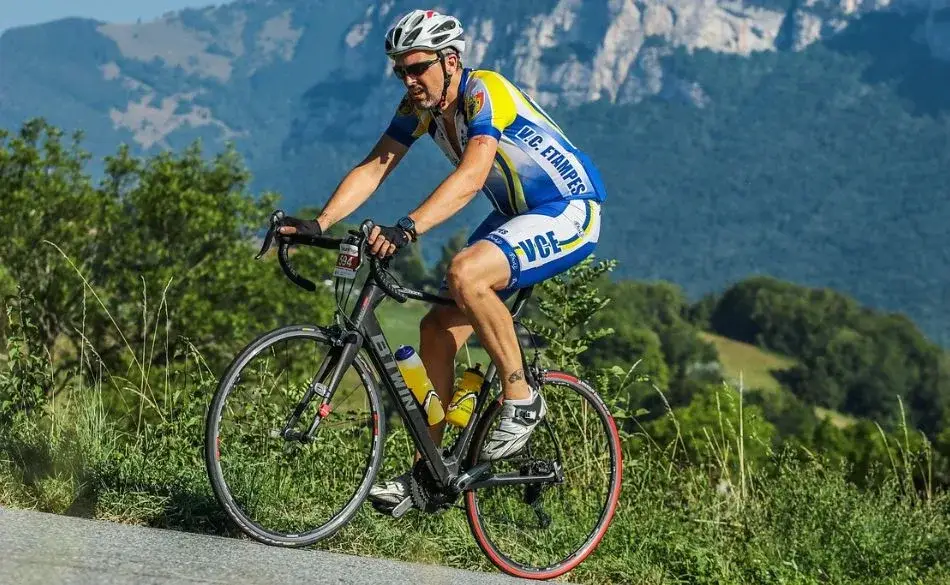

Using Technology and Data to Train Smarter Indoors
Indoor cycling has evolved far beyond just pedaling on a trainer. Today, smart technology transforms your bike into a performance lab, giving you access to data and feedback that used to be reserved for professionals.
The most powerful tool is the smart trainer itself. With accurate power measurement, you can hit exact targets for interval training indoor cycling threshold workouts or sweet spot sessions. No guessing, just precise execution. Paired with apps like Zwift or TrainerRoad, workouts adjust automatically to your FTP, ensuring every session matches your current fitness.
Beyond trainers, heart rate monitors, cadence sensors, and even motion analysis cameras are becoming part of the indoor setup. Each layer of data adds another way to spot strengths and weaknesses. For example, tracking cadence can reveal if you naturally ride at 85 rpm but fatigue when pushed above 95 rpm. That’s a clue to include cadence drills.
Here are a few ways technology helps riders train smarter indoors:
- Power zones: Smart trainers let you hold exact watts, maximizing the effect of each workout.
- Performance tracking: Apps log every session, showing long-term progress in FTP and endurance.
- Virtual racing: Competing online adds motivation and mimics the unpredictability of group rides.
- Biomechanics feedback: Advanced sensors show pedal stroke efficiency and left/right balance.
Don’t drown in data. Choose two or three key metrics (like FTP, cadence, and heart rate) and focus on trends, not single sessions. Too many numbers can distract you from the training itself.
Technology isn’t just about making workouts harder; it’s about making them smarter. When you use the right tools, you’ll train more efficiently, recover better, and know exactly what’s working. Indoor cycling becomes less about guesswork and more about building a system that steadily moves you toward your goals.
Structured indoor sessions are the fastest way to boost power and endurance. Our Cycling Training Plans are built to maximize gains from smart trainer workouts, sweet spot intervals, and performance-focused blocks.
- Proven structures: Balance of endurance, threshold, and VO2 max work.
- Indoor & outdoor ready: Designed for use with smart trainers or road rides.
- Progressive blocks: Gradually increase load for sustainable improvements.
- Performance-driven: Perfect for building FTP, speed, and race readiness.
Turn your indoor training into real-world performance with a structured plan that keeps you consistent and motivated.
View Cycling Plans →Translating Indoor Gains to Outdoor Performance
Indoor training gives you precision, but the ultimate goal is riding faster, stronger, and longer outdoors. The good news? Gains made inside transfer directly to the road when you structure your sessions right.
Threshold and sweet spot indoor cycling workouts improve your ability to sustain steady efforts. That translates to holding speed into a headwind or maintaining power on a long climb. Similarly, VO2 max indoor sessions prepare you for surges in a race, like responding to an attack or powering through a steep section.
But there are a few things to keep in mind when transitioning back outdoors. Indoors, you’re in a perfectly controlled environment. Outside, factors like terrain, wind, and group dynamics demand flexibility. That means learning how to apply your indoor training zones in real-world conditions.
Here’s how to bridge the gap effectively:
- Test fitness outdoors: Use a steady climb or flat stretch to confirm indoor FTP improvements.
- Practice bike handling: Indoor training doesn’t teach cornering or descending. Add skills sessions outdoors.
- Simulate race demands: Mix structured indoor intervals with outdoor rides that mimic event conditions.
- Balance fatigue: Outdoor rides often add extra load (climbs, rolling terrain), so adjust recovery if needed.
Think of indoor work as sharpening the engine and outdoor riding as learning to drive the car. Both are essential. One builds raw power, the other refines how you use it in the real world.
An insider tip: keep at least one indoor session in your plan even during peak outdoor season. It ensures consistency when weather or schedules disrupt outdoor rides. Many of the athletes I work with carry their indoor discipline year-round and they show up to events fitter, fresher, and more confident.
Indoor training is a tool, not a replacement. Used wisely, it makes your outdoor performance smoother, stronger, and more reliable.
To dive deeper into why your indoor watts often feel higher than your outdoor power, check out our full breakdown in this helpful guide on stationary bike vs race bike wattage comparison.
Find Your Next Cycling Race
Ready to put your training to the test? Here are some upcoming cycling events matched to this article.